COLUMN | Losing Hegemony in the Pacific
This article was translated automatically and may contain differences from the original. For reference, read the original.
- por Sascha Hannig
- Columnas
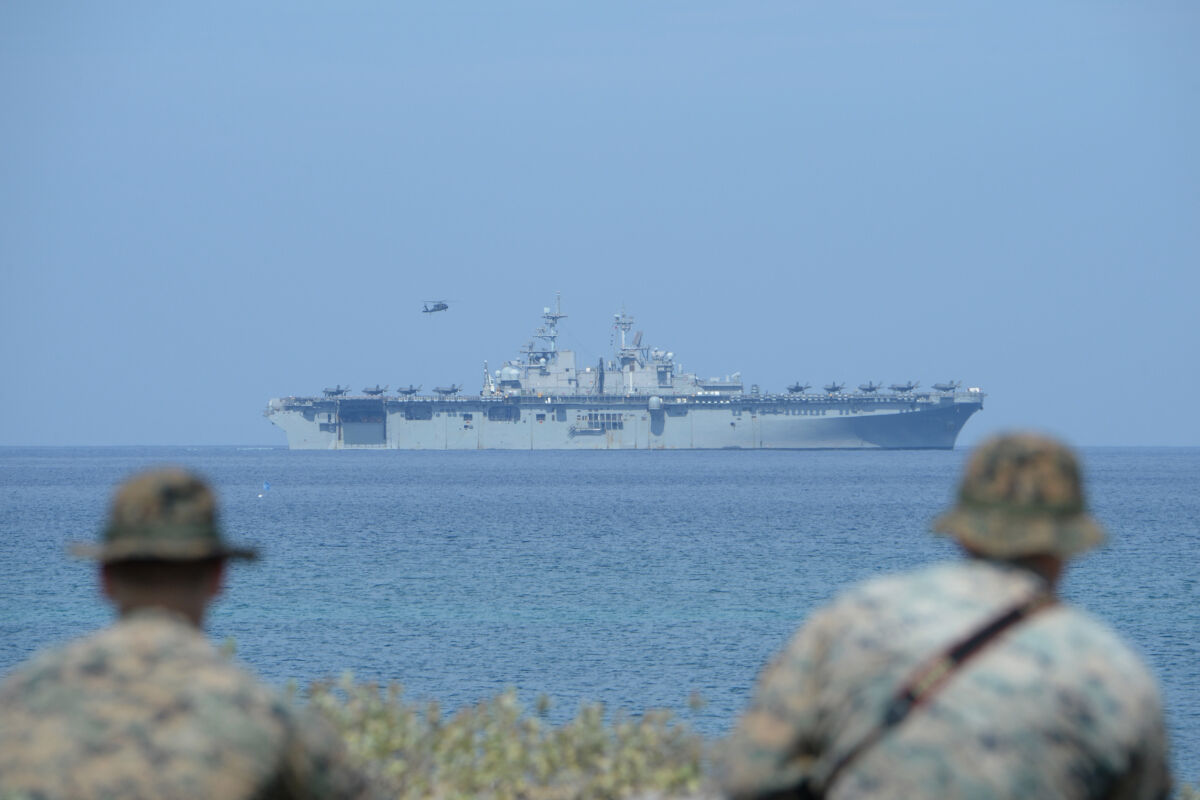
Fuerzas navales estadounidenses en en un ejercicio en Filipinas. AFP
The geopolitical effects of Trump’s international political upheaval are debatable but unpredictable. It is also uncertain how they will impact the power projection of the United States, particularly in the Asia-Pacific region, following a series of geopolitical decisions, including Trump’s so-called “betrayal” of Ukraine and the conditioning of defense for Japan and Taiwan, undermining its tradition of defending global democracy. According to some experts, we are facing a “second cold war” with the Pacific as the new iron curtain and Taipei at its epicenter.
Despite Trump’s efforts to limit Beijing’s influence, his actions generate uncertainty and a loss of trust in Washington. The suspension of tariffs is not a guarantee for his allies following the hostility of the Trump Administration. This hostility is being exploited by China to build political bridges in the Asia-Pacific, despite the opposition that its militaristic policy in the region evokes among neighboring countries.
Recently, China inaugurated the Ream port in Cambodia, which could serve dual military-civilian purposes. Beijing has also created artificial islands in the South China Sea, conducted military exercises around Taiwan, announced its capability to cut undersea cables, and strengthened economic alliances with its neighbors (including historical rivals like Japan and South Korea), presenting itself as a friendly alternative to U.S. measures.
Trump’s strategy has two seemingly incompatible faces. On one hand, the idea of “America First,” an isolationist proposal that leaves the rest of the world bewildered; and on the other, the idea of dominating the international stage and isolating China, albeit without entering into direct conflict.
In response, Beijing warns that there is no “turning back” and responds in kind with the same political language: tariffs, threats, and prioritizing security, as evidenced by its recent white paper on national security.
This new scenario demonstrates that the world has changed and that geopolitics and power will prevail over the cooperation and global interconnection that characterized the first two decades of the century. All of this conditions the future of Taiwan, whose democracy could fall into the hands of the Chinese dictatorship. Such a loss would signify the end of U.S. control over the Pacific.
The geopolitical framework that took nearly a century to build would be considerably dismantled: its bases in Japan, its alliances with Australia and the Philippines, its bases in Guam, and even Diego Garcia. This is without mentioning the economic implications of a blockade on maritime transit, which Rhodium Group estimates at two trillion dollars.
Experts like historian Niall Ferguson have been openly critical of Trump, who, despite presenting himself as a reconciler seeking to correct Biden’s mistakes, faces a China that may have already won the race and only needs to decide when to make its move against Taipei. Despite this assessment, it is uncertain whether China has the real capacity to seize the island, and if it did, it would come at a disproportionately high cost.
In theory, Taiwan has not yet been abandoned. This is evidenced by rumors of high-level conversations between Taipei officials and members of an American delegation, low-profile visits, and Taiwan’s statements of not responding to Trump’s tariffs.
And what about the rest of the regional allies? Japan, which in the 1980s had its own trade war with tariffs of 100% during Reagan’s administration, has increased its military capacity and its institutional defense tools, in addition to repeatedly demonstrating its commitment and friendship with Taiwan. At the same time, it is a military ally of the United States, part of the American nuclear umbrella, and is on the front line of containment against China, Russia, and North Korea, so its strategic importance cannot be overlooked.
In this context, U.S. policies, which also economically impact Japan, place the Japanese nation in a complicated position. For its part, Australia, which also refused to respond to U.S. tariffs and maintains a cautious attitude toward China, recently faced a strong controversy regarding the operating rights of the Darwin Port, which would be under a Chinese company for 99 years. This episode has brought American interests in the region to the forefront of debate.
Therefore, the key to avoiding an irreversible loss of American influence in the region lies in a strategic reevaluation that involves acting with greater diplomacy and long-term vision. If the United States continues down a path of foreign policy based on impositions and confrontations, it may paradoxically end up being the cause of its own exclusion from a constantly metamorphosing Asia-Pacific.
Sascha Hannig, international analyst specializing in technology and the Asia-Pacific, and contributor to Análisis Sínico
May 30, 2025
*Originally published in Clarín and republished by AthenaLab with the author’s permission.