COLUMN | Quo Vadis Chilean Army?
This article was translated automatically and may contain differences from the original. For reference, read the original.
- por Richard Kouyoumdjian
- Columnas
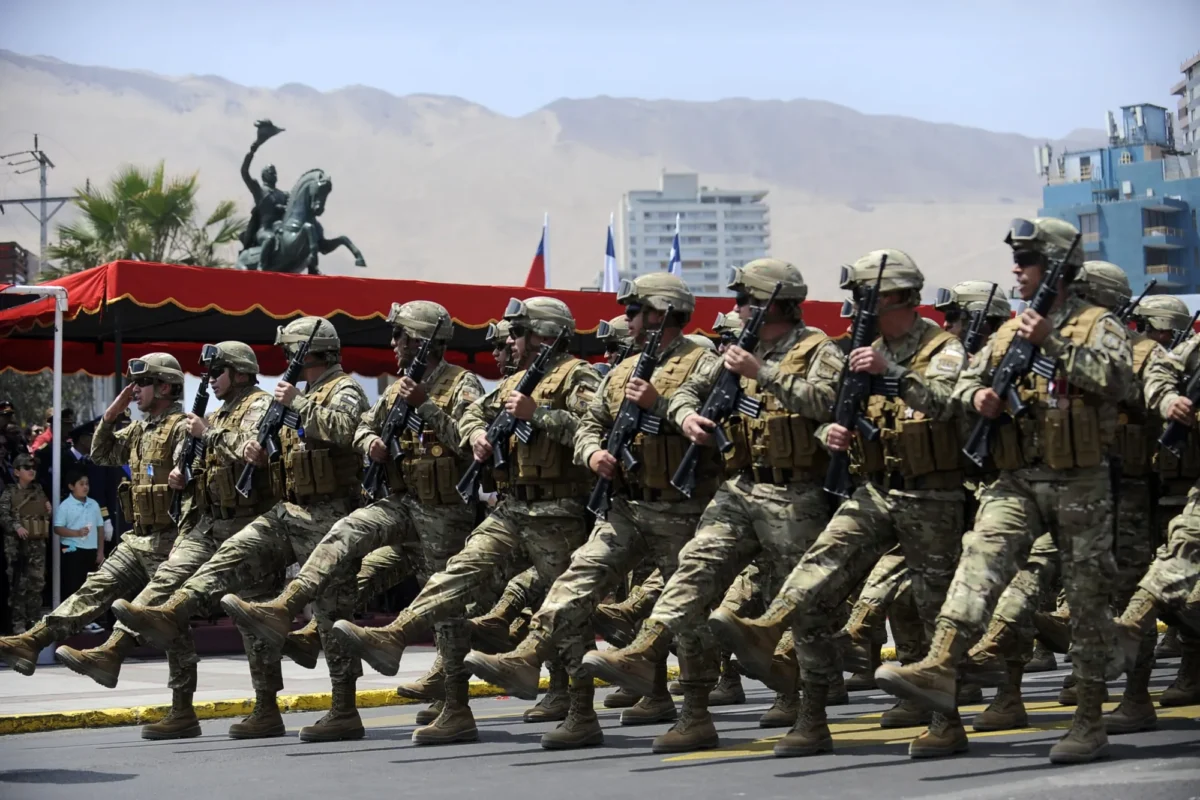
The Army is affected by the same budget cuts impacting other institutions of National Defense: salaries and general expenses.
Our glorious army, soon to celebrate 215 years, always victorious and never defeated, which successfully fought the wars of independence, which alongside San Martin’s Army liberated Peru, which subsequently defeated Peru and Bolivia on more than one occasion, and was key in convincing Argentina that invading us in 1978 was not a good idea, which trains daily to ensure sovereignty and protect national territory, and which has been deployed for over five years in states of disaster and emergency, is not at its best moment after the institution itself recently detected and reported non-commissioned officers involved in drug trafficking activities.
Clearly, the issue of traitors, a term used by the commander in chief to describe the seven detained for participating in the transportation of drugs from the north to central Chile, has taken over the institution’s agenda with the Ministry of Defense and the government.
Understanding the importance of the drug issue and its impacts on our army, its morale, and above all, on the institutional mood and the large military family, there are issues that, in my opinion, are more important, urgent, and critical when viewing the Chilean Army as an institution preparing for the defense of Chile and its interests, and more specifically for war, to be lethal, to generate respect, and to provide the assurance that if Chile is attacked, whether by state or non-state actors, those who dare to do so will pay dearly, very dearly.
The important, critical, and urgent issues that concern us beyond the drug problem, to which I refer, are:
1. The Army is affected by the same budget cuts impacting other institutions of National Defense, which primarily occur in subtitles 21 and 22, namely salaries and general expenses, with the obvious implications this has for personnel, military training, and equipment maintenance, an issue that, if not corrected in a timely manner for the 2026 budget, we will pay dearly for in the future and in the immediate term.
2. They are being asked to be deployed on the borders with Peru and Bolivia, while simultaneously maintaining a significant contingent in the Southern Macrozone, all of which implies troop needs beyond those currently deployed, as a deployment includes those in pre-deployment preparation and those returning for rest and retraining, all within an army prepared for war and not for internal security tasks, which is low in personnel and high in technology, exactly the opposite of what we had in the 20th century, which had regiments in almost every city in Chile and at a time when it was constitutionally part of the public force, a role eliminated by the 1980 constitution, leaving it only for exceptional circumstances, something the government and Congress seem not to understand.
3. In relation to the previous point, and beyond what is correct from a constitutional perspective, the issue of the type of personnel in the Chilean Army is an important matter. It is different to equip an army for modern wars like those observed in Ukraine or those involving Israel, than to have it as a scarecrow in the provinces of Malleco and Cautín, or in support roles for the police on the northern and northeastern borders. Modern warfare requires technological and digital military personnel, while internal security requires military troops trained to be part of the public force facing illegal immigrants, transnational criminals, and drug traffickers. Two very different things, but not unlike what other armies have had to face, as was the case with the United States Army, which had to transition from being prepared for wars with the Soviet Union to being deployed in the wars in Iraq and Afghanistan, and now back to being prepared to face Russia, China, North Korea, and Iran.
4. It is clear that we must define what type of army we need, with the implications this has for both personnel and equipment, but in the immediate term, we must address the urgency we have with the current personnel, where I will not provide exact figures for confidentiality, but we could say that we have only 2,000 of the approximately 7,000 professional soldiers authorized in the force structure. Professional troops are conscripted soldiers who stay a few more years in the Army, obviously under different conditions, but with the advantage of already being trained. On the other hand, this year and in previous years, the intake of young men and women has been less than 5,000 per year, far from the numbers of the past, where we could have more than 10,000 annually. With these numbers, it is difficult to maintain a deployed army in the south and north without affecting those in training schools preparing to be part of an army capable of defending territory, sovereignty, and national interests.
5. Changing the subject, and looking at the lessons learned from modern wars, it is unclear to me that national defense, and particularly the Chilean Army, is equipped to deploy, among other things, massive drones, missiles, and guided munitions, as well as to properly face such threats. We have an army with superlative capabilities in both personnel and material when compared to our neighbors and potential threats, but these capabilities can quickly be surpassed if we do not immediately address the weaknesses we may have when compared to the equipment of armies like those of Israel or Ukraine.
Experts such as General Griffiths or Colonel Masalleras from AthenaLab have extensively discussed what a modern army should be and what modern warfare consists of, as well as the need for a more prepared Chilean Army to take charge of the northern and northeastern borders. By prepared, I mean personnel, organization, equipment, facilities, training, and clarity on legal aspects, as well as the need to manage the borders jointly, utilizing the available command and control capabilities of the Northern Joint Command that reports to EMCO.
To this Chilean Army, to our army that is always victorious and never defeated, we owe clarity in what we expect from them, their mission areas, as well as the budget they need to operate and continue being a modern and lethal combat force, but at the same time, if we want them back in the public force as they were under the 1925 constitution, then we also owe them the necessary personnel, along with the consequent training, capabilities, and legal support that those functions require. It is supposed that Carabineros de Chile is constitutionally responsible for providing and guaranteeing security and public order in the territory of the republic, but if that is no longer the case, and the armed forces and the Chilean Army in particular will be needed, then let us be honest and not send them to pull the chestnuts out of the fire without soldiers, without equipment, without training, without legal support, and with few intelligence capabilities to indicate the risks of where we ask them to operate, and counterintelligence to protect them from those who wish to corrupt and betray their comrades in arms, and the good name of those who preceded them.
The future Chilean Army requires that we also seek to resolve the problems of the past. Therefore, I refer to releasing from Punta Peuco, Colina 1, and other prisons the military personnel from 1973 who are ill, those who are elderly, and those who are unjustly imprisoned. We need to demonstrate humanity and gratitude towards them, something that the soldiers of the present and future observe, and will take into consideration the day their country calls them to serve.