COLUMN | Chile, China, and the United States of America
This article was translated automatically and may contain differences from the original. For reference, read the original.
- por Richard Kouyoumdjian
- Columnas
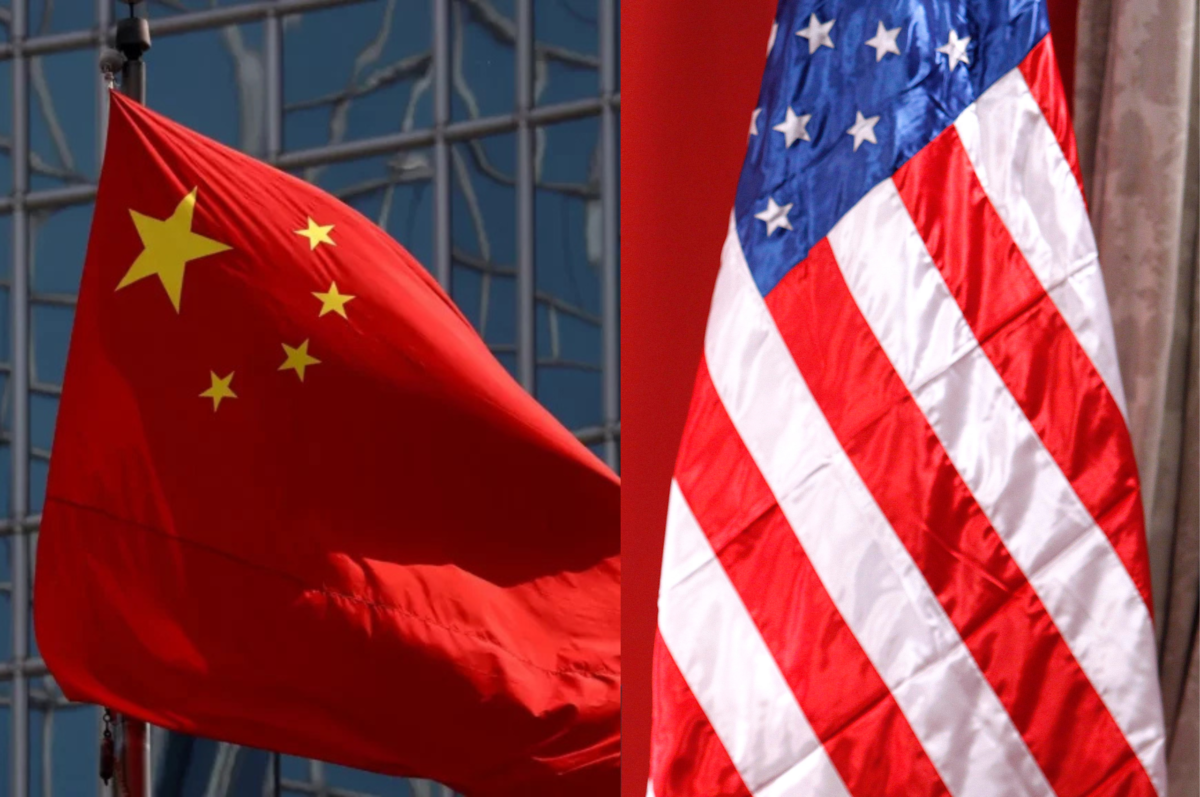
Starting in 2026, we will not only have good economic relations with China but also comprehensive relations with the United States, which is our second-largest trading partner and one with whom we share values such as democracy and unwavering respect for human rights.
Having passed the elections on Sunday, December 14, where there were no surprises and everything occurred as predicted by pollsters, and with an elected President set to assume leadership in Chile on March 11, 2026, it is time to address one of the most important issues we face from a national security perspective,, which is none other than the relationship with the two global powers, the United States of America and the People’s Republic of China.
Clearly, the relationship with the United States was neglected and mistreated during President Boric’s administration,, an administration where foreign relations were managed more in line with the personal interests, preferences, and ideologies of the President rather than necessarily seeking what was best for the national interest.
The good news is that on Monday the 15th, congratulatory messages were received from President Trump, Secretary of State Rubio,Undersecretary Landau, and newly appointed Ambassador Judd, all expressing their interest in working with the new government, something that is obviously of interest to the elected President, who made this known to them.
During the four years of the Broad Front (FA) government, relations at the government level were not good, but they were functional.Economic relations, those at the university level, and between the Armed Forces and police maintained their course, based on years of trust and mutual knowledge that extend beyond the current administrations, providing a foundation from which to act and quickly restore the historical relationship we have had.
In the meantime, other countries in the region, such as our neighbors Peru and Argentina, enjoy excellent relations with the United States. The former is in the process of becoming a non-NATO ally, and the latter has a high level of alignment with President Trump’s government, which has allowed them access to financial conditions that have aided in their economic recovery and restored their military equipment levels across all three branches of their Armed Forces.
Evidently, the issue of tariffs caused concern in the region. Chile did not fare too badly, and our overall economic relationship was not significantly impacted, although there were some damages in industries already stressed by their global realities, such as the wine industry.
What is generating interest is the new national security strategy published at the end of November 2025, which places a strong emphasis on the Western Hemisphere and particularly on the Americas,, in what some have called the return of the Monroe Doctrine. The truth is that the northern country never neglected Latin America; it simply increased its interest from the perspective of its national security.
U.S. security is affected by several elements, including unfriendly nuclear powers, countries and organizations that are declared enemies, such as Hezbollah or Iran,, especially if they are located at short distances, as in Venezuela or Cuba,, or the drug cartels that seek to smuggle drugs and illegal immigration.
That is why it is not surprising to see the actions being taken regarding Venezuela and those that may be executed against Colombian cartels, all actions that make a lot of sense from a national security perspective. They are not seeking regime change or to take over countries. What they seek is to eliminate the capacity of drug traffickers to smuggle drugs into their country. This is obvious and natural, given that drugs have killed more American citizens than all the wars in which they have participated.
Chile is not a departure point for drugs heading to the northern country, but it is a country close to China, and as long as that relationship remains strictly commercial, there are no problems. However, if it transforms into something more, a reaction from the Americans can be expected. They have been clear that they do not want Chinese influence in areas beyond the trade of goods and services. They do not want to see investments in infrastructure, electricity generation and transmission, rare minerals, telecommunications, data processing and transport, and especially in military and strategic matters that could provide a position from which to affect them, as is currently the case with Venezuela and certain countries in the Caribbean and Central America.
In parallel to the publication of the American national security strategy, the Chinese published a document in which they update and clarify their expectations regarding relations with Latin American countries,, which could be interpreted as a desire to advance beyond strictly commercial relations, something they do not need to pursue since this continent is outside their most immediate area of influence and does not affect their national security. It seems they are doing this to annoy the Americans.
Americans not only want to be secure in their own continent but also to prevent China from effectively becoming a global power with capabilities similar to theirs, and thus potentially jeopardizing their existence. Preventing them from taking Taiwan or becoming the dominant power in Asia are actions that align with this direction. For now, American support for Japan, South Korea, the Philippines, and Australia is assured. Russia and Iran do not hold the same importance as long as they do not engage in foolishness or adopt dangerous nuclear postures, so they will not expend much effort in supporting Europeans or Ukrainians.
Chile, as former Foreign Minister Moreno recently stated, president of the Chilean Committee on Foreign Relations, must seek not to get involved and fall into the China-U.S. struggle. This is easy to say and much harder to achieve when one does not want to feel insecure due to Chinese presence in Chile beyond commercial interests, while the other seeks to deepen the relationship, something they do not need to do from the perspective of their own security, and that only makes sense if they want to annoy or provoke North America.
We will see how things develop, but it is clear that starting in 2026, we will not only have good economic relations with China but also comprehensive relations with the United States, which is our second-largest trading partner and one with whom we share values such as democracy, unwavering respect for human rights, individual freedom, the concept of family, and the principles of the Christian Western society.In conclusion,
Chile needs China as much as they need us. If they are currently purchasing from Chile, it is for a reason, and that reason will not disappear.