COLUMN | The Real Challenges in Defense
This article was translated automatically and may contain differences from the original. For reference, read the original.
- por John Griffiths & Marcelo Masalleras
- Columnas
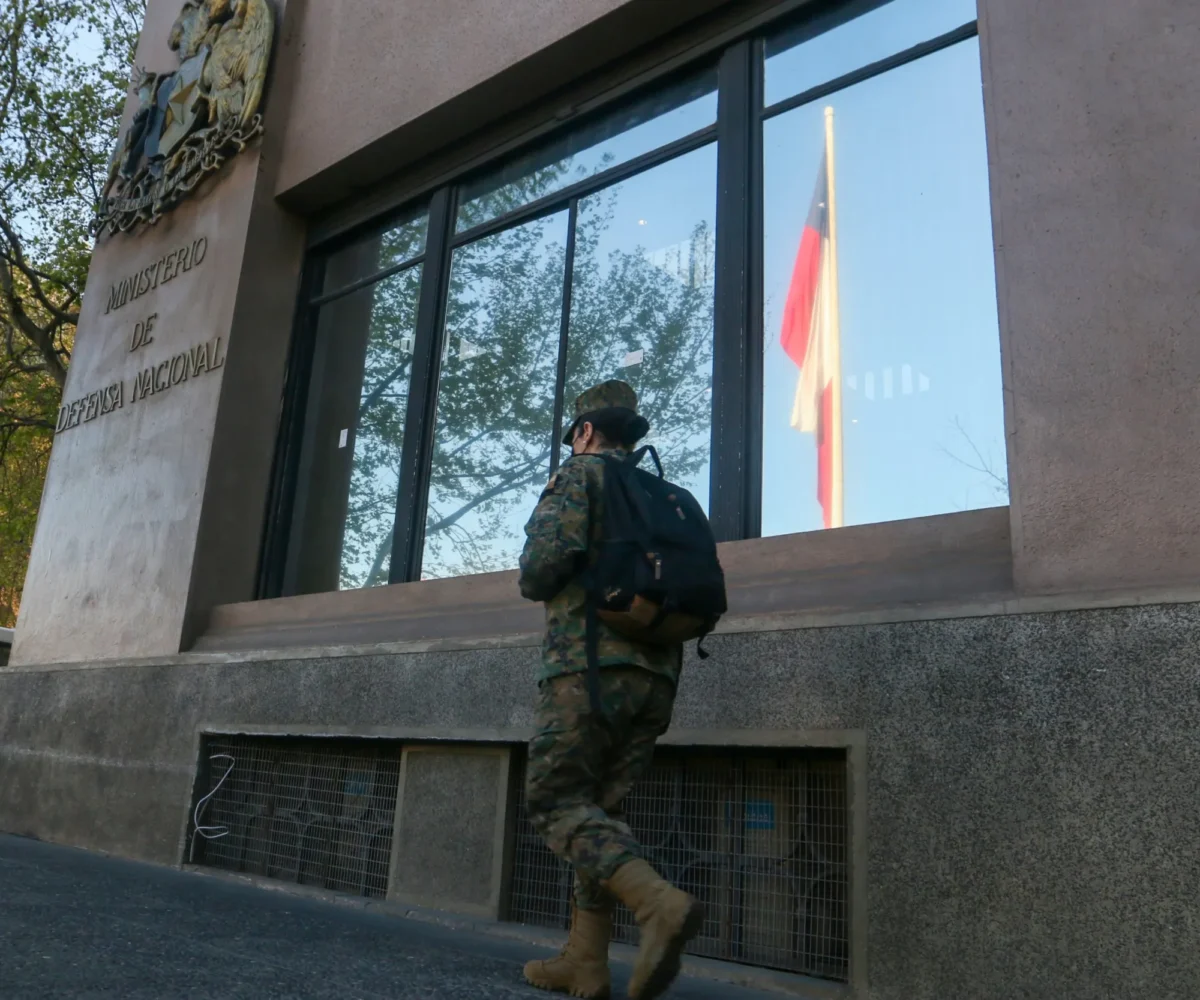
The defense function is of utmost concern and must be addressed with professionalism, deep knowledge, and a strong sense of patriotism.
In a recent publication in this media outlet, Dr. Loreto Correa, a faculty member at the National Academy of Political and Strategic Studies, titled “Defense Policy in Chile: Diagnosis Without Strategy”, raises a series of observations and comments. First, we must commend Dr. Correa for highlighting a very important issue for national defense, which is the definition of an updated and modern sectoral policy. We can only agree with her when she expresses her concern upon seeing that the policy withdrawn from the General Comptroller’s Office was lost in complementary matters, without addressing crucial definitions. It is also timely to emphasize the need to think about defense with a strategic vision, in the medium and long term. However, within her arguments, she refers to a publication by AthenaLab titled “Old Challenges of National Security and Defense for New Authorities”. Regarding this, we find it appropriate to make a couple of comments to contribute to the discussion on these matters.
On one hand, Professor Correa warns, by way of comparison, that the aforementioned text “written in outline form” would only limit itself to listing threats “but does not precisely develop how these translate into concrete strategic scenarios for the country, nor does it clearly define what type of military capabilities” or other characteristics are needed. In this regard, it is pertinent to clarify two aspects. First, the objective of the AthenaLab document is not what she infers; rather, as the title suggests, it aims to present general challenges for the defense function of a new administration, far from intending to be a document that identifies threats, evaluates risks, and defines capabilities. It is difficult to fulfill the challenge posed by the academic in an article that does not exceed 1,400 words —which does not even mention the Defense Policy—. Second, the AthenaLab document does not enumerate a list of threats; it only mentions a set of phenomena affecting the State, among which there are not only threats but also vulnerabilities and weaknesses. What Dr. Correa demands would be characteristic of a much more extensive and profound strategic reflection process.
In summary, we regret that our document has been misinterpreted, as it never intended to be a political strategic analysis, nor an examination of the defense policy with which it is being compared, much less an assessment of threats; it only aimed to contribute —not in outline form as suggested, far from our purpose— to the discussion on the general challenges of defense. Attempting to compare or even relate two documents of different nature and purpose ends up being futile.
On the other hand, it is worth taking this opportunity to reiterate some points that we at this think tank have insisted on for several years. Caution must be exercised in the use of terms. Threats and risks are closely related but are not the same, so it is not advisable to use them as synonyms. Similarly, one should avoid confusing concepts such as defense strategy and defense policy, as both are valuable instruments but serve different purposes. While the latter should provide guidance and priorities for the defense function derived —ideally— from a national security strategy, the former defines how available resources will be employed to achieve the defined objectives.
We highlight that Professor Correa acknowledges the need for a national strategy; however, it is noteworthy that she does not simultaneously identify the need for a structure to support it, namely, a national security architecture that currently does not exist (we invite you to review the proposal “ General Considerations for a National Security Architecture of Chile” by AthenaLab, published in January 2026). Likewise, she assigns to this national strategy the possibility “to translate risks into real scenarios and scenarios into concrete capabilities,” whereas these challenges are distinct and must be addressed by different levels of strategic leadership: political-strategic (characteristic of grand strategy-national level) and military strategic (characteristic of defense-sectoral).
Another aspect that stands out is that Dr. Correa cites, by way of reference, the purported “National Security and Defense Strategy” presented in 2012. This is noteworthy since the mentioned document, while an interesting initiative, mixed two distinct levels (national security and national defense) which, although closely related, are not equivalent. In any serious and modern national planning process, the national security strategy always comes first, followed by sectoral strategies, such as that of defense. Mixing both areas is a methodological error since defense policy or strategy is subordinate to national-level strategies.
Finally, while the rhetorical sense of the expression “strategic void” could be understood, it is difficult to fully comprehend. This is because it must be recognized that National Defense has legal authorities that direct it permanently; Chile has a current Defense Policy, published in 2020, which certainly requires updating; we have a defense structure that ensures compliance with the missions assigned in the Political Constitution of the Republic and other legal bodies; thus, such a void is not evident.
However, what is recognized is that defense faces serious budgetary problems in a scenario of increasing demand for tasks from the Armed Forces; which adds to the concerning advance in the obsolescence of some strategic weapon systems; the real challenge represented by recruitment, development, and retention of talent; as well as the necessary incorporation of evident experiences in the use of new technologies and operational employment. These are the types of issues of utmost interest, the real challenges for the function that must be incorporated, from our perspective, into the analysis of the new administration.
Finally, it is worth thanking and seizing this great opportunity provided by Dr. Loreto Correa, to express that, as she recognizes, the defense function is of utmost concern and must be addressed with professionalism, deep knowledge, and a strong sense of patriotism. In these processes, the National Academy of Political and Strategic Studies has a key role in which it can convene academic centers and the defense community for an informed and responsible discussion in support of the review and update that the new government will undertake.
*John Griffiths – Executive Director of AthenaLab.
*Marcelo Masalleras – Head of Security and Defense, AthenaLab.