The annoyance and discomfort of the Armed Forces with the government regarding the proposed new state of emergency
This article was translated automatically and may contain differences from the original. For reference, read the original.
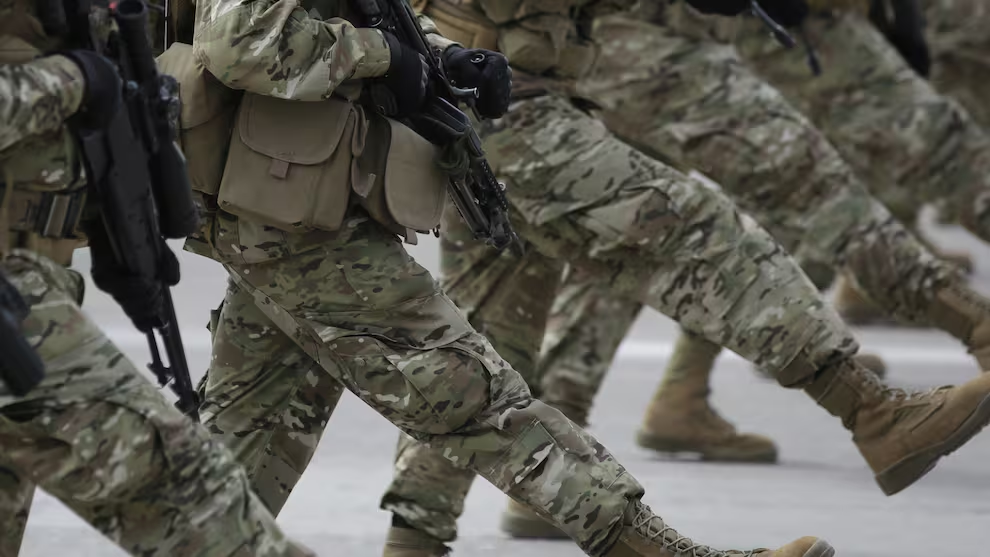
The constitutional security reform presented by Kast was not well received within the military institutions. They claim they were neither consulted nor informed in advance; they are surprised by the limited involvement of Minister Barros in the development of the project, and there is increasing resistance to participating in public security tasks under police command.
State of emergency. This is the term that has been repeatedly used in recent years due to security issues. It was discussed during the administration of former President Sebastián Piñera regarding the Southern Macrozone, on several occasions during the administration of former President Gabriel Boric, and now, once again, in the government of President José Antonio Kast.
Last week, following the announcement of the Agenda Against Organized Crime and Terrorism (ACOT) by the Executive, the possibility of involving the Armed Forces (FF.AA.) in tasks that are not their own, such as public order, has been raised again.
This situation has generated annoyance, discomfort, and concern within the Army, Navy, and Air Force, as if it were déjà vu, they are once again being called upon for potential deployments in urban areas.
While during Piñera’s administration there were advances in deployments in the Southern Macrozone, and during Boric’s term in the north, with discussions on critical infrastructure, this time the case is different. Kast proposes a constitutional reform that would allow the deployment of the FF.AA. in neighborhoods and, furthermore, place them under police command, an idea that has provoked a negative reaction within military ranks.
A distant announcement
A distant announcement
Beyond the substance, when inquiring about the project announced by the Executive, the main concern within military leadership comes from the manner in which the ACOT announcement was made. Military sources indicate that the prevailing sentiment is that their opinions have not been considered in the initiative, despite the prominent role they would have, which generates concern.
In addition to that, there have also been objections regarding how the announcement was made. According to multiple sources, the project was not only not previously socialized with the FF.AA. and Defense, but they were not even informed of the announcement, which left them completely excluded. “We learned about the project, but through the press,” a high-ranking military source quipped.
The absence of the Ministry of Defense in the development of the reform has also drawn attention. The same sources suggest that everything has been led solely by the Minister of Security, Martín Arrau, and they have not seen Minister of Defense, Fernando Barros, present.
Although Minister Barros participated ceremonially in the signing of the project, the prevailing sentiment within the FF.AA. is that he has been seen as rather excluded from the process. For this reason, and after returning from a trip to Panama, it is expected that senior leaders will be able to discuss the reform with him in more detail.
Arrau was asked this Friday on Radio Infinita about the annoyance within the FF.AA. The Security Minister firmly stated that “all public officials have a duty to fulfill their functions, especially those who are non-deliberative and must obey civil authority.”
The list of objections
The list of objections
When asked why there is opposition to participating in states of emergency for public security reasons, the list of objections within military institutions is long.
The most frequently mentioned concern is that there is no training or preparation to deploy, for example, in neighborhoods or communities. Additionally, they point to a lack of a legal framework to safeguard and regulate actions. While critical infrastructure will soon be dispatched, that project was designed to protect locations, not to combat organized crime.
Operational issues are also raised. Conducting deployments of this nature involves logistical work—food, technological support, among others—that is difficult to cover, whether due to resources or personnel shortages. This is even more challenging considering the current deployments in the Northern and Southern Macrozones, which are already operating with limited personnel and significant financial stress.
Along with that, it is noted that the institutions also lack the necessary weapons to deploy in urban areas, as their firepower is greater, which could cause collateral damage. An officer illustrates this: “Firing a rifle in a community could not only kill the criminal but could even penetrate houses.” For this reason, they request a gradual approach to armament.
Moreover, it is stated that a deployment for security purposes is not appropriate for the FF.AA., which would distort and neglect the inherent role of the institutions, but also disincentivize personnel, who would take on unrelated functions for the same pay as currently, and significantly less than that of police personnel.
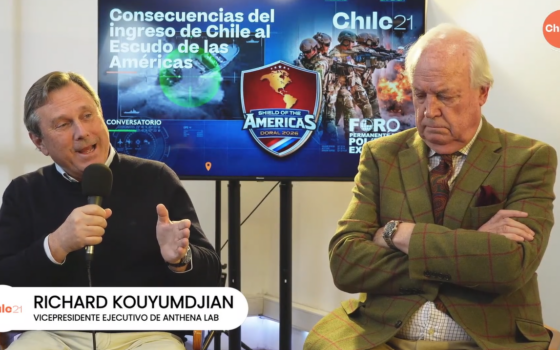
According to the director of studies at Athenalab and retired Army Colonel, Marcelo Masalleras, “the problem is that what they are proposing is to use the military as police, and it is not the nature of the military to be police; the nature of the military is to be military. The doctrinal conception of employing a military force is to use all the force. So, if the problem is police-related, increase the police. If you employ the military in police tasks, they will stop performing defense tasks.”
Despite the objections, there is indeed a willingness within military institutions to collaborate with coverage, checkpoints, or even intelligence. They assert that all of this can be achieved under current legislation without the need for a constitutional reform.
A police command?
While further details regarding the implementation of the possible new state of emergency are still unknown, one of the announcements that generated the most concern within the institutions is that under the new regulation, the “chief of National Defense” could be a police officer, a role that has historically been held by the FF.AA.
Being under the direction of the police, they argue in private, distorts and undermines the very objective of a state of emergency: for the FF.AA. to take charge of an exceptional situation.
This is also the belief of Masalleras, who argues that this possibility is not understood, given that police and military are “organizations of different natures.” He adds, “If the FF.AA. are to be employed, it is because the police forces have already been overwhelmed. How can you put in charge someone who has already been overwhelmed?”.