The relationship between Chile and Latin Americans with the United States of America
This article was translated automatically and may contain differences from the original. For reference, read the original.
With the United States of America, apart from a community of values and principles, we already have a long history of cooperation in military and public security aspects.
At the end of November 2025, the United States of America published an update of its National Security Strategy. Shortly thereafter, the respective documents from the Department of Defense and the Department of State followed. Both are consistent and aligned with the overarching directive.
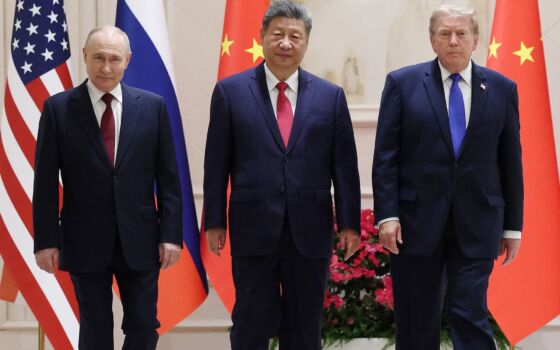
Basically, what the National Security Strategy does is indicate that the area of influence of the United States is the Western Hemisphere, which should be understood as the entirety of the Americas plus Greenland. Additionally, it indicates that Russia’s area of influence corresponds to what was the former Soviet Union and that China is the dominant power in Asia. It does not mention Europeans, nor Africa, the Middle East, or India. For some, this may seem like a return to isolationism, but I see it more as a reluctance to resolve the world’s problems without receiving appropriate compensation.
The strategic logic of the National Security Strategy is that of an island nation. They seek to isolate themselves from potential enemies. The Atlantic and Pacific Oceans assist them in this regard. The frozen Arctic isolated them from above, but that is at risk, which is why they are interested in Greenland and Canada. To the south, they have Latin America, a part of the world that will never be a military threat, but is a source of problems that they traditionally find complex to manage.
Even before the publication of President Trump’s strategy, it was possible to see that there was a change in direction, one that had been anticipated during the political campaign that brought him to power at the end of 2024. In September 2025, Operation “Southern Lance” began with the objective of destroying drug boats in the Caribbean Sea and in the Pacific waters off Central America. This was followed by the operation to extract Nicolas Maduro in January 2026. Actions consistent with the national security strategy.
The American National Security Strategy for Latin America aims to address drug trafficking that targets their country, illegal immigration seeking to reach their lands, and Chinese strategic investments in the region. The strategy does not specify what is understood by Chinese strategic risk for these purposes, but it can be understood, among other things, to relate to critical minerals for the development of the digital economy and artificial intelligence (copper, lithium, and rare earths), as well as data processing, storage, and transmission. Evidence of this in the specific case of Chile includes the agreements that the United States has sought regarding rare earths, as well as the discomfort they have shown with initiatives known as the Chinese Cable, which aimed to connect Valparaíso directly with Shanghai without Chilean data control mechanisms. North America seeks to prevent data related to them from ending up in Chinese hands, as is the case with what they send us for processing the Visa Waiver.
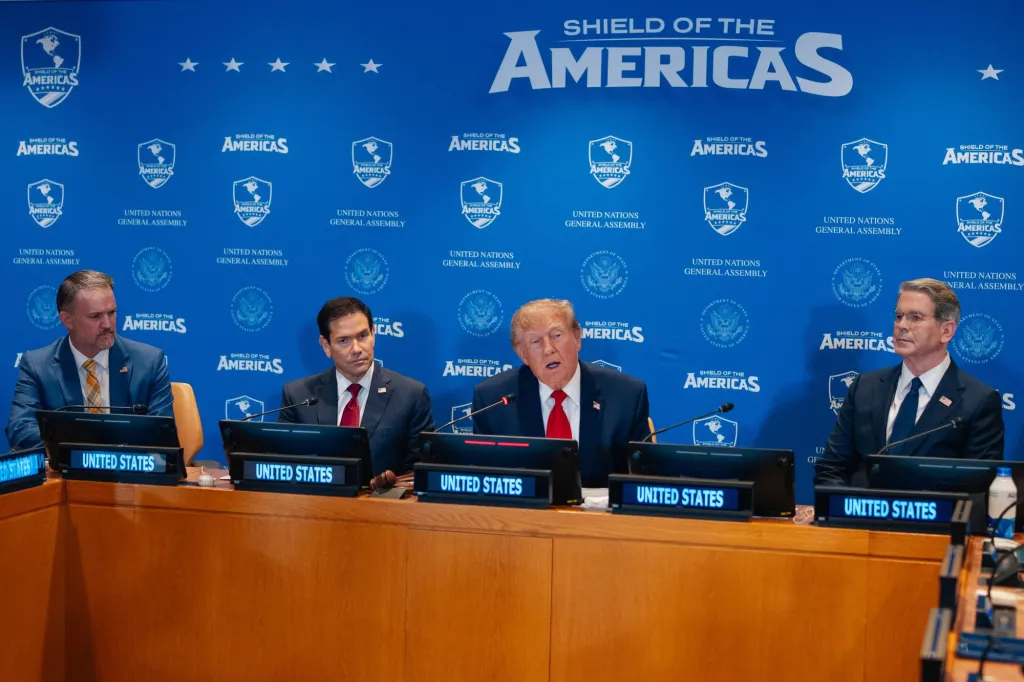
In March 2026, a meeting of the Shield of the Americas was held in Miami, as well as the first version of the A3C (Americas Counter Cartel Coalition). The former is the political, economic, security, and multilateral coordination agreement that seeks to shape the United States’ National Security Strategy in the Americas, but excluding Mexico and Canada, neighboring countries with which they have direct relations. Throughout the year, the Shield of the Americas has taken shape, and recently, taking advantage of the United Nations General Assembly, it was communicated in greater detail what it includes. For more details, see this link.
It is important to highlight the main paragraph of the statement from September 22, 2026, which states: “We, the Heads of State and Government participating in the Shield of the Americas, jointly declare our intention to strengthen the resilience of the Western Hemisphere through the three pillars of the Shield of the Americas as follows: Economic, security, and multilateral coordination.”
The A3C, on the other hand, is the agreement that seeks to address the war against cartels, drug trafficking organizations, and organized crime that plague the Americas. This generates a bit more noise since it is where force must be applied. The United States has declared criminal organizations as narco-terrorists, a classification that allows them to use the force of their Southern Command against them, which they have already been doing when they eliminate drug boats or removed Maduro from Venezuela.
The key meeting of the A3C is set to take place in Miami in November 2026. On this occasion, plans will be reviewed that will be implemented to combat organized crime. Evidently, not all regions of the Americas face the same situation. What occurs in Ecuador, Colombia, Mexico, Central America, and the Caribbean is very different from what happens in the Southern Cone of South America, which is why Chile, Argentina, Peru, and Bolivia, with the participation of Ecuador, Paraguay, and Uruguay, agreed at the end of May to a regional coordination agreement against drug trafficking and the cartels operating in the southern part of the Americas. It is very likely that the United States will assist with logistics and intelligence in the south while concentrating its main efforts in its security area, which is the Caribbean, Central America, and northern South America. If the United States is successful in the north, it is very possible that drug trafficking will shift its operations to Peru and Bolivia, as it did when the Colombia Plan was implemented.
In the remainder of the year, we will see how these agreements take shape and the real political will of the countries in the region to be part of the Shield and its operational arm. For now, it is clear that the United States’ strategy in the region is here to stay and will not change as long as they perceive that the risks posed by drug trafficking, illegal immigration, and Chinese influence affecting their national security remain. They do not want China in the Americas. They only want it in Asia as long as it does not alter key strategic aspects such as chip production in Taiwan and respects their traditional allies in the area, such as Australia, New Zealand, Japan, South Korea, and the Philippines, countries they are willing to assist, but now without risking lives for them.
There was no possibility that Chile would oppose the Shield or the agreement against the cartels. If Bachelet and Boric oppose it, it is a clear indication that it is in our interest as a country, something that President Frei made clear in his column in El Mercurio of Santiago. We are talking about an agreement, not a treaty. It seeks to benefit us all; it does not impose what is not in our interest or what our legislations do not accept. Sovereignty is not at risk as some would like to portray to those whom President Trump does not favor.
With the United States of America, apart from a community of values and principles, we already have a long history of cooperation in military and public security aspects. Our relationship with the FBI and the DEA is longstanding, and we should soon have one with the Bureau of International Narcotics and Law Enforcement Affairs (INL) of the State Department, which will be established in Santiago. Everything adds up and helps achieve better economic and security objectives for Chileans.
Integrating into the Shield of the Americas does not jeopardize our fundamental economic relationship with China, a country that President Kast will visit in November. Regardless of what happens, we will continue exporting copper to China, where the main part of the refining of the red metal is located, and importing goods that its very efficient economy provides to us and the world. We have over 55 years of friendship that have proven to be of great value to both countries. Chile knows that both countries are of primary interest to its national interest.
RICHARD KOUYOUMDJIAN
Executive Vice President AthenaLab