On Strategic Equipment and National Defense Funding
This article was translated automatically and may contain differences from the original. For reference, read the original.
The balance of power in South America, and more specifically in the Southern Cone, requires a Chile with modern, effective, and above all, highly deterrent capabilities. This way, we can live in peace.
Much has been said in recent days about the strategic equipment needs of the Chilean Armed Forces. The press and television discuss almost daily the potential purchase of F-35s to replace the F-5s, as well as the needs of the Army and the Navy. This column aims to provide an explanation to non-specialists regarding the current situation and future needs.
First, by the end of September, the government must present to Congress the 2027 Budget Bill. This will give us some insight into what the Ministry of National Defense has in mind regarding the operational budget of the three institutions, plus that of the Joint Staff, as well as how they plan to address the issue of financing strategic capabilities, something that the Minister Fernando Barros indicated in his public report that had not been functioning correctly in the previous administration, which is why he informed about it and made the situation transparent to the public.
Conceptually, Chile is a country with negative political objectives; it does not seek or dream of anyone’s lands, seas, or airspace. We know what Chile is, what it includes, where it begins and ends, and what our national interests are, as well as what we must protect and defend. The success of Chile’s strategic posture is based on our ability to deter third parties from interfering with us, which implies having, among other things, relevant military capabilities.In this sense, history is on our side. Whenever we have been militarily weak, there are those who seek to take advantage of it.
With this in mind, how do I plan my capabilities? I do so either based on threats or in the absence of clarity regarding what those threats are, seeking to have capabilities that I know will be useful in a range of potential adverse scenarios that may arise, something that was very common at the end of the Cold War when it was unclear to many who they were facing, a situation that soon became clear, lasted a limited time, and has everyone now responding to the threats that have been revealed.
Historically, we spoke of the neighborhood hypothesis 3 (Argentina, Bolivia, and Peru), a hypothesis that lost strength for a long time because things in the region were going well, but which may be returning more recently, though not necessarily in the same form. I hold on to the idea that the balance of power in South America, and more specifically in the Southern Cone, requires a Chile with modern, effective, and above all, highly deterrent capabilities. This way, we can live in peace.
For us, whether we plan to have broad-spectrum strategic capabilities based on what we know works for us, or we plan based on possible regional threats plus those generated by the existence of transnational organized crime, the end result is not very different. We still need an Army capable of defending the territory, a Navy that protects our seas and maritime interests, and an Air Force that handles aerospace matters, all together ensuring our sovereignty and independence.
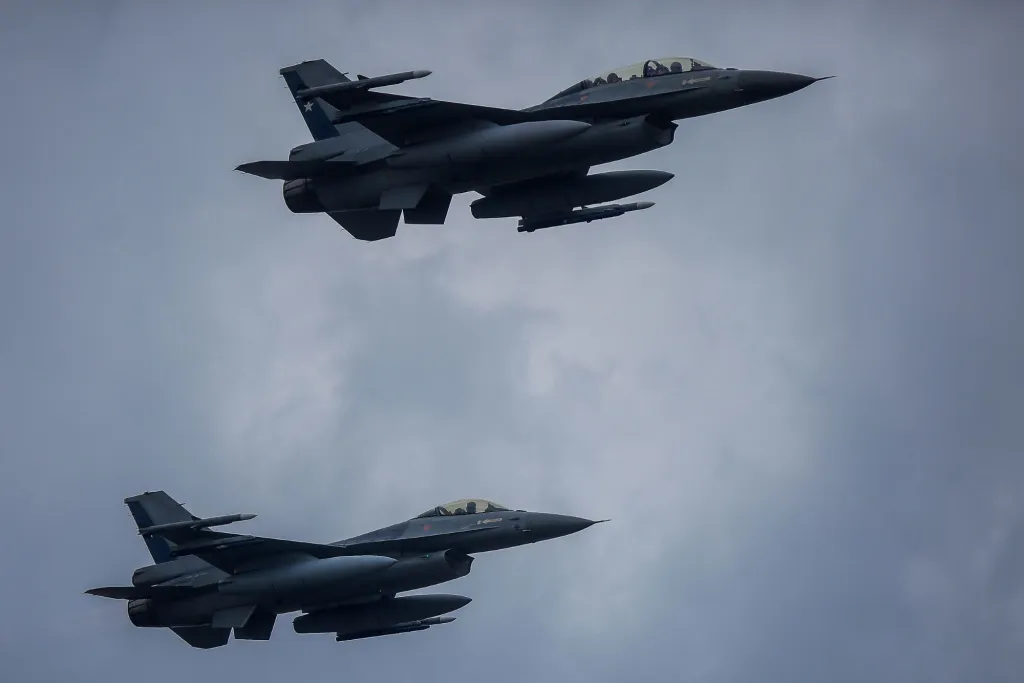
Evidently, the lessons learned from the war in Ukraine or the conflict in the Middle East are insights we must incorporate, but fundamentally, we still need a Air Force with F-16 type aircraft, which we must always ensure are at their maximum potential. The issue of replacing the F-5s is something we must address promptly. Regarding the Air Force, we basically have three alternatives: 1) Only enhance the approximately 46 F-16s that still have many flight hours left, 2) The above plus replace the F-5s with F-16s, whether new or used, bringing them to the same standards as existing ones if they are used, and 3) Option 1 plus a replacement of the F-5s with F-35As. I lean towards options 2 and 3, to which we must add investments in helicopters and transport, more air defense capabilities, and what exists in terms of in-flight refueling and AWACS.
I will not detail what the Army needs, as it was the subject of the previous column. I will only remind that it is not healthy to use the Army for internal security tasks, and if it must be done, it should only be very exceptional, something that has not been respected. The
Navy has a complex set of problems at hand. In the immediate term, it needs to promptly initiate or have a plan for the renewal of the eight frigates of the Squadron plus the two oldest submarines, complete the construction of the four logistical vessels, replace its two tankers, as well as invest in its maritime units, naval aviation, and the needs of the Marine Corps. The entire plan must be completed before 2040, and it will likely require bridge projects that provide us with used ships, submarines, and helicopters in good condition, such as the much-discussed Japanese ones, or material available in the United States. To conclude, we can have the best strategic equipment, but without adequate training, a budget to operate or fly, or without up-to-date maintenance or insufficient levels of ammunition, Chile’s strategic effectiveness can be seriously limited.
That is why it is so important that the Armed Forces are dedicated to their roles, that their operational budget allows them to ensure their availability and lethality at the levels that deterrence requires to be effective. The levels of announcement will be whatever is necessary; if it is for a week, then let it be so, but let it be so. Best of luck to the Minister of National Defense with the 2027 budget and the defense policy he is working on. He has already given us some ideas about his thoughts with his column in El Mercurio on Sunday, September 20,
“Chile: The Embrace That Is Missing.” RICHARD KOUYOUMDJIAN
Executive Vice President AthenaLab.