October 18: "After seven years, we are still left with almost the same questions and few or no answers."
This article was translated automatically and may contain differences from the original. For reference, read the original.
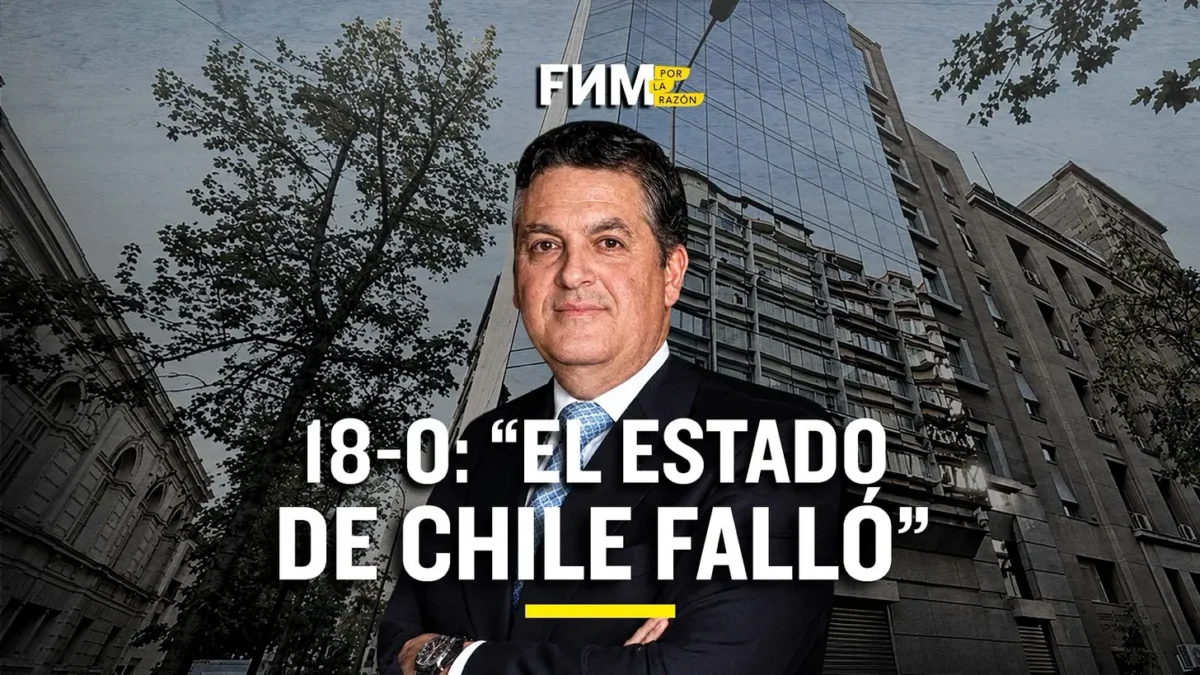
In light of October 18, 2019, the need to improve the State’s anticipatory capacity, strengthen the intelligence system, and move towards a permanent national security architecture has been emphasized. What do you believe was the main failure of the State during the events of October 18?
What occurred on October 18, 2019, and the events of the following months have been the subject of much discussion but little investigation and modest results. Events of this nature and magnitude do not have simple explanations or singular origins. We witnessed massive protests expressing widespread citizen discontent, unmet social demands, a lack of equity, and other unresolved issues. At the same time, we observed the use of extreme violence. This does not mean that both phenomena were directly connected, but rather that they coincided in places and moments. The events spread to several major cities in Chile, causing destruction of public infrastructure and private property, as well as loss of life.
Regarding the use of violence, many of us expected responses from the authorities, perhaps not immediate ones, but at least some insights explaining what happened. After seven years, we are still left with almost the same questions and few or no answers. What distinguished the events of October 2019 and the following months was the exceptional nature of the violence. To date, the origin of the violence has not been clarified, nor has it been proven to be organized; however, it has not been ruled out that it was orchestrated.
This is raised because there are groups that benefit from acting violently in pursuit of their objectives. On one hand, organized crime benefits from a weakened State and institutions, and having the police occupied with public order favors their business. On the other hand, radical anarchist groups have maintained a position of defiance against the State and the organizations that comprise it. There may also have been interests from other countries in weakening Chile, whether for ideological reasons or, primarily, because of what the country represents as a model of political and economic success in contrast to failed totalitarian projects in the Latin American region. Moreover, there were and continue to be national political actors who accept the use of violence as a means of action to achieve partisan objectives. None of this allows for assigning responsibilities; rather, it acknowledges that it is not possible to rule out that the extreme violent actions had a level of organization beyond mere coordination through social networks of individuals without ties to one another.
In this context, and regardless of the motivations or level of organization, the State of Chile failed, as it was unable to foresee this phenomenon or confront it adequately, at least at the outset. Among the main problems, four elements can be identified: the progressive loss of the rule of law, intelligence failures, the absence of a national security architecture, and a political class that was not up to the circumstances.
For years, various actors questioned the legitimate use of force by the State to enforce the law. In the name of social protest, excesses were tolerated, including the destruction of public property and attacks on State officials. At the same time, the ongoing questioning of the actions of members of institutions such as Carabineros de Chile ultimately undermined their authority in the face of various actors, including anarchists, criminals, and, certainly, individuals who simply wanted to protest. Ultimately, this process instilled distrust, normalized violence, generated impunity, and, finally, dangerously degraded the rule of law.
In parallel, Chile did not have an intelligence system commensurate with the needs of a country of its characteristics. It is not that there were no agencies dedicated to the tasks of gathering, processing, and disseminating information; rather, the existing ones operated within their own areas of specialization. The intelligence generated in Chile in 2019 primarily met sectoral needs, such as police, military, and economic, among others. However, there was no integrative element with effective authority. The National Intelligence Agency (ANI), created in 2004, lacked the necessary powers to act as a central hub, direct efforts, set priorities, and shape a true intelligence system. To date, there have been reports that the Santiago Metro received information about potential mass evasion events or that police and even military intelligence might have been aware of some intention to create chaos. In the end, no one had the comprehensive vision that would have integrated the various elements in a timely manner. Intelligence was unable to anticipate events or generate alerts that would have allowed the State to prepare for the crisis that unfolded.
The State also did not have —nor does it have— a national security structure to address threats like these. Chile lacks an architecture that, at the highest level of political leadership, integrates and coordinates the various elements of national power and identifies threats, monitors risks, and detects opportunities for the country. Such a structure, had it existed, would likely not have prevented the crisis, but it could have warned of scenarios that considered it and provided authorities with more and better decision-making options. In summary, it is an instance that strategically thinks about the nation’s security, integrates intelligence, and coordinates all elements of national power. An organization of this type, present in most developed democracies, has faced strong opposition from a segment of the national political and academic elite.
Finally, we believe that the State did not fulfill its role of providing security, partly because a significant segment of the national political elite was far from the level that the moment and circumstances demanded. On one hand, we observed leaders who not only justified the protest but also the use of violence. Some even confronted and attempted to intimidate police and military officials whom the democratically elected government had entrusted with a security function. On the other hand, there were absent leaders, paralyzed or, outright, unwilling to assume responsibilities.
In summary, the progressive weakening of respect for the law and the rule of law, failures in a fundamental function such as intelligence, the absence of a national security architecture, and a political class far from what was expected contributed to the State of Chile failing its citizens in its duty to provide them with security in October 2019. Ultimately, after seven years, one must ask whether the conditions that allowed, facilitated, or did not prevent the extreme violence of 2019 are still present. Unfortunately, the answer is yes.
From that experience, what should Chile understand today by national security and how should a permanent architecture capable of anticipating the main threats facing the country be structured?
At AthenaLab, we have promoted the need for Chile to establish a national security architecture. To this end, we have pushed various initiatives, including the proposal contained in the document “General Considerations for a National Security Architecture for Chile” (2026). In it, we assert that national security refers both to a condition of the State and to the set of institutions and public policies through which national interests are protected. In order to narrow the concept of national security and avoid the tendency to securitize, the document includes a definition that confines its scope to phenomena or actions that employ violence, respond to a defined intention, and effectively or potentially cause loss of human lives or critical infrastructure. National security also requires anticipating, evaluating, and mitigating these phenomena and developing a strategic anticipatory capacity within State institutions.
As has been emphasized in this text, Chile still does not have a specific national security structure, although there are independent sectoral structures in areas such as defense and public security. Consequently, the proposed solution is to equip the State with a permanent architecture, composed of the set of institutions and agencies, regulations, processes, coordination mechanisms, and relationships that allow it to protect itself, formulate a strategy, and anticipate crisis scenarios. This architecture should be organized around five functions:
- Decision: the Executive Power; in particular, the President of the Republic, the center of the architecture and the only irreplaceable element.
- Advisory: the National Security Council (CSN) and any other body, person, or entity that the matter requires.
- Execution: Armed Forces, Law Enforcement and Security Forces, foreign service, intelligence system, and other State agencies.
- Control: National Congress, Comptroller General of the Republic, judicial system, and press.
- Collaboration: academia, think tanks, defense industry, private sector, and civil society.
This architecture must be capable of integrating, coordinating, and organizing resources, policies, and actors to identify threats and risks, determine vulnerabilities, collaborate in defining priorities, and thus mitigate or eliminate dangers, both internal and external. To achieve this, it requires a vertically and horizontally integrated structure, with clear relationships of dependency, functions, and levels of responsibility and authority; leadership capable of directing and coordinating the system; political, legal, and administrative backing; and control mechanisms that prevent the diversion of its function for the benefit of a particular administration.
In this structure, the CSN should be the main advisory and coordinating body of the system. It is a permanent body, of a political nature, predominantly civil, and situated at the highest level of State leadership, which coordinates inter-institutional policies, formulates recommendations to the president, evaluates risks, manages crises, and develops the National Security Strategy (ESN). Its structure includes four levels: political decision (president and immediate advisors); political advisory (ministers of the Interior, Foreign Affairs, Defense, and Public Security); permanent technical advisory (director of the ANI, chiefs of staff, commander-in-chiefs, general directors of Carabineros and the Investigative Police [PDI]), and a permanent secretariat. The National Security Council (Cosena) currently outlined in the Constitution does not serve this purpose, as, beyond being conceived at another time and for different purposes, it is not permanent, lacks a technical executive body, and its composition and roles are outdated, not to mention that it carries a significant historical burden.
Within the CSN, the National Security Advisor (ASN), a position of exclusive trust of the president, should be the president’s main advisor on these matters and lead the permanent secretariat. This secretariat would be the executive body that operates continuously and provides continuity to the Council’s work. To carry out its function, it needs representatives from each relevant ministry, along with specialized advisors by geographic or thematic areas.
Thus, it is recommended that Chile implement a CSN, create the position of ASN, and establish a permanent secretariat. For this, three implementation pathways are proposed: in the short term, an administrative one, which places the advisor and their team in the so-called “second floor” and convenes an informal council, temporarily named the State Security Council; in the medium term, a legal one, which grants greater continuity, legitimacy, and resources; and in the long term, a constitutional one, which replaces the council established in the Constitution. It is also essential that each administration develops or updates a National Security Strategy during its first year in office, with a condensed version for public knowledge. Additionally, it is crucial to form a critical mass of specialists and promote a strategic community and culture.
The architecture proposed by AthenaLab inevitably requires a modern and robust intelligence system, an integral part of national security. As outlined in the document “General Considerations for a Proposal for an Intelligence System in Chile” (2026), lacking this system constitutes a significant vulnerability for the country, as it can entail severe costs in lives, infrastructure, and economic resources. According to that work, the system should include, at a minimum, a centralized authority that integrates, coordinates, and supervises its components; specialized intelligence, counterintelligence, and cybersecurity agencies; access to a wide range of sources and means, with a solid analytical capacity; secure technology and information systems; professional and continuously trained personnel; inter-institutional and international cooperation; a legal and ethical framework with controls from the Executive, Legislative, and Judicial branches; and the capacity for evaluation, innovation, and adaptation. Furthermore, it should not rely solely on sectoral intelligence from defense or police, whose scope is specific and limited.
The Intelligence Law No. 21,821, published in 2026, is a necessary regulatory advance, although it is not synonymous with success, estimating that the country will take years to have a fully efficient system. A law alone does not guarantee operational effectiveness if the budgetary, technological, and human resources required by 21st-century threats are not allocated. These resources must align with the priorities of the search, in a context of funding constraints and a shortage of specialists, where analytical capacity, which depends primarily on people, remains one of the most critical elements.
In this framework and reality, the National Intelligence Agency (ANI) should act as the integrating and coordinating agency of the system, advising the President of the Republic and the CSN, with direct communication with the head of State and permanent interaction with the ASN. To do this, it requires clear definitions of command and control that prevent the fragmentation of information and balance the “need to know” with the “need to share.”
International experience —the United States, the United Kingdom, or Japan, for example— suggests that by equipping the State with a national security architecture with clear relationships, responsibilities, and democratic control, its chances of addressing problems and seizing opportunities increase. The CSN improves decision-making, reduces risks, anticipates crises, integrates and coordinates government action, and strengthens political leadership through more timely and higher-quality advice to the president. With such an architecture, the country would have been better prepared for October 2019 and could have anticipated the increase in irregular migration flows, the establishment of transnational criminal gangs, and the escalation of violence in La Araucanía.
However, none of what has been proposed here will take effect without the political will to implement and project it over time, strengthening existing institutions. No council, intelligence system, or institution will be able to impose the law and the rule of law if the political authorities of the moment —all of them— do not act with decisiveness and responsibility, inspired by the defense of national interests and not by partisan or personal ambitions. It is organized civil society that can generate greater cohesion and a pact that legitimizes these structures, pushing political leaders to act accordingly and in the nation’s interest. In summary, it is a task for all.