Civil-Military Relations in South America
This article was translated automatically and may contain differences from the original. For reference, read the original.
Infogate, Wednesday, March 31, 2021
In Peru, Ecuador, Paraguay, Uruguay, and Colombia, they adhere to the Constitution and what that may imply, whether liked or disliked by the political world. This is not strongly observed in Argentina and Venezuela.
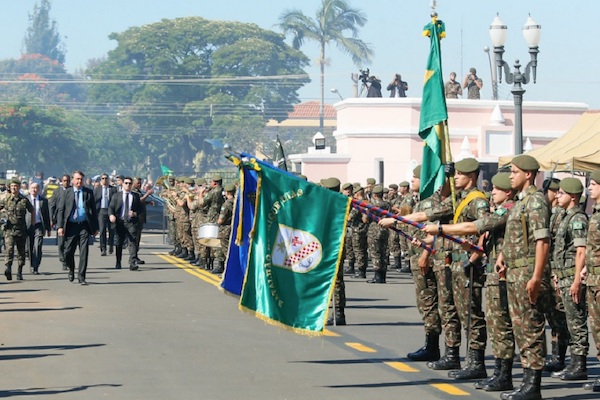
Many are surprised that the President of Brazil is going to renew the military leadership. For a Chilean, it is unclear whether they resigned in solidarity with the ousted defense minister (a retired general) or if they were dismissed. What is clear is that the Presidency wanted to use them more actively in its political plans, and they did not want to fall into the game that Bolsonaro had in mind.
It should be clarified that Brazil, being a federal country, the governors of the states have their own vision of how to manage the current crisis, which primarily originates from the super-pandemic caused by Covid-19 in that country, and the executive has different ideas on how to handle the disaster they face, ideas that include a more active use of the armed forces to shape their plans.
The central government already has a cabinet with many retired military personnel, something that is repeated in other positions within the administration, but despite the press wanting to portray this as a sign of Bolsonaro’s closeness to the military, the truth is that this does not imply that the armed institutions are at his disposal for whatever he wishes to do, and it is unlikely that a change in leadership will lead to changes in how the military views things.
The next question is how do the Brazilian armed forces view things? It is most likely that they see them similarly to the Defense institutions in Chile, that is, adhering to the Constitution and acting very prudently so as not to fall into the politicians’ game, or to be swept away by the currents in one direction or another, or to tasks that are not their own or for which they are not prepared.
This is something that is also observed in Peru, Ecuador, Paraguay, Uruguay, and Colombia, that is, an adherence to the Constitution and what that may imply, whether liked or disliked by the political world, but that is not strongly observed in Argentina and Venezuela, where they are clearly under the control of the executive (in the case of Argentina) or are part of the structure that keeps a group in power (in the case of Venezuela)..
Despite the political and social complexities they are experiencing, it is to be expected that the Brazilian military will remain faithful to the Constitution and not be led into territories they have visited in the past and surely do not wish to revisit, as the previous experience was not to their liking or that of those who suffered the consequences of their actions, which did not always conform to the law or common sense. This is even more important when in most countries in the region constitutional states of exception are in effect, allowing the use of institutions for non-traditional tasks, something that we must ensure is limited only to pandemic management and nothing more.
Richard Kouyoumdjian
Vice President AthenaLab


