The Armed Forces of Chile are constitutionalists and non-deliberative.
This article was translated automatically and may contain differences from the original. For reference, read the original.
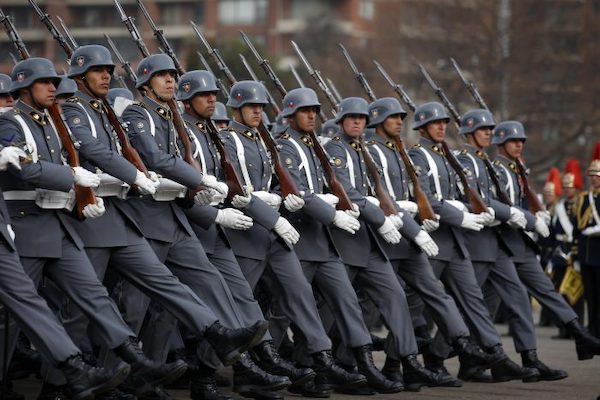
El Mostrador, April 21, 2021
The Ministry of Defense, the Navy, and the Air Force support the Army, agreeing that they were mistreated. However, the most interesting aspect is their call to safeguard the coexistence of Chileans and to promote responsible behavior from the press. Under no circumstances do these institutions or the Army express opinions on current political matters or support one political sector over another, nor do they criticize how political aspects of the Republic are managed. It may warrant further analysis whether it should have been the Ministry of Defense that issued a statement rather than the institutions themselves, but this is in light of subsequent reactions, as the joint communications from the three armed institutions generated an adverse effect and diverted attention from the underlying issue.
The reactions of many to the statement issued by the Army of Chile, along with the additional statements from the Navy and the Air Force in support of that institution, are surprising, especially after they felt disrespected by a television program regarding how they were treated as an institution and as individuals.
To understand the problem, it must be analyzed in parts, rather than as many do, mixing this issue with recent and past topics, which logically invalidates their conclusions.
First, the program in question likely made a mistake in its content, and what they did may have been inappropriate. One should not confuse humor with routines that undermine the dignity of individuals or institutions, and if I recall correctly, this would not be the first time someone has been unhappy with a program or its comedians. Just ask ‘Yerko Puchento’ how he has fared in this regard.
Second, it is important to understand what the Army stated. They indicated that the content presented in the program was incorrect, that it affected them as an institution and as individuals, and they concluded by affirming their respect for freedom of expression while simultaneously requesting that it be exercised responsibly.
Third, the Ministry of Defense, the Navy, and the Air Force support the Army, agreeing that they were mistreated. However, the most interesting aspect is their call to safeguard the coexistence of Chileans and to promote responsible behavior from the press. Under no circumstances do these institutions or the Army express opinions on current political matters or support one political sector over another, nor do they criticize how political aspects of the Republic are managed. It may warrant further analysis whether it should have been the Ministry of Defense that issued a statement rather than the institutions themselves, but this is in light of subsequent reactions, as the joint communications from the three armed institutions generated an adverse effect and diverted attention from the underlying issue.
Fourth, the reactions from politicians and the media tend, as often happens, to forget what triggered the Army’s response. Similar to the recent attack on the monument of General Baquedano in March of this year, the focus shifted again to the statement rather than the incident that caused it. On that occasion, the Army also expressed its sorrow over what occurred.
Fifth, the Army and the other institutions are accused of deliberating and infringing upon freedom of expression. The first accusation arises because different parties interpret deliberation in various ways, and the second, related to the first, expects a complete silence from the institutions, demanding that they never speak out on any matter.
Sixth, non-deliberation is established in the Constitution, but it is not defined. This is a significant issue because if an understanding is not reached and some continue—by one means or another—to insist on undermining the dignity of those who work in the armed institutions, these statements will not be the first nor the last.
Seventh, I recently heard a prominent jurist, an expert in constitutional matters, state that non-deliberative means the Armed Forces must remain silent on issues such as those related to Baquedano or the television program from Friday the 16th. If they have concerns or need to express their opinions, they should do so through the proper channels, namely, through the Ministry of Defense.
Eighth, the Armed Forces do not understand it this way. They believe that by being non-deliberative, the constitution intended for them not to intervene in partisan politics or to favor one side or another in a political dispute. They understand that they can express their opinions on issues that affect them, that they are thinking organizations, and that the law does not obligate them to silence.
Ninth, evidently, those who wish for the Armed Forces to have little relevance or to inhibit them as institutions want them to remain silent and without the capacity to speak.
Tenth, the question we must ask ourselves is why the constitution intends for them not to influence political outcomes. It is because they possess the power of arms and the monopoly on their use, so if that capacity is placed at the service of politics, it could be decisive in one direction or another or, worse yet, become the political power itself.
Eleventh, deliberative refers to one who deliberates, and deliberation is better understood when looking at its synonyms. These include meditating, thinking, reflecting, analyzing, considering, examining, treating, debating, discussing, disputing, resolving, deciding, determining, agreeing, ruling, and so forth.
Twelfth, regarding freedom of expression, none of the institutions wish to infringe upon it. They only want it to be exercised responsibly and not to be exploited or demeaned due to their status as permanent state institutions that owe allegiance to the Constitution and their role as obedient and non-deliberative entities.
To conclude this opinion column, and to the best of my understanding, the Armed Forces of Chile are absolutely constitutionalists, have no ambitions for power, and do not wish to be involved in internal security activities.
They are dedicated to Chile and the Chileans, to the protection of their independence, security, and sovereignty, and to safeguarding national interests, wherever they may be located. They only want to be allowed to do their job and to be well-prepared to effectively defend Chile and its interests if necessary. At the same time, they request not to be mistreated or demeaned, and that they and their members not be exploited. I believe this is not too much to ask, just as it is not too much to ask that, from both the right and the left, they not be transformed into political actors as both sectors did in the 1970s. It is time for everyone to act responsibly and safeguard our democracy.
Richard Kouyoumdjian
Vice President of AthenaLab


