What is celebrated on September 19?
This article was translated automatically and may contain differences from the original. For reference, read the original.
El Mostrador, September 19, 2021
This Army of Chile – always victorious, never defeated – along with the other defense institutions, enjoys approval ratings significantly higher than those of the institutions to which their attackers belong. This raises suspicions about the nature and intent of the attacks that some persist in making, taking advantage of the fact that it is a hierarchical, obedient, and non-deliberative institution, but one that is clear about to whom it owes its allegiance: Chile, the Chileans, their heroes, and their military glories.
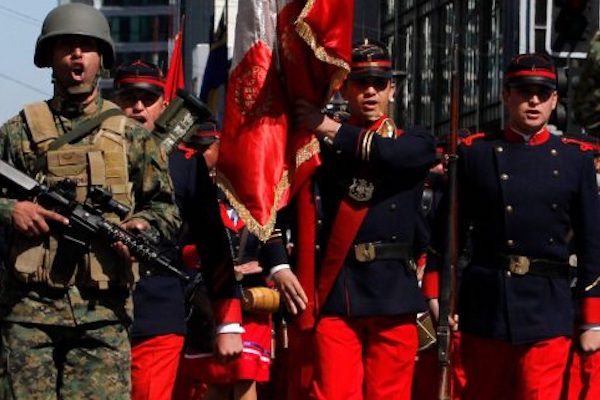
On September 19, all the glories of the Army of Chile are celebrated, a date established by Ramón Barros Luco through a supreme decree in 1915, which declared that day a holiday. It is often confused with the first ceremony in which the Army of Chile participated, which took place on the morning of September 19, 1810, in the Plaza de Armas of Santiago, on the occasion of the proclamation of the act of establishment of the Government Junta.
In this sense, the celebration of the Army’s glories has been maintained except on two occasions, in 1973 and 2020, two exceptional instances that do not require explanation. Therefore, the attempts by some to suspend it again in 2021 are incomprehensible, knowing that health indicators are much better and almost all of Chile is in phase 4.
This is the opportunity for the Army, accompanied by the other national defense institutions, to take to the streets to be with the Chileans to whom they owe their service. It is a civic-military celebration where normally the troops and civilians come together to celebrate Chile’s military glories, which granted us freedom and independence, which provided independence to Peru, which, alongside the navy, carried the Chilean flag to the very viceroyal palace in Lima, and which, together with the other armed forces, prevented Argentina in 1978 from usurping Chilean sovereign territories.
It is the Army composed of men and women who have sworn to give their lives for Chile if the homeland requires it, and who have been at the forefront of every disaster, providing community assistance under any circumstances and for extended periods, as demonstrated by the ongoing health crisis we are still facing.
This Army belongs to all Chileans and needs Chile and the Chileans to support them when they are attacked, while also demanding that they be better professionals and individuals, allowing them to perform their professional duties, and not holding them accountable for the improper actions of some commanders who acted incorrectly in the past—actions that are of personal responsibility and not institutional responsibility. Those who need to pay should pay, but the Army of Chile should not bear the sins of a few who failed to live up to their oath and professional duties.
There is sometimes a feeling that many of the attacks on the Army correspond to personal agendas of some politicians or academics who seem to want to settle scores and develop political projects that require consent, free permission, or a scenario where they are assured that nothing or no one can stop them in their pursuit of power or to do as they please. If that is the case, remember that the Army belongs to all of us and is here to safeguard our Republic, its independence, and sovereignty.
Perhaps it is worth recalling to conclude that this Army of Chile – always victorious, never defeated – along with the other defense institutions, enjoys approval ratings significantly higher than those of the institutions to which their attackers belong. This again raises suspicions about the nature and intent of the attacks that some persist in making, taking advantage of the fact that it is a hierarchical, obedient, and non-deliberative institution, but one that is clear about to whom it owes its allegiance: Chile, the Chileans, their heroes, and their military glories.
Richard Kouyoumdjian
Vice President AthenaLab