State of Emergency in the Southern Macrozone: How Do the Armed Forces View It?
This article was translated automatically and may contain differences from the original. For reference, read the original.
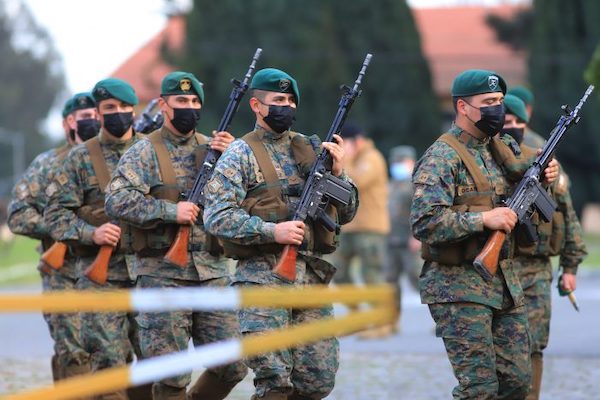
El Mostrador, Wednesday, October 13, 2021
What problem does the presence of the Armed Forces in La Araucanía solve? In the police-criminal issue, they are not specialists in the matter. In the counterinsurgency issue, except for the Army’s special forces and the Marine Corps, the rest of the forces are not specialized in these areas, and those that could be do not have practical experience in them. Above all that has been described, I am not sure they possess the intelligence that every military operation needs to be successful. Furthermore, even if the Executive claims they will only be providing support, the possibility of confrontations is real and not fictional when the Armed Forces are sent to do the work that politicians have been unable to carry out and resolve peacefully.
After reading and listening to the presidential announcement, the question remains as to what the real purpose of a measure like establishing a State of Emergency in the Southern Macrozone is. A State of Exception that can be declared for 15 days, with a 15-day extension, after which any further extensions must have the agreement of Congress, which I do not believe will be granted to the Executive unless the situation is of such magnitude that both sides agree to maintain it.
To think that establishing a State of Exception resolves problems, beyond some aspects of public order, is an illusion. The Southern Macrozone is not the northern border and has a mix of problems that, when combined, create a highly complex scenario that is clearly not resolved by deploying Armed Forces troops or placing a general and an admiral in charge.
The Armed Forces are clear; they understand that their mere presence does not resolve the issues that have existed in La Araucanía for many years, which have increased in the last decade to the point of having a situation that could explode at any moment.
To understand why the presence of the Armed Forces does not resolve all problems, we must analyze what is happening and see if the presence of untrained troops in police matters and modern counterinsurgency techniques helps to reduce the level of tension and buy time at the political level to find a solution that has been elusive since we recognized we have a problem in that area.
In the Southern Macrozone, there is a mix of actions that are purely criminal and related to drug trafficking, which are likely the means by which insurgent groups of Mapuche origin finance themselves, seeking to reclaim lands they consider their own and which were usurped in the 19th and part of the 20th century.
The acts of violence mentioned above generate a natural reaction from those who feel their rights are being violated and, in the absence of the rule of law, are arming themselves for self-defense, blocking roads and sending signals that they are ready to go to war.
They may not agree with the previous diagnosis, but some of it may hold true. They will agree that the State of Chile has failed to ensure the rule of law and that the combination of coordinated or uncoordinated actions by the police, the Public Ministry, and the courts has not been able to maintain law and order, and that there are parts of the national territory where local insurgent groups prevail or do not recognize the authority of the State of Chile.
After stating the above, I ask again: what problem does the presence of the Armed Forces in La Araucanía solve? In the police-criminal issue, they are not specialists in the matter. In the counterinsurgency issue, except for the Army’s special forces and the Marine Corps, the rest of the forces are not specialized in these areas, and those that could be do not have practical experience in them. Above all that has been described, I am not sure they possess the intelligence that every military operation needs to be successful. For logistical and material support, it would have sufficed to modify the failed decree that was rejected by the Comptroller’s Office, and in any case, if that were the purpose, things will definitely not change and will remain the same, as the police along with the Public Ministry and criminal courts will continue to be in charge, just as they have been until now without success.
Could this state of exception be a way for the Government to distance itself from the problem and pass the baton to the defense institutions, in what would be akin to asking them to pull the chestnuts out of the fire with the cat’s paw? I pose the question because, after examining the problem from various perspectives, I reach no other conclusion, especially in the absence of a political plan agreed upon with the opposition and representatives of the Mapuche people that allows for resolving the underlying issues, rather than simply applying what would be equivalent in medicine to a paracetamol, especially if it turns out that it will only be support for the work of the police.
In addition to the previously analyzed political-strategic aspects, a practical issue becomes critical considering the level of noise in the area, which surely must be concerning the Armed Forces’ command. I refer to the rules of engagement (ROE) that would apply in the State of Emergency zone, which, if too restrictive or complicated, diminish the impact and effectiveness that the troops may have, to the point of having to perhaps review everything they do with their lawyers to ensure they do not get into trouble or are accused of excesses in the application of their mandate. The example of Punta Peuco is too strong, and even if the Executive claims they will only be providing support, the possibility of confrontations is real and not fictional when the Armed Forces are sent to do the work that politicians have been unable to carry out and resolve peacefully.
On another note, international comparative experience indicates that strategic political problems like this are not resolved in 30 days and that the presence of troops risks further inflaming the situation, and it is very possible that years later La Araucanía will remain militarized. One only needs to observe the recent experiences of Colombia and the Armed Forces of the United States in Iraq, Afghanistan, and Vietnam.
I acknowledge that being in the shoes of the Executive cannot be easy, but someone must represent the limitations of a Constitutional State of Exception and the use of armed institutions in scenarios like this, as they are not designed for purposes other than war and are not suited for counterinsurgency and anti-crime operations. The solution for La Araucanía necessarily requires a political solution and a parliament with the Mapuche people, and if the state of exception is applied as announced, it must be made a priority to ensure it is of short duration and solely aimed at lowering the temperature and buying time for a political solution.
In conclusion, one should not fall into the illusion that a State of Exception resolves complex problems, especially not in the manner in which it was announced. Its mere announcement is already a warning to those acting outside the law to lay low for 15 or 30 days, and that the Government, in light of the decrease in tension, will declare victory, as surely in the days that follow, criminal efforts, destabilization, and a renewed insurgency will resurge, taking advantage of a month to rest, rearm, and plan their next moves.
Richard Kouyoumdjian
Vice President AthenaLab


