Illegal Economies: The Other Side of Organized Crime
This article was translated automatically and may contain differences from the original. For reference, read the original.
El Líbero, February 12, 2022
International criminal gangs do not only rely on drug trafficking; human and arms trafficking, along with money laundering and cybercrime, are also among their specialties. However, there is one area we discuss less: the illicit trade of goods and natural resources.
The recent enactment of the law that penalizes illegal trade and intellectual piracy, while being an important advancement, also serves as a reminder of how organized crime has been gaining ground in the country. International criminal gangs do not only rely on drug trafficking; human and arms trafficking, along with money laundering and cybercrime, are also among their specialties. However, there is one area we discuss less: the illicit trade of goods and natural resources.
In Chile, there are parallel economies led by criminal gangs that profit from our resources. There is now specialization and a whole structure of groups dedicated to illicit businesses.
The street trade has garnered the most attention recently. We have witnessed how sidewalks have gradually filled with vendors offering counterfeit or stolen products. The social outbreak acted as a trigger for this phenomenon, and investigations into the looting demonstrated how what was stolen from large stores was reduced on the streets. Additionally, fights between groups for control of corners and high-traffic areas have even resulted in deaths. Santiago, Valparaíso, Viña del Mar, and Iquique are just a few examples of this.
International experience tells us that we will neither be the first nor the last to coexist with this issue. Some countries are ahead of us. In India, for example, water infrastructure did not advance as quickly as population growth, leading to the emergence of water mafias. A closer case is found in Peru, where illegal mining has become a significant problem for a sector that has even begun to question whether they are losing the battle.
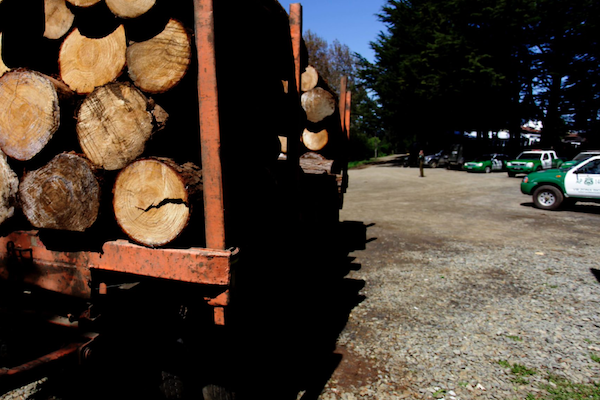
Thus, throughout the country, particular realities are emerging that highlight one or another aspect of organized crime. In the north, drug and human trafficking is accompanied by copper theft; 257,000 tons of copper were stolen in 2020. In the center, street trade fills the cities, significantly impacting daily life. The Southern Macrozone is marked by timber theft; in three years, US$133 million has been lost due to this. Further south, the theft of marine resources has replaced livestock theft; illegal fishing generates a parallel market that moves around US$60 million a year. While cybercrime and money laundering are not specific to any area, they permeate Chile, serving those who “need” them.
The State as a whole suffers the consequences of the specialization of crime. The national economy must contend with parallel trade, and vulnerable sectors are exploited by gangs. It is time to think beyond drugs, to understand the phenomenon comprehensively, and to incorporate the relationships that may exist between each of the areas of organized crime. The issue of public security in Chile has changed; now it is the State that must catch up.
Pilar Lizana
Researcher, AthenaLab
Source: El Líbero