Do not ask the military to do what the state should do
This article was translated automatically and may contain differences from the original. For reference, read the original.
El Líbero, February 19, 2022
Security. That context of peace that allows us to develop without fear seems to be in doubt. Since October of last year, a state of emergency has been in effect in the Southern Macrozone, and this week another has been declared for the north. For very different reasons, the populations at both ends of Chile do not feel that security and demand that the state provide it.
In La Araucanía, the problem has persisted since 1990. The first occupation of a farm evolved over the years into the formation of radical groups that finance themselves through marijuana cultivation and timber theft. Ancestral claims have given way to violence perpetrated by organizations that claim to be fighting against the state.
In the north, the situation is more recent. Massive illegal immigration, rising crime, and the emergence of crimes such as extortion and homicide have hindered the development of a population seeking well-being.
Truck drivers have been prominent at both ends of the country. In one area, the burning of their vehicles and the theft of trucks loaded with timber have left them in a vulnerable situation that has repeatedly brought them to La Moneda. In the other, last weekend, we witnessed how they blocked Route 5 North and forced the Iquique airport to suspend flights. This time, the problem was the assaults they suffered on the highway from foreigners traveling on foot, and the last straw was the murder of Byron Castillo, whose body was thrown from an overpass in Antofagasta.
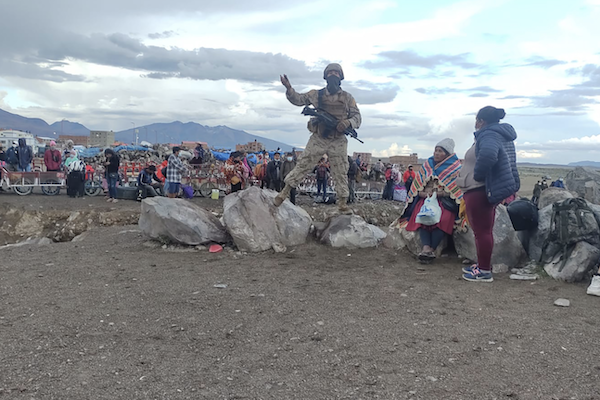
The demand from both ends was the same: security. The response was also the same: a state of emergency. Military and police are conducting joint patrols with the aim of restoring peace. However, it is important to understand the training and objectives of each of these institutions. The Armed Forces, trained to defend the homeland and prepared for war, react very differently than the police in the face of violent situations. The police, being closer to the population, who see them daily in their neighborhoods, streets, and highways, have very different training and operations. Both can complement each other in certain scenarios. Sharing information and intelligence is one of them. But we cannot expect the military to solve what the state has been unable to do.
When problems are structural, the mowag and blackhawk are not enough. Security in its broadest sense depends on the state and requires political will from all sectors to advance long-term proposals. The police and Armed Forces are agencies that can contribute to those plans, just like many others, but the solution does not depend on them.
Just as this week the government acknowledged that it requires more than a police deployment in the Northern Macrozone, the same applies in the south. The state of emergency cannot be normalized, much less prolonged indefinitely. The good results in La Araucanía will only be good if accompanied by concrete actions from each of the branches of government, and controlling illegal immigration will be successful if the right signals are sent. Without them, joint deployments and curfews could end up being stopgap solutions that, like a poor diet, lead to a rebound in violence due to a lack of a comprehensive response to a problem for which Chile was unprepared. The military and police will not solve in a few months what the state has been unable to fix for years. We must accept that the security problem has changed; nothing we did before will be sufficient now.
Pilar Lizana
Researcher at AthenaLab