One star, one flag, one Chile
This article was translated automatically and may contain differences from the original. For reference, read the original.
El Líbero, March 4, 2022
While Ukrainians demonstrate their unity to the world, in Chile the Constitutional Convention has been doing the opposite: it approved an article that defines our country as a regional, plurinational, and intercultural state composed of autonomous territorial entities, and this week it followed up with another on legal pluralism. However, in all this discussion, an important fact is being overlooked: since our origins, there has been a full awareness of the inclusion of all who make up Chile. The best example is our flag and the seal of O’Higgins.
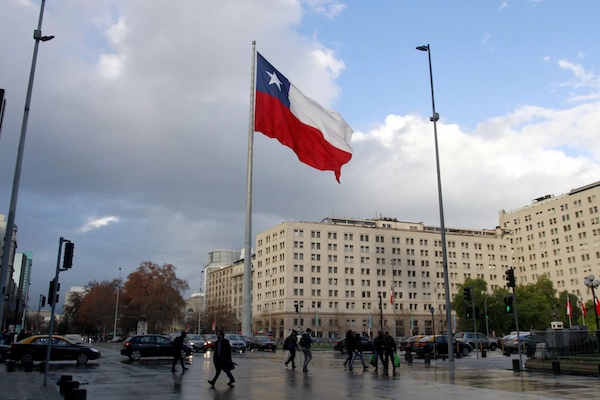
It has been established in public opinion that the national flag does not represent everyone. Its color has been changed, and in its place, the Mapuche symbol created in 1992 has been raised. However, the tricolor band accompanied by the lone star is not a coincidence. Unity in diversity is the message, and, just as it did more than two centuries ago, it should set the tone in today’s public discussion.
Bernardo O’Higgins was very familiar with Mapuche culture. During his studies in Chillán, he shared classrooms with the children of chiefs who showed him their way of life firsthand, and with that knowledge in mind, he designed a flag that included all cultures and signed a decree defining what it means to be Chilean. Nothing was left to chance. The yellow of the first flag was replaced by red, and then the lone star was included. “Across the chests, slanted bands of blue, white, and red,” wrote Alonso de Ercilla in Canto XXI of La Araucana. The same colors used by the Mapuche were incorporated into our flag. But that was not all. In his effort to show unity without forgetting diversity, O’Higgins reclaimed the star, which represented the planet Venus, or Wünelfe as the Araucanians called it, and the same one that those peoples used in their battle banners.
Yes. Our flag, that blue, red, and white one adorned with a star, represents the cultural diversity that has marked the development of our country since its origins. They may paint it black and trample it as an insult, but they cannot separate it from the concept of diversity. Insulting the national flag is insulting the Chileans, those who obtained their designation in 1818 through the decree of July 3, which states that “the Spaniard native of such a place, which has been used until now, shall be replaced by that of Chilean of such a place.” Furthermore, in 1819 Chilean citizenship was extended, and considering the indigenous peoples, the decree states that “from now on they must be called Chilean citizens, and free like the other inhabitants of the State with whom they will have equal voice and representation…”
October 18 is an important date in the development of Chile: in 1817 the flag was created as a symbol representing the union of Western and Mapuche cultures, and in 2019 a process began that, through violence, has insisted on separating that union.
We are a unitary state that arises from diversity and is nourished by it. Let us not ideologically force a separation of something that originates from a deep understanding of different cultures and has always represented us. We are unity in diversity. One star, one flag, one Chile. Let us not forget this when debating the new Constitution.
Pilar Lizana
Researcher, AthenaLab
Source: El Líbero


