Words matter
This article was translated automatically and may contain differences from the original. For reference, read the original.
El Líbero, April 2, 2022
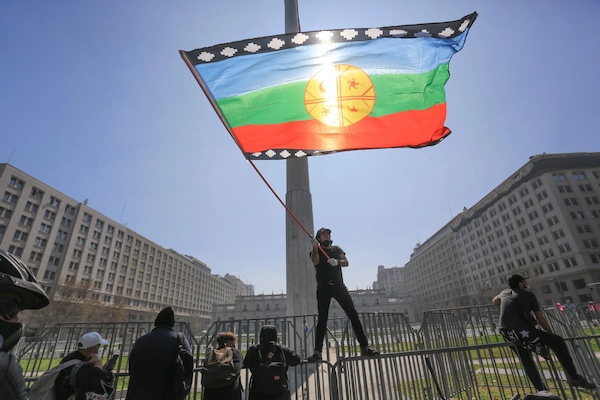
Referring to the Macrozona Sur as Wallmapu validates a stance that has impacted the well-being and security of an area that has shifted from being one of the most prosperous regions to ranking last in the Regional Development Index.
Wallmapu is the name used by some to refer to the Mapuche territory, which our authorities like to use as a way to signal empathy with the communities and their indigenous issues. However, it seems they have forgotten that this Wallmapu is not only located in Chilean territory but also in Argentina, and those across the Andes were not pleased that the new occupants of La Moneda wrote manuals of good practices and referred to it in interviews and on social media.
Our neighbors are absolutely right! The government belongs to all Chileans, regardless of ethnicity. Referring to the Macrozona Sur as Wallmapu validates a stance that has impacted the well-being and security of an area that has shifted from being one of the most prosperous regions to ranking last in the Regional Development Index.
The Coordinadora Arauco Malleco (CAM), Weichán Auka Mapu (WAM), Resistencia Mapuche Lavkenche, and Temucuicui, among others, have evolved their intimidation techniques since the 1990s, increasing levels of violence and seeking to send clear signals to the State. In 1998, an increase in violent incidents was observed, coinciding with the creation of the CAM; the 2013 murder of the Luchsinger-Mackay couple was a milestone in the escalation of the problem; and currently, the authorities responsible for security cannot travel to Araucanía without issues. In this context of insecurity, the government cannot retreat; it has the obligation to ensure the rule of law.
In Argentina, the Constitution recognized, in 1994, the pre-existence of indigenous peoples and communal land ownership. However, “under no circumstances does communal property constitute a pretext to disregard Argentine sovereignty,” stated the newspaper La Nación this week. In fact, the Argentine media refers to it as a mistake to label the land usurpations as a Mapuche conflict, describing them as actions “carried out by a group of criminals on private and public lands.” Perhaps we could learn something from the realism with which our neighbors view the problem.
If the government continues to concede on security matters, it will be a setback that may not be recoverable. For now, we are at a testing moment: how far can I push the boundaries? This is the question that violent groups seek to answer. Let us hope they cannot. However, if good intentions are not accompanied by the legitimate use of force to guarantee the rule of law, they will not be of much use.
We find ourselves in a vicious circle; the State must provide security across the entire national territory, but the signals it is sending are quite confusing. Clarity is needed that its commitment is to Chile, not to a group that lives in Chile. The agenda must be clear and forceful; there should be no fear in using force. Those who live outside the law have no qualms about it. Let us stop talking about Wallmapu and talk about Chile! A unitary country, the result of diversity, that cannot lose the battle against crime.
Pilar Lizana
Researcher, AthenaLab
Source: El Líbero


