Rescuing the Pacific
This article was translated automatically and may contain differences from the original. For reference, read the original.
El Mercurio, Sunday, April 10, 2022
While much of the West focuses on the Russian-Ukrainian war, Chilean authorities are concentrating on regional matters, including President Gabriel Boric’s recent visit to Argentina and the arguments presented by the Foreign Ministry team at the International Court of Justice in The Hague regarding the Silala, an international river on the border with Bolivia.
Hopefully, it is only the current situation that is detracting from one of the hallmarks of Chilean foreign policy over the past four decades: successful integration into the Pacific. This includes not only its commercial dimension but also its strategic aspect. Beyond President Boric’s expressed interest in the Pacific Alliance, it seems that there is currently no vision, or at least no priority intention, to take advantage of this space of prosperity.
During the recent electoral campaign, some leftist sectors now in power raised opposition to the Comprehensive and Progressive Agreement for Trans-Pacific Partnership (CPTPP or TPP-11) as one of their banners of struggle, much to the confusion of many embassies, which recalled that Chile was key in rescuing this agreement and that it is now even attracting the interest of countries like China and the United Kingdom. In the current context, it seems more likely that opportunities associated with the TPP-11 will continue to be squandered.
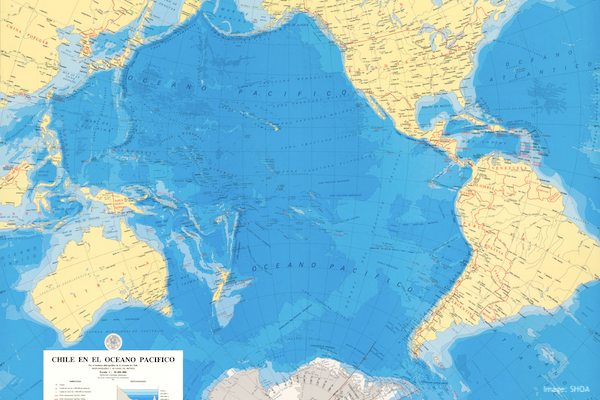
No matter how serious the events in Europe are or how essential it is to address regional disputes, there is no doubt that the center of gravity of global affairs lies in the Pacific. The bulk of our exports heads there, and soon our digital data will traverse the seabed connecting us with Asia. The maritime area of the country is 4.5 times larger than its land area, and it is through this that the tri-continental reality—American, Antarctic, and oceanic—is structured. Therefore, Chile’s well-being and development depend on its reality in this ocean.
Many things are happening today in the region. North Korea has intensified its missile tests this year, raising alarms in East Asia. Many are betting that Taiwan could be the target of armed action by China, following Ukraine’s fate. While India’s neutrality regarding Russia’s aggression has been attempted to be understood—from its traditional non-alignment to the origins of much of its military equipment—it has also raised doubts about its global role alongside democracies.
Closer to the South American coast, a Chinese consortium is building a mega-port north of Lima, in Chancay, which aims to be the destination for shipping lines from that country and, as such, a distribution center for cargo, which could alter the future of local terminals, in which little has been invested.
In Chile, although the summer season for visiting Antarctica has ended, polar vessels are still circulating that utilize our privileged position to access that continent.
For all the above reasons, the Pacific deserves attention in every area: political, commercial, maritime, and environmental. Honoring its Magellanic origins, President Boric posed with the sea in the background in his official photograph. Therefore, it is to be expected that his government understands that the destiny of Chile and the future of new generations lie there. We urgently need realities to align with priorities. In such a competitive world, we cannot afford to misplace our pieces.
Juan Pablo Toro V. is the Executive Director of AthenaLab
Juan Pablo Toro
Executive Director AthenaLab