In the face of crime, we all feel the same.
This article was translated automatically and may contain differences from the original. For reference, read the original.
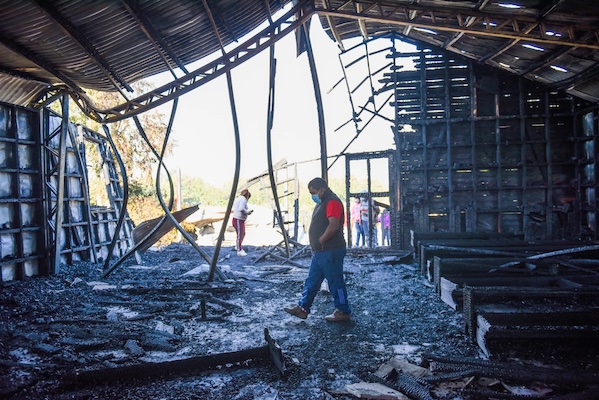
Criminality may have different characteristics at both ends of Chile, but what is certain is that in neither of them can the population live their lives normally.
This week, the CEP published a special survey showing the perceptions of both Mapuche and non-Mapuche individuals living in Biobío, La Araucanía, Los Lagos, and Los Ríos. There were some differences, yes, but where neither group faltered was in matters of security.Crime, assaults, and thefts were mentioned as the problems to which the government should dedicate greater effort to resolve. Some may say it is obvious that for those living in the regions of the Southern Macrozone, security is the primary concern, but I assure you that if we ask the same question in the Northern Macrozone, the response will not be very different.
Criminality may have different characteristics at both ends of Chile, the responses required may need different emphases, the nature of the problem may not be the same, but what is certain is that in neither of the two extremes can the population live their lives normally.Usurpations and arson attacks in the south are added to kidnappings and homicides in the north. The center is not doing well either: carjackings and home invasions are a daily occurrence.
Who do we turn to? To the security and defense institutions, those so discredited by many in the current government, the same ones that want to be restructured and whose defense chiefs are being changed? Curiously, the same ones that in the aforementioned survey have more trust than political parties, Congress, and the Government.
We are facing an unprecedented public security problem; the population expects concrete actions to prevent insecurity from deepening, while criminals roam our streets as if they own them, as some would say. We return to the question of whom to turn to. Military and police, each in their own sphere, protect the country and its citizens, and in that sense, it must be understood that their dedication and bravery relate to that country and those citizens. It is not about the enemy, but about that homeland and those people behind them whom they swear to protect with their lives.
Our military and police do not deploy for a government or a political sector; they do so for a flag that, with Venus as its symbol—yes, the same one used by the Mapuche in their battle standards—seeks to show the unity of that diversity that is Chile. The same unity observed regarding crime, assaults, and thefts in the CEP survey. 42% of those who identify as Mapuche indicate these as the problems needing more attention, the same percentage as those who do not identify as Mapuche.
So, let us return to the origin and make that unity the center of our effort. Enough blaming the previous government. What do we do today to prevent this from happening again? That is what we should be discussing. A united State should propose solutions. Time is short, so wasting it on finding blame makes no sense. Only united as a State and collaborating with others will we advance. Let us remember that which inspires the nobility of our Armed Forces and police; it is not for the enemy or the rival, it is for those we have behind us, and those are all Chileans.
Pilar Lizana
Researcher at AthenaLab
Source: El Líbero


