Why Does the Case of Undersecretary Eidelstein Matter?
This article was translated automatically and may contain differences from the original. For reference, read the original.
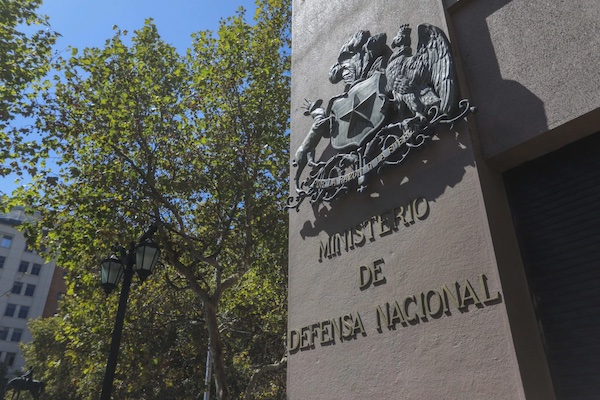
El Mostrador, October 12, 2022
We must not only be cautious about how we use the Armed Forces, particularly outside their traditional roles, but we must also be careful not to facilitate their use for purposes other than their primary objectives or to seek to neutralize them by modifying their curricula. This could allow political actors who do not understand democracy in the same way as the vast majority of Chileans to gain unfettered access to political power, requiring the use of force for their ends or, alternatively, their nullification to clear their path.
Recently, many have expressed concern over reports that Mr. Galo Eidelstein (PC), Undersecretary for the Armed Forces, is seeking to review the curricula of National Defense institutions beyond the mandatory topics of gender and human rights, which are incorporated into several programs of President Boric’s government.
If the above is as indicated, it may be advisable for those responsible for overseeing the work of the Executive and its dependent ministries—the Congress and the Comptroller General of the Republic—to ensure that this aligns with the law and falls within the powers of Undersecretary Eidelstein.
If the objective is merely to gather information on their activities, I see no problem; however, if there is something more behind this, as many suspect, given that he is sending observers to some of the courses being conducted, then public alarm is not so exaggerated, and the reactions we have seen in various media, including calls to annul the requests made to the armed institutes, including the attendance of their ‘Political Commissioners or Observers,’ are justified.
The problem is that the PC, the party to which the undersecretary belongs, has a long history of seeking to nullify or eliminate the Chilean Armed Forces, viewing them as an obstacle to their access to political power as they understand it. Therefore, any action perceived as aimed at this is rejected by many compatriots who do not share the ideas of the PC or organizations with similar political proposals.
The Armed Forces, along with the police, hold the monopoly on the use of state force, which is why special care must be taken to ensure they are not captured by political parties or organizations that wish to use them for their own purposes. To minimize the likelihood of this occurring, it is necessary for the fundamental aspects of defense institutions to have constitutional rank, and for the details not to be included in laws or decrees of lesser categories, or within the administrative powers of an undersecretary. Proper oversight by Congress and the Comptroller’s Office helps ensure that matters remain on the right track.
Additionally, it does not help that recent governments, whether right or left, have used the Armed Forces so intensively for clear political purposes that are not their primary focus, to the point that it is difficult to see how governments like Boric’s can remain in power until the end of their four-year constitutional term without the armed institutions performing internal security tasks in areas under Constitutional States of Exception due to the actions of insurgents and criminals who take advantage of the chaos, or supporting the police in safeguarding our borders, which are under significant stress.
In this same vein, politicians find it so necessary that they are once again insisting on a project for the protection of critical infrastructure, which would obviously be carried out by military personnel, sailors, and aviators, further distancing the institutions from their primary roles, but with the aggravating factor of lowering the oversight requirements of Congress regarding their proper use, especially when it is for internal security purposes.
In conclusion, we must not only be cautious about how we use the Armed Forces, particularly outside their traditional roles, but we must also be careful not to facilitate their use for purposes other than their primary objectives or to seek to neutralize them by modifying their curricula. This could allow political actors who do not understand democracy in the same way as the vast majority of Chileans to gain unfettered access to political power, requiring the use of force for their ends or, alternatively, their nullification to clear their path.
Richard Kouyoumdjian
Vice President, AthenaLab
Source: El Mostrador


