The Pandora's Box of the Foreign Ministry Committees
This article was translated automatically and may contain differences from the original. For reference, read the original.
Perhaps it is time to be realistic and review where we went wrong, correcting or modifying what is necessary for the Foreign Ministry to be an effective organization in its role of supporting the Presidency of the Republic in conducting Chile’s foreign relations. This could start with the official notification to those who are no longer part of the Advisory Council on Foreign Policy, as they learned through the press about the meeting from which they no longer had the right to participate, which could be classified as a very undiplomatic action.
El Mostrador, November 17, 2022
Law 21.080 of March 7, 2018, which aimed to modernize the Ministry of Foreign Affairs, among other things, established a series of councils intended to support the management of that portfolio and Chile’s foreign policy. This modernization was primarily the work of Heraldo Muñoz, who can be criticized for some aspects of how he managed our relationship with Argentina, but who, in other respects, including this issue of modernization, clearly understood what we needed in terms of the ministry responsible for supporting the President of the Republic in conducting Chile’s international relations. The day the Congress approved the modernization was described by the then-chancellor as a historic day, due to the impact it was expected to have in the future (see).
In the first paragraph of the modernization law, where the mission and organization of the ministry are discussed, the Advisory Council on Foreign Policy is created (Article 6), the Committee of Former Ministers (Article 7), the advisory unit to safeguard Chile’s interests in international processes (Article 8), the Interministerial Committee on International Economic Negotiations (Article 9), and the International Cooperation Council for Development (Article 10). Climate Change | Fourth Season: Cap. 01 – Special Camino7
So far, so good, except that everything indicated in the previous paragraph either does not work, works more or less, has not been created, does not fulfill its purpose, or what was designed by Chancellor Muñoz was meant for another country, or we simply do not have the necessary maturity that this requires.
To clarify the above and as an example, the Advisory Council on Foreign Policy only started functioning with Chancellor Ribera, who gave it a consultative character, but which originally faced the problem of being too extensive in order to accommodate all sensitivities, making it unlikely to generate any added value, except to please those who had been chosen to be part of it. Subsequently, Chancellor Allamand only informed the council of issues and did not use it for the purposes for which it was designed. Between the two, there were only 4 non-in-person meetings where the added value was minimal.
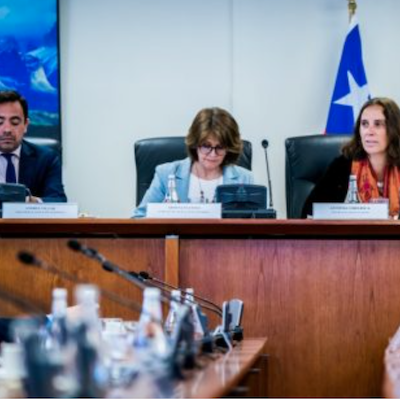
The meeting on Friday, November 11, 2022, of the Advisory Council on Foreign Policy was the first under Chancellor Urrejola, with a council of 26 members reflecting the interests of the current government, with some names repeating, and with a vague agenda, reflecting the current state of the Foreign Ministry and the country’s foreign policy, in a meeting dominated by a lack of clarity and purpose, raising the question of whether this was the fault of the chancellor or a design problem, or both. I lean towards the latter, as it partly falls to the highest authority to ensure that things work, but that said, the difficulty of making such councils function is understood, something that their right-wing predecessors also failed to achieve, leaving open the question of the effectiveness of the new institutionality brought by Law 21.080, which likely sought to make international relations a matter of state.
The Committee of Former Ministers also faces a similar fate to the aforementioned council, as it depends on the minister to convene it, its purpose is unclear, it is ad honorem like the previous one, and there is no obligation to attend. And something more important: it is not transparent, as minutes, agreements, and recommendations are not published, a matter that generally affects all the committees created by the modernization.
Regarding the committees or units generated by Articles 7, 8, and 9, it is unclear to me whether they have been created, function, or if they have, it is not public knowledge, which leads me to the question of who or which state unit is responsible for ensuring that the laws created are materialized and implemented. I have not seen any report from the Foreign Ministry reporting on the progress of the implementation of the modernization law, or from the second floor of La Moneda, or from the Comptroller General of the Republic, regarding what seemed to be a good idea from Chancellor Muñoz that received the approval of the entire Congress in January 2018, without a single vote against.
Perhaps it is time to be realistic and review where we went wrong, correcting or modifying what is necessary for the Foreign Ministry to be an effective organization in its role of supporting the Presidency of the Republic in conducting Chile’s foreign relations. This could start with the official notification to those who are no longer part of the Advisory Council on Foreign Policy, as they learned through the press about the meeting from which they no longer had the right to participate, which could be classified as a very undiplomatic action.
To conclude, if we are going to open the Pandora’s Box of the committees, why not once and for all review the problems and incentives affecting the performance of career professionals working in the ministry, as well as why the Foreign Ministry is the state organization responsible for oceanic and Antarctic issues, matters that should clearly be managed by an executive organization in charge of actions and interministerial coordination of our interests in Antarctica, the seas of Chile, the maritime subsoil, and foreign trade that connects us with the rest of the world, as their complexities clearly exceed the capacities that have been given to this ministry, which by nature is oriented towards conducting foreign relations, and not managing Antarctica and the seas of Chile.
For questions regarding Law 21.080, see here.
Richard Kouyoumdjian
Vice President Athenalab