When migration becomes a security issue
This article was translated automatically and may contain differences from the original. For reference, read the original.
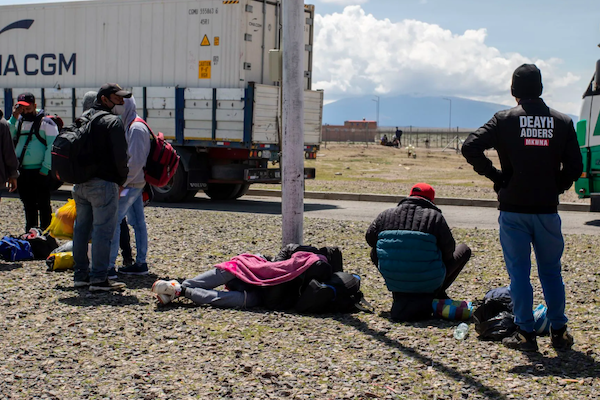
El Líbero, December 19, 2022
It is not the migrants who lead to this; it is the lack of a clear migration policy that aligns with Chile’s capacities, combined with an unsatisfactory response from the State to the new security challenges.
The trip of Undersecretary Monsalve to the Arica and Parinacota region raises a matter that is quite clear to the citizens of that area of the country, but which may only now be gaining traction in the rest of the national territory: migration as a security issue.
The data is abundant: 11.27% of foreigners deprived of liberty in the country’s prisons rises to nearly 50% in the Tarapacá region; in that same locality, 30% of those charged with homicide are foreigners, and more than 20% of the victims; homicides in the northern macrozone increased by 89% between 2011 and 2021; foreign gangs dedicated to contract killing have arrived in the country, and the Prosecutor of Tarapacá is already speaking of criminal migration.
All of this, combined with the migratory pressure at the border, has led local authorities to request a State of Exception in the area. The icing on the cake is provided by the survey Cadem from the first week of December, which shows that the majority of respondents believe that the main cause of the increase in crime is the rise in migration.
With this data, Undersecretary Monsalve’s visit to the north seems to take on a different significance, especially when, accompanied by the Undersecretary of Defense, he stated that the government is fully available to include border protection in the critical infrastructure bill . All of this is within the context of the pressure from foreigners wanting to enter Chile from neighboring countries. What clearer signal that migration has become a security issue than the Undersecretary of the Interior and Defense discussing it!Since the dawn of humanity, people have migrated across the world. Various reasons have driven this, contributing to the planet’s population. However, what is happening today in Chile, while related to individuals seeking a better life, also reflects a weakness of the State in a territory where the needs of those who move intersect with the interests of criminal groups that see the country as a land of opportunity, exemplified by the Tren de Aragua. Its leader entered from the north, was arrested in Iquique, and that gang has extended to Puerto Montt. So, is migration a security problem? Is the increase in foreigners in Chile the reason for the rise in crime? Not necessarily; however, in a context of low state presence, difficulties in border enforcement, and a weakened rule of law,
migration appears as the element that creates an environment of opportunities for organized criminals wanting to enter the country, ultimately transforming, from the perspective of perceptions, into a security problem.
But it is not the migrants who lead to this; it is the lack of a clear migration policy that aligns with Chile’s capacities, combined with an unsatisfactory response from the State to the new security challenges. This situation will only change when Chileans perceive a real willingness to address these issues. Pilar Lizana
AthenaLab Researcher
Source:
El Líbero.


