"Rare Earths" in Sight
This article was translated automatically and may contain differences from the original. For reference, read the original.
El Mercurio, December 31, 2022
In the current technological competition, access to the so-called “rare earths” is crucial. These are 17 minerals from the periodic table whose magnetic properties withstand high temperatures and are essential for manufacturing everything from electric motors for cars and wind turbines to missile guidance systems and nuclear submarines.
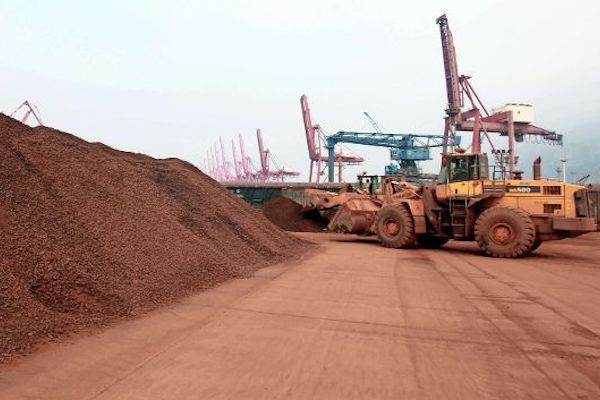
Almost 65% of the deposits of these scarce “rare earths” are found in China, which is also responsible for 85% of global production, giving this country significant control over these resources, similar to that held by the United States and its partners in semiconductor manufacturing. With global supply chains under severe stress due to geopolitical tensions and the aftereffects of COVID-19, both powers are trying to secure their access to these raw materials. For example, it is estimated that a fifth-generation F-35 fighter jet requires about 415 kilograms of these minerals.
While the illustrious Deng Xiaoping stated three decades ago that just as “the Middle East had oil, China had ‘rare earths’,” the President of the European Commission, Ursula von der Leyen, recently acknowledged that “lithium and ‘rare earths’ will be more important than oil and gas. Our demand for rare earths alone will quintuple by 2030.”
This week, for example, it was announced that Japan, which suffered a “rare earth” embargo from China in 2010 due to a maritime dispute, will begin extracting these metals in 2024 around an island located 1,900 kilometers from Tokyo and at a depth of 6,000 meters. This is another indication of the eagerness these metals inspire.
To lead the Fourth Technological Revolution and implement a rapid energy transition, having access to these minerals is essential. Therefore, countries that possess them will be highly advantaged. Additionally, if they can advance their refining capabilities, as most of this capacity is also in China. With France at the forefront, several European projects are progressing in this regard.
Chile, a country blessed with enormous deposits of copper and lithium, also possesses “rare earths.” In fact, there is a deposit located in the Penco area, 15 kilometers from Concepción. The company Aclara, part of the Hochschild group, is developing a project aimed at producing a rare earth carbonate, essential for the development of electromobility and clean energy. It could be launched once its environmental assessment process and subsequent construction are completed, after processing ionic clays in an extraction chain that seeks to safeguard environmental aspects. This represents an investment of $130 million.
Only four countries in the world have these clays: China, Brazil, Uganda, and Chile. Currently, China is the only producer, while the other three countries are still in project stages. Others, like Australia, possess these elements, but they are contained in rocks, which requires a more costly and potentially polluting extraction process. There is also the possibility of finding some of these minerals in tailings.
For all the above reasons, “rare earths” should be considered a strategic asset, necessitating a perspective from international security. Indeed, many developed countries already include references to them in their strategies. This does not mean that the State of Chile must determine their extraction, but rather create conditions for private entities to exploit them in a way that contributes to development and, at the same time, better inform countries and like-minded partners, such as the United States, Japan, and the European Union, about our availability and explore mutually beneficial cooperation opportunities.
Thus, it seems we will need to learn names like praseodymium, neodymium, samarium, terbium, and dysprosium, which will no longer be so “rare.” Just like lithium. This represents both a potential market of $15 billion annually by 2030 and a factor that will shape the upcoming geopolitical landscape.
Juan Pablo Toro
Executive Director of AthenaLab
Source: El Mercurio