INTERVIEW | "The Gangs" in Chile?: Factors That Would Motivate Their Arrival and the "Complexity" of Confronting These Groups
This article was translated automatically and may contain differences from the original. For reference, read the original.
Emol, January 19, 2023
The suspicion regarding the presence of the criminal group in the country is due to the offensive that the President of El Salvador has launched against them, but also to the “opportunities” that our country would offer for their establishment.
“If you ask me whether there are criminal organizations from other countries that are influencing Chile, I will answer yes.” This statement from the Undersecretary of the Interior, Manuel Monsalve, may not be unprecedented, but it is a clear confirmation of the reality that Chile has been facing for some time in this regard, and especially of the urgencies that arise to confront this scenario.
This is because, although reports from the Public Prosecutor’s Office have been warning for at least three years that organized crime has arrived in Chile, a new suspicion arose on Monday in the Chamber of Deputies during the third session of the investigative committee on the northern macrozone: Have Salvadoran gangs arrived in the national territory?
The question was posed by Deputy Jaime Araya (Ind. PPD), regarding the potential possibility that this criminal organization operating in El Salvador—but also in Honduras and Guatemala—has sought to “migrate” following the offensive against crime initiated months ago by President Nayib Bukele.
In response, the Deputy Director of Intelligence, Organized Crime, and Migratory Security of the PDI, General Prefect Luis Silva Barrera, remained silent for a few seconds and then stated: “To be faithful to that response, I would ask to do it in a closed session, please.”
However, Deputy (PS) Danisa Astudillo, who will participate in the closed session next Monday, hinted yesterday that according to the information provided in the investigative committee, “various criminal gangs have already entered our country, and possibly the gangs are also in our territory; this means that the Government must take much more drastic measures.”
Yesterday, the press again insisted on the issue, this time with Undersecretary Monsalve, who, after meeting with the National Prosecutor, Ángel Valencia, recalled the warnings contained in the reports from the Public Prosecutor’s Office: “We are experiencing a progressive, growing threat from more complex and violent criminal organizations. Therefore, institutions cannot be surprised; they should have taken all measures to prevent the situation from worsening.”
While the authority emphasized that operational measures and legal initiatives are being taken in response to these threats, a series of doubts about this group and its effects remain unanswered. Who are they? Why would they have come to the country? How do they operate? And, above all, how do we confront them?
The Gangs and Bukele’s Offensive
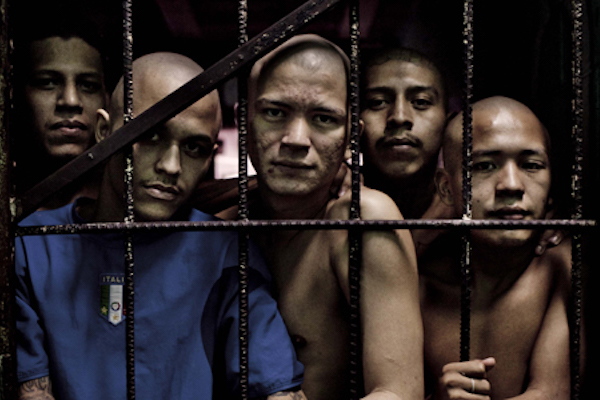
Mara Salvatrucha, also known as MS13, is one of the most well-known gangs in Central America, with significant presence in El Salvador, Honduras, and Guatemala, although its networks extend to Europe. The peculiarity is that MS13 originated in the 1980s in the refugee neighborhoods of Los Angeles, and its significant presence in Central America is due to massive deportations from the United States.
Its members are recognized for using tattoos on their bodies that symbolize life stories or the time they have spent in prison due to the crimes they commit. Their main activities include extortion, drug trafficking, arms smuggling, kidnapping, robbery, and contract killings, among others.
When Bukele was a candidate, he promised to confront Salvadoran gangs, and after being elected, he took this mission as one of his main banners. In fact, in March of last year, after 87 murders were recorded, he imposed a state of emergency in the country, suspending constitutional rights such as free association and assembly, which in turn allowed for a strong police and military deployment. The offensive in prisons has also resulted in deaths, leading to international human rights community denunciations.
“I don’t care what they say. Let them come here and protect our people. They can take the gang members if they want; we will give them all,” the Salvadoran president has said in response to criticism. He even went further and in October changed the strategy, shifting from mass arrests of gang members to the search for the last “homeboys,” as gang members are known, especially those belonging to Mara Salvatrucha.
The president acknowledged at that time that it was already more complex to detain “what remains of the gangs; we can no longer make a thousand arrests daily; we make 80.” Ultimately, it is a sweeping operation that—criticized and applauded—has sought to push the limits of criminal combat.
Alleged Arrival in Chile
The doubt raised by Deputy Araya is, therefore, almost common sense: a country that “tightens the noose” on gangs inevitably leads them to seek other areas of Latin America to “survive” and continue their illicit businesses.
In conversation with Emol, AthenaLab researcher Pilar Lizana agrees that “what we see is that the gangs are being pressured in El Salvador, and that will necessarily have a reaction. This would lead to the gangs arriving in other countries; in fact, we should not forget that they originated in the United States in the ’80s. These types of organizations will always react to what the State is doing.”
However, there are certainly other factors that may make the arrival of these groups particularly attractive to Chile. According to the researcher, “today our country is presenting opportunities for these organized crime groups to see us as an opportunity.” One of these aspects is this “permeable border” that allows them not only to cross an irregular border but also serves as a passageway for human trafficking or arms smuggling.
In this regard, Undersecretary Monsalve has also provided his analysis. He explained on Monday that this situation has arisen due to the migratory crisis in Latin America, “because the 7 million Venezuelans who have been forcibly displaced from their country are at the borders of various Latin American countries, and therefore, for transnational organizations, one of the most profitable businesses they have, in addition to drug trafficking, is the illicit trafficking of migrants and human trafficking.”
As a result, “the presence of criminal organizations from other countries engaged in the illicit trafficking of migrants to irregularly enter foreign citizens into Chile means that these organizations have approached the country,” said the authority.
Furthermore, AthenaLab’s investigations indicate that “we have problems with the oversight of criminal economies, and this will be exploited by other types of groups. In other words, we leave space for them to establish themselves in national territory.”
This leads to a third problematic and much more evident element: the territorial dispute among the cells of these criminal gangs, which leaves dozens of homicides in its wake. In the Tarapacá region, for example, at least eight have been recorded so far in 2023; the New Year’s weekend was also violent; and recently we have begun to see news of charred bodies. “At first, we were shocked, but now we are concerned about whether this is a trend,” the researcher states.
The Challenge of Disbanding Organized Crime
It is true that these cells of criminal organizations have begun to gradually arrive in the country, and while an optimistic view might suggest that this could still be an advantage in confronting them, the problem is that identifying and disbanding them requires not only a sense of urgency but also dedication and a collaborative attitude from all actors.
An example of the speed and persistence of these cells is the Tren de Aragua. In June of last year, the Prosecutor’s Office of Arica and the PDI managed to arrest 17 members of the “Los Gallegos” cell; however, seven months later—after a continuous investigation—another 12 individuals were arrested in Cerro Chuño; the leadership had restructured.
“This demonstrates that these are groups where organization is the most important factor. Therefore, the challenge is how to combat the organization itself. We can remove individuals, but depending on the role that the group plays in the organization, they may be able to rearm more or less quickly,” Lizana comments.
Additionally, it is crucial to control the factor of corruption, another source of sustenance and temptation for these criminal groups. “These groups will grow based on how much they can corrupt the State, and as more of them arrive in the country, there is a narrative about the opportunities we are offering them and the weaknesses that exist as a State. Clearly, there is a danger associated with advancing levels of corruption,” she asserts.
Gangs, for example, have achieved such a level of control in El Salvador that even some institutions pay their members to ensure their safety.
On the other hand, the researcher argues that the fact that a closed commission has been convened to address the issue aligns with the need for caution for those who must pursue, investigate, and sanction these groups. “We need to be careful about how we communicate, because this information generates behavioral changes in the population amid high levels of insecurity. Furthermore, it must be understood that combating a cartel or cell does not end with confirming its presence in Chile; it requires a long time to combat it,” the researcher adds.
Thus, the fact is that with all the available evidence, both from the security and prosecution agencies, authorities, and experts, the presence of some criminal groups is a reality. And what cannot be ruled out is that if rigorous measures are not taken, and if technical capacity is not aligned with even political dialogue, discussions about their threats and potential establishment in Chile will continue.
Source: Emol