Nain-Retamal Law: Ideology Must Not Cloud the Security Debate
This article was translated automatically and may contain differences from the original. For reference, read the original.
It is inappropriate to question whether crime will be addressed from a democratic perspective, as democracy is also a victim of the security crisis.
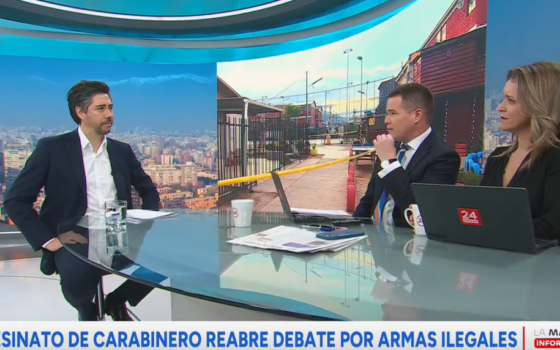
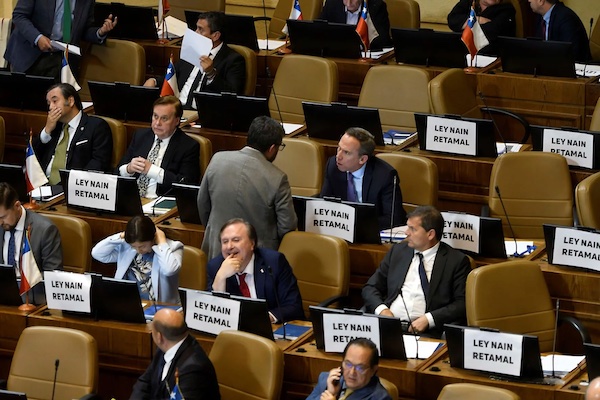
The approval of the Nain-Retamal Law in the Chamber of Deputies has sparked a political debate regarding police actions that led, for example, the National Institute of Human Rights to speak of a “disproportionate inclination towards Carabineros” and to assert that “crime must be confronted from democracy and the protection of Human Rights.”
Some wish to politicize the security debate, reverting to the discourse of excesses that accompanied public discussion during the social outbreak, reducing a complex issue to an ideological problem that does not respond to political logic and requires responsible actions from the State: the rise of violence and organized crime in the country.
It is inappropriate to question whether crime will be addressed from a democratic perspective, as democracy is also a victim of the security crisis, which has reached a point where part of the population is willing to sacrifice freedoms for security, even though security is what enables the exercise of those freedoms and the development of democracy.
The death of Major Rita Olivares over the weekend allowed for progress on projects like the Nain-Retamal Law that provide guarantees to Carabineros. They do not protect them from incidents like that which occurred to Officer Olivares, but they do demonstrate a different commitment to police work.
It is precisely that commitment that is not well received by a segment of the political class that directs the discourse towards potential abuse, which is more related to their interpretation of public order control by associating it with repression.
For example, those voices are the same ones that, in the case of the young man who fell into the Mapocho River during a protest, did not hesitate to accuse the police of excesses and remained completely silent when it was demonstrated that the Carabineros officer’s actions were to detain and apprehend. The same voices that today do not hesitate to complain about legitimate defense, but have forgotten the presumption of innocence that was recorded in the examined videos, which undermined the hypothesis of attempted homicide in the case of the person who fell into the riverbed.
Absolute distrust of institutions is not good for democracy, nor is blind trust. A balanced perspective is required that can strengthen institutions while simultaneously sanctioning those who commit offenses. Institutions are made up of people, and people are not perfect, but it is not possible to confuse the institution with the individuals that comprise it.
Institutions transcend their members, and their good health will depend on the development of a context of peace. Therefore, any advances made in strengthening them will always be positive. We may not be able to silence the voices of distrust, but that does not mean we cannot raise our own to protect the institutionality and value the efforts that its members make daily at the cost of their lives, solely to protect the lives of others.
Pilar Lizana
AthenaLab researcher
Source: El Líbero