Migration Crisis: Time is Up
This article was translated automatically and may contain differences from the original. For reference, read the original.
El Mostrador, April 28, 2023
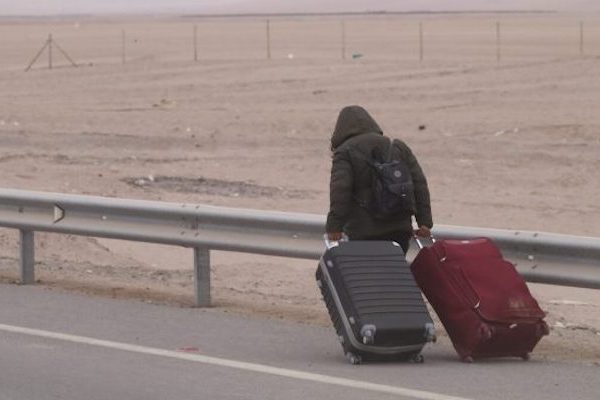
When foreigners, who hopelessly leave their countries and hopefully arrive at our borders, are met only with misery, uncertainty, and insecurity, and this begins to affect Chileans themselves, then the migration process must be strictly controlled, decisively discouraged, and potentially interrupted.
This week, Foreign Minister Van Klaveren stated that, in terms of absorbing migrants, Chile’s capacity is “exhausted.” In this regard, he recalled that this is not the first migration flow the country has received, but it is one of the first “that has been associated in some cases with organized crime phenomena.” The Foreign Minister’s statement is instructive and should serve as a guiding light for all instances that, inexplicably, appear hesitant and even complacent regarding the migration phenomenon that seriously affects our country. The problem is extremely serious and could worsen further.
It cannot be clearer that when a small country like Chile (similar in population to Guatemala) becomes saturated with immigrants, its public services, educational systems, transportation, and housing cannot meet the minimum needs of the newcomers. Additionally, the situation also begins to unacceptably affect the quality of life of Chileans themselves, which is very visible today and has been for some time. Therefore, the occasional inaction or contemplative attitudes of all societal actors involved, to effectively address the problem and with the utmost urgency, is truly disconcerting and completely questionable.
All of the above is compounded by complications arising from perceived high common crime, terrorism, organized and transnational crime, phenomena that intertwine with the migration overflow; overwhelming the Public Ministry, the Judiciary, prisons, and police, and testing our protective legal framework. In this crisis context, it is also fair to mention that we should not stigmatize the millions of foreigners already living in Chile who, for the most part, contribute to the potential development of the country.
When foreigners, who hopelessly leave their countries and hopefully arrive at our borders, are met only with misery, uncertainty, and insecurity, and this begins to affect Chileans themselves, then the migration process must be strictly controlled, decisively discouraged, and potentially interrupted. Otherwise, we are acting as a state whose irresponsibility exceeds the limits of practicality and also becomes a moral issue, which will inevitably be judged harshly by our fellow citizens in the appropriate instances.
Alberto Soto
Collaborator of AthenaLab
Source: El Mostrador