A New Form of Common Crime
This article was translated automatically and may contain differences from the original. For reference, read the original.
El Líbero, August 18, 2023
Security is a public good that everyone should have access to; however, some are excluded. This should be a priority for a government that has lost the trust of its citizens.
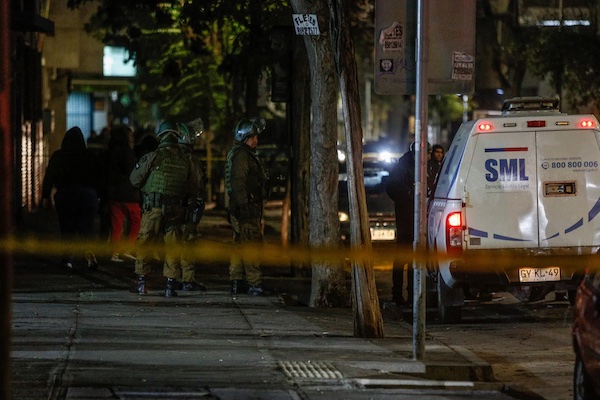
Common crime is that which is committed by individuals or small groups engaged in theft and robbery, among other things. In Chile, for decades, this type of crime has concerned citizens, who usually took greater precautions when in highly populated areas that could be optimal settings for pickpockets. Today, despite a decrease in victimization indicators, the perception of insecurity is increasingly high, and how could it not be? A simple robbery on public transport can end with fatal results.
“Common,” that qualifier related to something frequent or ordinary, is becoming less frequent and more extraordinary. This is due to the increase in levels of violence, the organization of groups that are no longer so small, and the alienation of those who commit crimes. Undoubtedly, the media bombards us with information that heightens fear, but how can it not be extraordinary that the theft of a cellphone in a Metro station ends in a shootout?
It is a reality that crime in Chile has mutated. Greater access to drugs that embolden criminals, the ease of acquiring weapons, and a state that has been slow to respond are some factors that contribute to the rising sense of fear. People have the capacity for astonishment, a quality that allows us to adapt to a changing environment, and today it leads us to demand that situations like those in the Metro or involving victims on one of the many buses in Santiago do not happen again.
The problem arises when these extraordinary crimes become the norm, and we become accustomed to common crime simply coming with higher degrees of violence. In some areas of the country, Chileans already assume that crime operates in their neighborhoods and that it has often permeated the institutions that should respond to it. Accustomed to living with gunfire, thefts, and street confrontations, they have had to change their habits. By modifying their departure and arrival times, routes of movement, and meeting places, they have adapted to the new common crime.
This necessarily results in a loss of trust in those who are supposed to provide security. They have lost faith in the intentions of those who claim to prioritize it and have decided to organize themselves, weakening the Social Contract.
Security is a public good that everyone should have access to; however, some are excluded. This should be a priority for a government that has lost the trust of its citizens. Of course, the arrival of Latin American organized crime is a major concern; however, this new common crime cannot be overlooked, as it could end up integrating into that criminality, generating a spiral of violence that, if not addressed in time, would significantly erode the foundations of democracy in Chile.
Pilar Lizana
Researcher, AthenaLab
Source: El Líbero