Veto on Usurpations and the Value of Words
This article was translated automatically and may contain differences from the original. For reference, read the original.
El Mostrador, October 6, 2023
Using the concept of “criminalizing poverty” denies a common reality for organized crime: the exploitation of individuals’ vulnerabilities to achieve economic ends.
In a context where organized crime extends its territorial control through illegal land occupations, the words of President Boric regarding “criminalizing poverty” in reference to the usurpation project cannot be overlooked. It is not arbitrary that this crime is being discussed, nor is it acceptable to use poverty to justify political differences. This represents a matter of utmost importance that should not be instrumentalized in such a manner, especially in the name of security.
Using the concept of “criminalizing” denies a common reality for organized crime: the exploitation of individuals’ vulnerabilities to achieve economic ends. Hence, the seriousness of the words used to highlight differences between political sectors. These differences are entirely legitimate. Not everyone thinks alike, and that is why debate in Congress is important; however, it is not possible to justify them with the needs of Chileans, who have repeatedly expressed that their top priority is security.
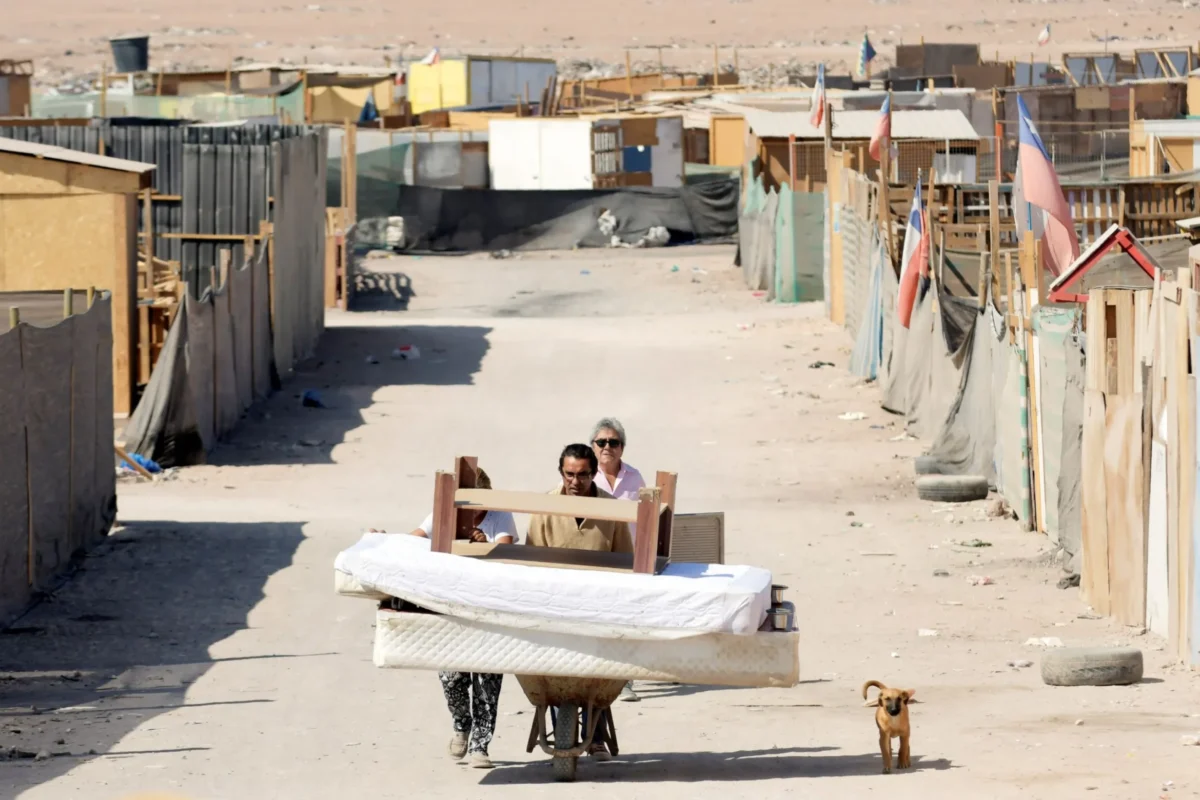
The illegal occupation of land has led to the development of large settlements, such as the one in Alto Hospicio, which, managed by crime, provides those living there with the services they need, is divided into sectors, and those who manage them exert their power through the way they exercise territorial control.The
illegal occupations that sometimes gather more people than some cities or towns in Chile pose a challenge to the State: the protective network that crime builds for itself. The place where it controls the territory not only lacks the presence of the State but also represents a safe area for crime.Its rules are the ones that apply there, and those who live in those places either join or submit. The advance of illegal occupations represents a displacement of the State and a regression of the rule of law, a situation that, if not addressed promptly, could become a risk for Chile, not only due to the advance of crime but also because of the difficulty in recovering what the State loses.
The best example of this is the case of Brazil during the Covid-19 pandemic. In April 2020, the health minister of that country acknowledged that to contain the spread of the virus, they needed to engage in dialogue with the drug gangs that controlled the favelas, as they were the ones in charge there.
We cannot afford to extend that reality in Chile. We must confront the challenges with realism, and for that, we must recognize the underlying problem addressed by the usurpation law: organized crime. The President’s words only cloud the debate and send the wrong message to criminals.
Now more than ever, political leadership must construct the correct narrative. Speaking of non-violent usurpations does not align with that, as reducing penalties to a fine, rather than demonstrating a government committed to security, presents a different opportunity to seize land or property.
Pilar Lizana
Researcher, AthenaLab
Source: