The Strategic Capabilities of the Chilean Armed Forces
This article was translated automatically and may contain differences from the original. For reference, read the original.
El Mostrador, November 19, 2023
What people, and particularly politicians, do not always understand is that our problems could be even worse if we do not have armed forces with effective and convincing strategic capabilities.
The strategic capabilities of the Chilean Armed Forces are determined by the equipment they possess, the quality of their personnel, the training they receive, and several significant aspects such as intelligence, planning capacity, and command and control that exist for their leadership both individually and when operating jointly. Obviously, all of the above is not a topic that is often discussed publicly, and generally, most of these aspects are subject to some degree of confidentiality.
Clearly defining the purpose of the armed forces is key if one wants to discuss strategic capabilities. The constitutional project that we will vote on December 17 states in Article 114 that these are intended for the defense of sovereignty, national security, and territorial integrity, in accordance with the Constitution and the law, and I would add, the defense of national interests, wherever they may be located. In the Lagos Constitution of 2005, they exist for the defense of the homeland and are essential for national security.
There are issues that, given the complex reality in which we live and the passage of time, have emerged for the National Defense institutions. Therefore, I refer to the protection of critical infrastructure, their participation in the very frequent and almost permanent states of emergency, and other matters that are not part of their primary mission, which forces them to neglect preparation for their constitutional role, with the consequences this has on the quality of their strategic and deterrent capabilities.
What a country thinks in military matters is reflected in its defense policy, which in the case of Chile, can be found on the website of the Ministry of Defense, as well as in what is known as military policy and in the force development plan, all aspects that the authorities of the National Defense Ministry should explain to the Congressional Defense Committees at least once a year. This obligation was established in Article 104 of the 21174 Law, and it is unknown whether this has occurred in a timely manner during the current administration.
Assuming that the quality of the personnel in the National Defense institutions remains excellent, and that the capabilities in intelligence, command, and control are still available and operating as needed, we know that training must be affected by the dedication to non-primary tasks, as certain material capabilities must also be affected since maintenance budgets are impacted in the same way as the general finances of the nation.
Not everything is negative; dedication to citizen interest tasks brings good prestige and popularity to the armed forces, but it is clear that this will not save us in case of problems, as at the end of the day, it is the ability to be effective in combat that we need to have.
The strategic capabilities of the armed forces are not built overnight. This is something that is difficult for politicians to understand, who tend to be more focused on immediate problems, and that is why issues like this seek to be treated as state matters, something that is achieved very rarely.
It is obvious that an effective air force is not built overnight, and the same applies to an army. The same logic applies to navies, except that it must be added that the construction of surface ships and submarines takes longer, and therefore requires thinking now about the naval capabilities that will be needed in 20 or 30 years, and about the resources to finance the development of the force, whether naval, air, or military. This is the logic behind the law for financing strategic capabilities that replaced the so-called copper law or initially known as the cruiser law, and we must ensure that it functions as designed, which remains to be seen.
Discussing future strategic capabilities in various areas may seem irrelevant when we have urgent public security problems, insurgency in the southern macrozone, transnational crime entering through our borders, an economy that is not taking off, and many other issues that daily trouble Chileans.
What people, and particularly politicians, do not always understand is that our problems could be even worse if we do not have armed forces with effective and convincing strategic capabilities that, among other things, have allowed Chile to enjoy the benefits of peace for the last 140 years and have protected national interests as necessary.
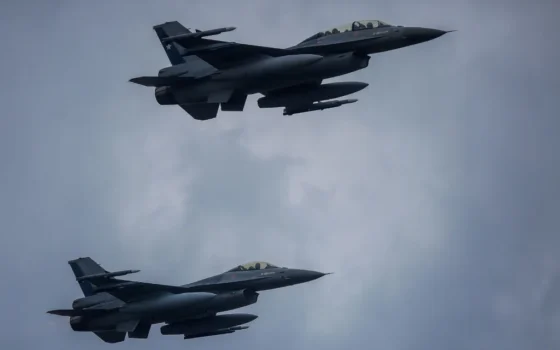
Modernizing the F16s, maintaining the capabilities of our armored brigades, incorporating new aerospace technologies, and developing cyber defenses, among others, are things we must do and finance, because if we need them and have not done the work in time, it will be too late. Obviously, we must be effective in the use of financial resources, as not everything we would like to have will be possible, and that is why it is important that we do not lose sight of the mission that the Constitution assigns to the armed forces, as resources must be invested in the necessary capabilities to fulfill the primary role and not necessarily in accessories, something that is mistakenly done when justifying purchases or investments with a social criterion, a mistake that has been made in all recent governments.
The Navy, due to its special characteristics, deserves a special section, due to the amount of investments and the time it takes to construct ships. Obviously, there may always be opportunities for second-hand purchases with relevant remaining useful lives, but in today’s world, unlike what occurred in the first decade of this century, offers are not abundant, and we may need to consider that part of the future units of the Fleet and definitely the units of the Submarine Force should be new constructions, which ideally should occur in local shipyards, which have the experience and capabilities to do so, requiring significant but not extraordinary investments to build combat units in Chile, and not just auxiliary units, icebreakers, offshore patrol vessels, or replacements for the Aquiles, Aldea, and the barges.
Obviously, any material that can see its useful life extended will be considered, but at some point, new platforms must be built if the above is not possible or there are no good second-hand opportunities. We are talking about a lot of money, and that is why this issue must be addressed realistically. The available resources will determine what we can build, develop, or purchase, and more importantly, equip. There are British, German, French, Spanish, and Danish options, to name a few. All suppliers will offer their best options, which will certainly include local construction as part of the offer, as well as the necessary training, and subsequent maintenance and upgrades. The important thing is that the naval force development plan is what is needed to have the strategic capabilities that fulfill what the constitution requires, our reality as a maritime and tri-continental country, and that it is addressed in a timely manner to avoid unnecessary surprises.
International experience in this matter helps, and we must learn from it, but we must not lose sight of the fact that we must choose the best that our resources allow, avoiding falling into purchases or developments that seek to favor certain countries that may be ideologically close to the current government, something that even the government of the Unidad Popular knew how to avoid when faced with the problem.
Richard Kouyoumdjian
Vice President AthenaLab
Source: El Mostrador