State of Exception in the Metropolitan Region?
This article was translated automatically and may contain differences from the original. For reference, read the original.
El Mostrador, December 6, 2023
Except for the Navy’s maritime police, the Armed Forces are also not designed to handle organized crime, pursue criminals, and apprehend thieves, murderers, and hitmen. They do command respect, but I believe that is insufficient for the problem we are experiencing in urban areas.
To begin this column, I want to make it clear that I understand the insecurity experienced in many neighborhoods of the capital and the desperation of both the residents and their mayors and authorities. We live in a Chile where crime and violence have become part of daily life, with criminals who do not fear the police, prosecutors, judges, or the Central Government, which are ultimately responsible for ensuring the effectiveness of the rule of law.
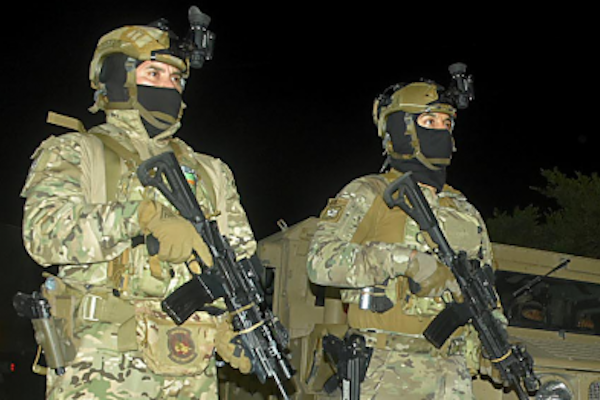
In light of the desperation due to the ineffectiveness of the actions of the Government and the police working for the Ministry of the Interior, more than one governor or mayor has requested the implementation of a State of Emergency or State of Siege, as this means that the respective municipality, province, or region is placed under the command of a general officer of the Armed Forces (FF.AA.), who by law reports directly to the President, acting as their delegate in matters of public security and administration, which constitutes a de facto militarization of the country.
It is not uncommon for public opinion to call for the intervention of the Armed Forces in such situations, as the National Defense institutions and the police top the list of the most prestigious institutions in Chile, and their leaders are recognized as the authorities with the best public image.
It also contributes to the call for the intervention of the armed forces in urban areas that they have already been present in for over two years in the southern macrozone and at the borders with Peru and Bolivia, since the enactment of decree 265 in 2019, or through the constitutional reform that authorizes their use for the protection of critical infrastructure, a definition that included, at the request of Minister Tohá, the borders through which both criminals and illegal immigrants enter. With these examples, governors and mayors ask why do they have that benefit and we do not?
The Armed Forces are designed to address military problems and are trained for that. They are not prepared to resolve police issues, which is why the Constitution clearly establishes that they should only be used exceptionally for tasks that are not their own, and that is why there are Constitutional States of Exception. This is something that the current Government does not understand and has already turned the exception into a routine, and worst of all, it does so with the approval of both Chambers of Congress. It does this both to address the Mapuche insurgency in the southern macrozone, which it incorrectly calls “rural violence” and therefore treats as a criminal issue, and it does so at the borders with Bolivia and Peru, where the problem is illegal immigration and transnational crime, phenomena that are clearly not of a military nature.
The three phenomena that complicate us are of different natures. One thing is the Mapuche insurgency, which can eventually be addressed with military solutions, but it requires recognizing that it is not a police problem, as if it were, it should be handled by the police and the Public Ministry. If we declare it for what it is, the military forces can take charge of the problem in a very short time, but this requires political will and acceptance that there will be casualties on both sides.
What we have in the southern macrozone is not the same as what we started with two years ago or what was implemented at the beginning of Boric’s Government. We started by using the Armed Forces very limitedly, guarding roads and controlling what passed through them, to move to a current model that gives more freedom to the head of Defense in the use of resources, which has brought (along with better work from the police and the Public Ministry) a more controlled and less dangerous reality. That said, if there is the will to use all state resources to eliminate or neutralize insurgent groups, this could be done without much difficulty, but—as I said before—it requires understanding the nature of the problem and having the political will to resolve it.
At the northern and northeastern borders of Chile, the phenomenon is different. We have both illegal immigrants and cross-border criminal groups that take advantage of the vastness of those borders and the inhospitable territory to enter the country. Clearly, this is a problem, but it is a police problem, as we are not facing enemy armies. The issue is not simple, as regardless of the fact that the Armed Forces operate supporting the police, their mere presence indicates that we are militarizing a police problem and, as in the case of the southern macrozone, we are making permanent something that the constitutional norms regarding critical infrastructure indicate should be exceptional.
The deployments in both the southern macrozone and the borders imply efforts for which the Army and Navy are not designed, as they are declared and addressed as police problems. They are designed for war and not to be fixed-point guards. Their maximum effectiveness is when they act to eliminate or destroy a target or organization. Except for the Navy’s maritime police, the Armed Forces are also not designed to handle organized crime, pursue criminals, and apprehend thieves, murderers, and hitmen. They do command respect, but I believe that is insufficient for the problem we experience in Chilean cities.
Chile’s criminal problem can be resolved quickly by understanding that police issues are addressed with police solutions, which must be effective, and for them to be so, they must have intelligence, unrestricted political and judicial support. If this does not happen, public opinion will continue to seek the intervention of the Armed Forces, ceding their individual freedoms in exchange for security and, more importantly, seeking strong, effective political leadership that is not afraid to exercise its authority. The Bukeles are a reality. People already know about them and, like the ancient Romans, want a consul to take charge of solving the problems, and if that means suspending democracy, they will do it.
In summary, General Martínez is correct when he responds to Governor Orrego by stating that the militarization of Santiago will not resolve a problem that is of a police nature and not military. Evidently, military presence provides reassurance, but the problem can only be resolved if the Government gets its act together, decides to exercise its authority, supports the actions of the police and state intelligence unconditionally, coordinates and agrees with the Public Ministry and the courts on an effective strategy, and above all, leaves behind all its complexes regarding the use of force to defeat organized crime and the criminals who do not allow us to live in peace.
Governor Orrego: unfortunately, the answers must be sought from Minister Tohá and not from the commanders in chief of the Armed Forces of Chile.
Richard Kouyoumdjian
Vice President of AthenaLab
Source: El Mostrador


