The Mistakes of Ambassadors Viera-Gallo and Valdés
This article was translated automatically and may contain differences from the original. For reference, read the original.
El Líbero, December 6, 2023
I respect what Valdés may think; however, when occupying the position of ambassador, one must refrain from expressing personal opinions, practice prudence, and safeguard national interests.
Much has been said in previous instances in this medium regarding the ambassadors representing Chile in countries with which we maintain diplomatic relations at the ambassadorial level. There has been discussion about those who come from the ranks of the foreign service, as well as the so-called political appointees who receive that designation for not being career diplomats. The position of ambassador, regardless of its origin, is one of exclusive trust from the President of the Republic, who is assigned by the Constitution to lead foreign relations, and as a result, is presumed to have a clearer understanding than anyone else of what constitutes the national interest and, therefore, is granted the authority to choose and appoint those who represent us in other countries.
In broad terms,20% of ambassadors are political appointees and generally tend to occupy several of the most important representations, such as those we have in Washington, Buenos Aires, London, Madrid, and Brasília, among other capitals. Several of the appointees under this government have drawn public attention, perhaps the most notable being Javier Velasco in Madrid, who had to quickly learn the customs and protocols of the position, including how to interact with King Felipe, or the representative we had in London, who, due to her inexperience, was unaware of certain activities prohibited for those leading diplomatic missions, such as managing contributions from the foundations of Charles III to ideas needing funding in southern Chile.
Surely, it cannot be that difficult to have a course for novice political ambassadors that allows them to avoid beginner’s mistakes or navigate the complex world of diplomacy. In this way, we could continue to benefit from the experience of individuals trusted by the President, as, although it may seem strange, we need them because not all career diplomats are available to become ambassadors and leave the advantageous position of minister counselor, taking the risk that comes with being elevated to the rank of ambassador.
That said, there are some who, despite not being career diplomats, come with experience in the field and are expected not to make the kinds of mistakes typical of first-time ambassadors, but who nonetheless do so, being imprudent or indulging in personal whims that exceed their authority or the prudence expected of an ambassador.Two recent emblematic cases help us understand that controversy is not absent even among the more experienced political appointees. On one hand, there is the mistake of
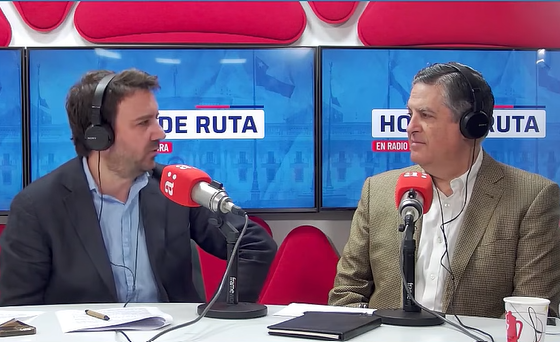
Viera-Gallo , who is currently assuming his role in theMilei administration in Argentina , who in one of his first interviews stated that thecontinental platforms were aspirations and not rights, and that the difference we have with Argentina on this matter would be addressed in the United Nations and not under the mechanism provided by the TPA of 1984 for these purposes. Our relationship with Argentina is fraught with such errors, whether committed by ambassadors, foreign ministers, or presidents, which are later used against us by the trans-Andean negotiators. With Argentina, there is no room for errors, especially when it comes to Chilean sovereign spaces. The other case is the indulgence shown by
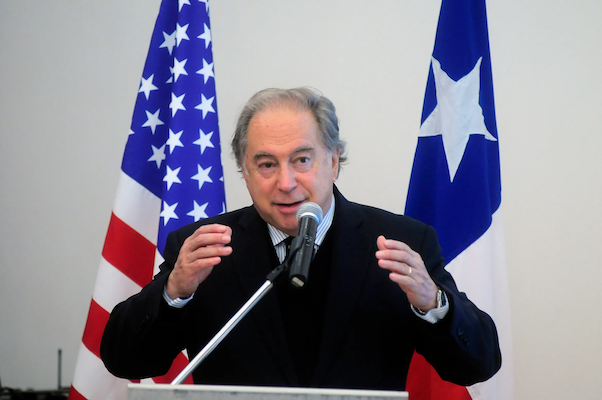
Juan Gabriel Valdés , our ambassador inWashington , when he characterized the recently deceasedHenry Kissinger , as having a profound moral misery. Kissinger served as National Security Advisor and Secretary of State of the United States under the Nixon and Ford administrations; he did not act alone but was part of the administrations in which he worked, holding positions that require Senate approval in that country. By characterizing in this way someone who was one of the most important ministers of the U.S. government during much of the 1970s, he is also characterizing those administrations and their leaders as profoundly miserable.The United States of America is the world’s leading power and a country with which we have significant economic, political, and military relations, and I do not believe it is in Chile’s national interest for its ambassador to indulge in such behavior.
I respect what Valdés may think; however, when occupying the position of ambassador, one must refrain from expressing personal opinions, practice prudence, and safeguard national interests. This also helps us avoid placing the government in the difficult position of having to rescue him and justify the unjustifiable. One would think that years of experience would serve as an antidote to avoid unforced errors and that prudence would be a virtue particularly developed by both, especially considering that many of us were pleased with the appointment of the one going beyond the Andes, or how reassured we felt with the one leading our representation in the northern country.
Richard Kouyoumdjian
Vice President, AthenaLab
Source: