The resignation of General Yáñez
This article was translated automatically and may contain differences from the original. For reference, read the original.
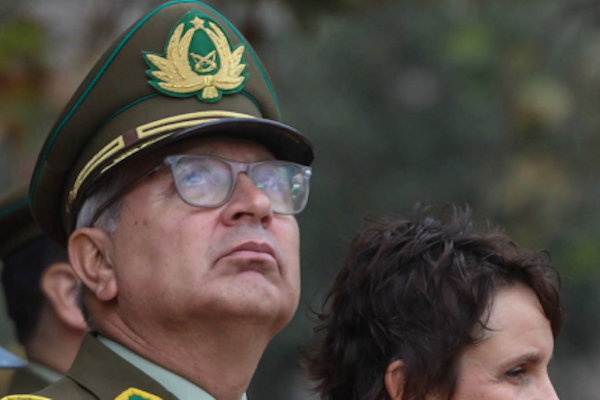
El Mostrador, January 6, 2024
For Carabineros, regardless of being a hierarchical, disciplined, and obedient organization, the resignation of its general director will not be inconsequential, and this could have serious repercussions for the fight against crime and organized crime, which are currently the major issues we face in Chile.
Logic suggests that, regardless of the underlying reason, General Yáñez must resign from the general direction of Carabineros if his continued presence creates a conflict between the Executive and an autonomous state body, such as the Public Ministry. Assuming that the President of the Republic supports the general director, the current situation does not allow for conflicts between two of the main authorities regarding public security.
One should not confuse this with the Public Ministry. It is not an independent power of the state; it is merely an autonomous body whose function is to “direct the investigation of crimes, bring defendants to court when appropriate, and provide protection to victims and witnesses.” It does not issue judicial rulings and can clearly make mistakes, and, more importantly, due to capacity issues, it does not pursue all crimes, only selecting the most significant or the cases where it is obvious that action must be taken.
Like in American movies, the Public Ministry has a lot of politics involved, and it is normal for its work to be praised by some and criticized by others. There is only one big boss, the National Prosecutor, whom regional prosecutors do not always heed, and deviations from the script, like those of prosecutors Chong and Armendáriz, are common.
Unfortunately, being autonomous, they are not very open to criticism or to improving their processes and procedures. The decision by prosecutors Chong and Armendáriz to charge General Yáñez with criminal conduct for being responsible for the actions of Carabineros during the social outbreak, and thus to treat him like any other criminal, is something that many find illogical.
Carabineros faced the social outbreak with the human and material resources it had, with procedures more suited for preventing crimes, pursuing criminals, and managing medium-sized public disturbances. They were not prepared, and it seems that no one was, to confront a social outbreak that mixed genuine social grievances with the actions of criminals and delinquents of the worst kind, who were solely dedicated to destruction and theft.
Let us not be mistaken; the Carabineros followed the orders of the Ministry of the Interior and the President of the Republic. They did not act independently. They went out to restore the order and public safety that had been lost. Like any human organization, they can and should have made mistakes, but there is a significant distance from labeling their commanders as criminals, which is why I miss the position of the National Prosecutor on this matter, or that of the political authorities of the time, assuming their responsibility for the actions of the Law Enforcement and Public Security Forces.
It is one thing for General Yáñez to resign and be replaced by one of the many other capable generals that Carabineros de Chile has, but it is quite another for the Government, the Public Ministry, politicians, and Chileans in general to expect that the day after, Carabineros de Chile will be ready as if nothing had happened.
For Carabineros, regardless of being a hierarchical, disciplined, and obedient organization, the resignation of its general director will not be inconsequential, and this could have serious repercussions for the fight against crime and organized crime, which are currently the major issues we face in Chile.
Richard Kouyoumdjian
Vice President of AthenaLab
Source: El Mostrador


