The Political Role of the Armed Forces of Chile
This article was translated automatically and may contain differences from the original. For reference, read the original.
El Líbero, January 10, 2024
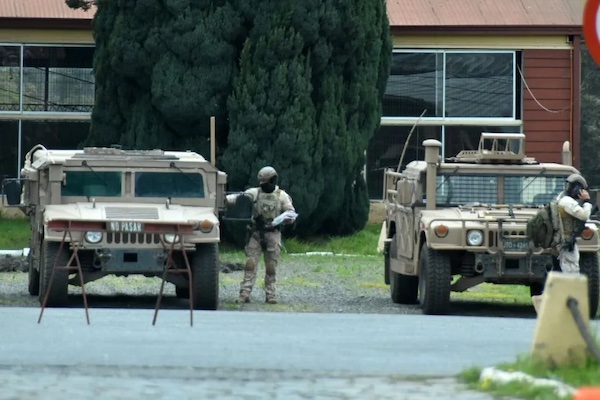
The Constitution assigns a role to the Armed Forces regarding public security, but it is exceptional and cannot become permanent. It is better that it remains this way.
This column is directed not only at the orphans of General Pinochet but also at all those who regularly ask why the Armed Forces of Chile do not take charge of the country due to the existing insecurity, or why they do not take a more active role in restoring public security. By default, it is also directed at all those who seek to nullify them to have a free hand in their pursuit of power through undemocratic means, something that remains the objective of ultra-left groups for whom the end justifies the means, or those on the opposite side of the political spectrum who seek to incorporate them as part of their design for an authoritarian republic like Bukele’s, where the Executive Power needs the power of the Armed Forces to develop its domestic security agenda.
For those who wish to delve deeper into the relationship between the Armed Forces, politics, and politicians, I recommend reading an essay published in this medium in October 2022.
It is clear that the current political situation is complex and that public security is not at its best, and this is largely due to the incapacity of the current government, which does not necessarily mean that previous ones did much better. This indicates that the problem likely lies in the lack of authority and character of those who lead or have led the country, accompanied by a Public Ministry and a judicial system that have also been ineffective in providing solutions to the criminal and delinquent problems we face, which obviously require a firm hand to effectively restore the absent rule of law that affects us. Also read Richard Kouyoumdjian:
On the National Security Council and states of emergency It is also clear that the Armed Forces not only have a
high prestige and citizen recognition, as confirmed by the survey Cadem Plaza Pública No. 521 published on Sunday, January 7, but also, and more importantly, they have what is lacking in Chile, authority and effectiveness. The problem is that they are designed for war and not to be government, police, firefighters, health workers, and all those things that their misunderstood versatility allows them to perform. That the Armed Forces appear to be well-organized, efficient, and effective, conveying authority, discipline, and order does not mean they are designed to be the public force that Chile needs.
Carabineros and the PDI are the police forces that are designed and have the capabilities to restore order and maintain public security. Another issue is that the government lacks the character needed to lead them and make tough decisions, as well as to provide them with the legal safeguards they need to operate without ending up in court. To make an omelet, you have to break eggs, something anyone knows, except for some who inhabit La Moneda. As we have discovered in Chile’s history,
the involvement of the Armed Forces in politics also has a complex side that many forget when facing situations like the current ones. The experience of the military in politics is filled with unfortunate examples, and I am not only referring to the 17 years of military government, which we know has a complex side regarding human rights violations, but also to what occurred in the 1920s and 1930s (See Military History of Chile in the 20th Century by Roberto Arancibia), where the Armed Forces took on political colors and intervened openly in current politics. The political Constitution of the Republic seeks for the Armed Forces to focus on their own duties and not on other matters.
This is very important as the State delegates to them and to the police the monopoly on the use of force, which can evidently be misused to disrupt the normal development of a country’s internal politics. The Constitution protects citizens from the misuse of armed force, or from arms being used to lead us in one direction or another, and limits the use of defense institutions to very exceptional situations, something that both this government and the previous one have failed to understand, but which was made very clear in what some call Pinochet’s Constitution, which for all intents and purposes remains fully in force and is very similar to its original design regarding the Armed Forces and states of emergency. The Armed Forces and their commanders-in-chief know they have power, but they also understand the purpose of that power, which implies its proper and improper use, the lessons that our bicentennial history provides on the subject, and, above all, what is best for Chile and Chileans.
For now,
the important thing is to prevent the misuse that some want to give to the figure of the 4/7, using it to modify the Constitution and constitutional organic laws regarding national defense institutions. The left has a group called Defense and Armed Forces Analysis Group (GADFA), to which Undersecretary Galo Eidelstein belongs, which recently published what they want to change in this area, and if successful, would leave Chile’s Armed Forces at the mercy of the current government. I understand the despair of many, but I regret to inform them that the solution is not a military one.
The solution is police-based and requires a political decision. It requires the government, the police, the Public Ministry, and the courts to do their job: to provide security to Chile and Chileans, who will never be abandoned by their Armed Forces, but it is another matter to ask them to be police, government, and administrators of the country. The Constitution assigns a role to the Armed Forces regarding public security, but it is exceptional and cannot become permanent. It is better that it remains this way.
Richard Kouyoumdjian
Vice President AthenaLab
Source: