Critical Infrastructure, the Militarization of Chile
This article was translated automatically and may contain differences from the original. For reference, read the original.
El Líbero, January 31, 2024
It is difficult to understand that, with a militarized police force like Carabineros, which has the human, operational, and logistical resources, we are not using it more actively to address public security issues.
Exactly one year ago, in this same week of the calendar, the constitutional amendment was enacted and published, allowing the use of the Armed Forces for the protection of Critical Infrastructure.
On Monday, January 29, 2024, the Minister of the Interior and Public Security indicated that the government’s legislative priorities regarding security are: Critical Infrastructure, Ministry of Security, Anti-Terrorism Law, and Intelligence Law.
To date, no specific law has been issued regarding critical infrastructure, and the government has been using the transitional provisions of the constitutional amendment for its application. This is why the chief of staff includes it among her legislative priorities for this year.
Also read by Richard Kouyoumdjian: ICritical infrastructure: risks and challenges posed by this constitutional reform.
Regarding the other priorities, it is correct to improve the Anti-Terrorism Law and the Intelligence Law. Both are ineffective and inefficient, as they currently do not adequately address the criminal reality that Chile faces. On the other hand, I do not see clear benefits in having a Ministry of Security, as it is very likely that the same personnel from the Undersecretariat of the Interior will staff this new government office. The problem of direction and leadership in security in Chile lies in the lack of decision and attitude from the current and previous governments on the matter, along with a lack of knowledge and experience in the field. Additionally, there are other actors such as the courts and the Public Ministry that are autonomous and will remain so regardless of the new ministry.
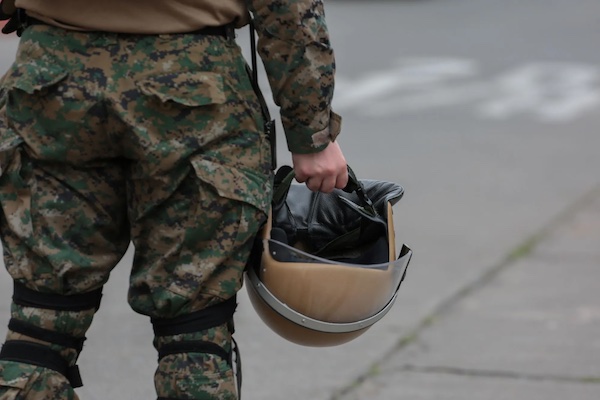
Returning to the issue of critical infrastructure and why it should concern us. Primarily because it allows the use of the Armed Forces in public security matters for longer periods without needing congressional approval; because it definitely involves them in public security issues, even though their focus, training, and capabilities are the protection of sovereignty, territory, seas, and air and space of Chile, and their use in these matters should be exceptional; because we continue to militarize Chile by having the Armed Forces involved and responsible for solving a significant portion of national problems; and because we continue to address the effects rather than the causes of the issues we face regarding police capabilities, the absence of a national security architecture, and coordination with judges and prosecutors.
To ensure we are all on the same page, critical infrastructure is understood by the Constitution as: “The set of facilities, physical systems, or essential public services, as well as those whose disruption would cause serious harm to public health, essential economic activity, the environment, or national security. This concept includes the infrastructure necessary for the generation, transmission, transportation, production, storage, and distribution of basic services and supplies for the population, such as energy, gas, water, or telecommunications; that related to road, air, land, maritime, port, or rail connections; and that corresponding to public utility services, such as health or medical assistance systems.”
The Constitution establishes that they must be protected when there are serious or imminent dangers, which seems logical to public opinion, but loses seriousness when the definition is subject to the initiative of the Executive, and Congress does not exercise strict and adequate oversight.
Already in the same processing of the constitutional amendment, the government included the safeguarding of borders, something that was pressing for them, not due to the invasion of foreign armies, but because of uncontrolled flows of immigrants and the porosity of borders to transnational crime.
The fact that serious or imminent dangers that need to be defended against are not defined, which obviously includes primarily the protection of infrastructure from damage that Chileans themselves may cause, or that they are being used to support police in controlling migratory flows or in the detention of criminals, implies a use of the Armed Forces in matters that are completely foreign to them, for which they have neither training nor legal protection, and leads them back to the old concept of public force from the 1925 Constitution.
The critical infrastructure initiative originated under the Piñera 2 government and is revived by the current government as a good example of the necessity having a heretical face. It stems from the damage caused by Chileans to critical infrastructure such as Metro stations and supermarkets during the social outbreak. It sought to avoid having to go to Congress to request permission to operate under states of constitutional exception, and its apparent legitimacy was based on the European example of using the Armed Forces for similar tasks, only forgetting to indicate that it was to protect against foreign Islamic terrorists.
Evidently in times when public security is at risk, using all state resources, including the Armed Forces, seems logical, but we must not forget that their use should only be exceptional and not permanent, as it goes against the reason for their existence, which is to protect us from external enemies, and at most from insurgents seeking to eliminate the State of Chile.
It is difficult to understand that, with a militarized police force like Carabineros, which has the human, operational, and logistical resources, we are not using it more actively to address public security issues, which makes me think of a lack of political will and support or adequate leadership. One thing is the insurgency in the Southern Macrozone, but another is what is happening in the cities and borders of Chile.
Moving forward decisively with the implementation of the pending legal aspects of critical infrastructure is to move forward with the definitive militarization of Chile. One thing is to support the police at the borders, and another is to transform the Armed Forces into the public force of the nation. These are very difficult processes to reverse and have complex consequences. Let this not be an example of bread for today and hunger for tomorrow.
Richard Kouyoumdjian
Vice President AthenaLab
Source: El Líbero