The kidnapping of a former Venezuelan military officer accelerates the need for a robust intelligence system
This article was translated automatically and may contain differences from the original. For reference, read the original.
El Mostrador, February 24, 2024
If Venezuela is behind this, we should provide protection to refugees. That is the first lesson. The second is that we need a robust intelligence system. And the third, we cannot be naive. We must monitor what the axis of Cuba, Venezuela, Bolivia, and Iran is doing.
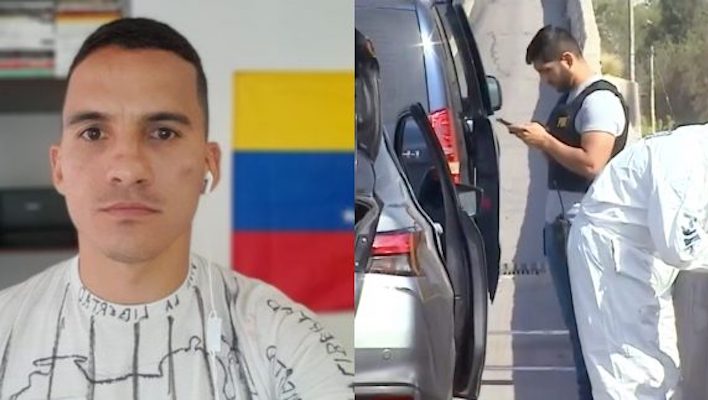
Forty-eight hours after the kidnapping of Venezuelan Lieutenant Ronald Ojeda, there is no clear and precise information available, except for what was captured on the building’s security cameras and the vehicles used. The Public Prosecutor’s Office and the police may know something, but if that is the case, it has not reached the public or the media.
Why does this case attract attention? Because it involves a former Venezuelan military officer who is an opponent and enemy of the Maduro regime, who escaped from Venezuela and was in Chile as a refugee, and who apparently was not involved in illicit or criminal activities, which could rule out settling scores or connections to organized crime.
The hypothesis put forth by specialists in the field is that Lieutenant Ojeda was captured by Venezuelan agents or at their behest due to his status as an opponent of the regime and a fugitive from justice. It is most likely that they did this to send a message both within and outside of Venezuela. Whether he is alive, in Chilean, Venezuelan, or another country’s territory is under investigation.
If the above is correct, what Venezuela did is illegal and a violation of Chilean sovereignty. It will generate calls from ambassadors, but I do not see us moving from diplomatic relations to merely consular ones. Countries engage in this type of activity more frequently than one might think, and that does not lead to war. If it did, the United States, the United Kingdom, and other Western powers would be banned and sanctioned. The same applies to Russia, China, Iran, North Korea, Cuba, and the aforementioned Venezuela, which regularly conduct operations of this kind.
Again, if Venezuela is behind this, and knowing that there are precedents such as a recent case in Colombia, we should provide protection to those we grant refugee status. This is the first lesson.
The second lesson comes from the absence of a robust intelligence system that can anticipate such situations. We know that what we have is insufficient, and combined with other problems we have faced, it adds urgency to the need for one, which involves not only legal aspects but also budgetary and organizational considerations.
Creating a system is something that should be entrusted to specialists and not left in the hands of the political world. It must consider operational capabilities, not just information and the generation of prospective scenarios. We are talking about a system that, on a Chilean scale, is capable of performing what the CIA does in intelligence, the FBI in counterintelligence, and the NSA in communications. It must incorporate what comes from the military and police sectors, aiming to avoid more blunders like those we have seen in recent months.
The third lesson, which is related to the previous one, is that we cannot be naive. We must monitor what the axis of Cuba, Venezuela, Bolivia, and Iran is doing. Their actions can affect us and, more importantly, impact us at the borders with Peru and Bolivia, fragile countries through which criminals enter Chile and the illegal immigration that burdens us.
Clearly, everything would be easier if we had a national security strategy that operated through a system designed to address the problems that affect us, which now not only consider organized crime, fires, insurgency, and illegal immigration, but also possibly operations by foreign agents on national territory.
It is time to get serious and do the work. It is time to have a national security system that includes a robust intelligence system. Otherwise, we will continue to be the laughingstock of the neighborhood. Chile and its people deserve more security than what we are witnessing every day.
Richard Kouyoumdjian
Vice President of AthenaLab
Source: El Mostrador