Lessons from the case of Venezuelan Lieutenant Ronald Ojeda
This article was translated automatically and may contain differences from the original. For reference, read the original.
El Líbero, February 28, 2024
We can no longer afford to be naive; we live in a dangerous neighborhood. We must monitor the actions of the axis of Cuba, Venezuela, Bolivia, and Iran. What they do affects us.
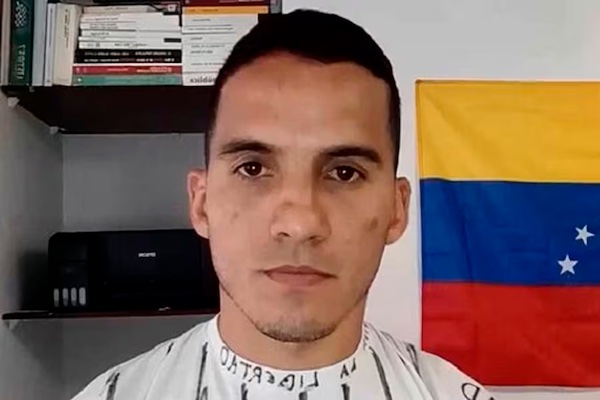
I write five days after the kidnapping of Venezuelan Lieutenant Ronald Ojeda , and there is no clear and precise information available, except for what was captured by the cameras in the building where he lived and the vehicles used. The public prosecutor’s office and the police may know something, but if that is the case, it has not reached public opinion or the media, and reports suggesting that this event was facilitated by the recently signed police agreement between Chile and Venezuela allowing for information exchange have been dismissed.
Why does this case attract attention? Because it involves a former Venezuelan military officer who is an opponent and enemy of the Maduro regime, who escaped from Venezuela and is considered a fugitive from justice in that country, who is or was in Chile as a refugee and who, apparently, was not involved in illicit or criminal activities, which could rule out settling scores or connections to organized crime.
The hypothesis put forth by specialists in the field is that Lieutenant (R) Ojeda was captured by Venezuelan agents or at their behest due to his status as an opponent of the regime and fugitive from justice. It is most likely that they did this to send a message both within and outside of Venezuela to those who oppose Maduro. Whether he is alive or dead, in Chilean, Venezuelan, or another country’s territory is a matter of investigation.
If the above is correct, what Venezuela did is illegal and a violation of Chilean sovereignty. It will generate calls from ambassadors, but I do not see it leading to major consequences such as breaking diplomatic relations or reducing them from full diplomatic relations to only consular ones. Countries, even knowing that it is illegal and more frequently than one might think, engage in such activities, and that does not lead them to war. If that were the case, the United States, the United Kingdom, and other Western powers would be banned and sanctioned. The same applies to Russia, China, Iran, North Korea, Cuba, and the aforementioned Venezuela, which regularly conduct operations of this type. Not to mention, in Chile, the military government through DINA carried out some operations of this nature, which still cause controversy and bad memories.
Again, if Venezuela is behind this, and knowing that there are precedents such as a recent case in Colombia, we should provide protection to those we grant refugee status to, as there is a reason they are in that condition. This is the first lesson.
The second lesson comes from the lack of a good intelligence system that can anticipate such situations. We know that what we have is insufficient, and combined with other problems we have faced, it adds urgency to the need for one, which involves not only legal aspects but also budgetary and organizational ones. Creating a system is something that should be entrusted to specialists and not left in the hands of the political world. It must consider operational capabilities to operate both within and outside of Chile, and not just information gathering and generating prospective scenarios. We are talking about a system that, on a Chilean scale, is capable of performing what MI6 does in intelligence, MI5 in counterintelligence, and GCHQ in communications and cybersecurity in the United Kingdom. It must integrate and sum up what comes from the military and police sectors, seeking to avoid more discomforts like those we have seen in recent months.
The third lesson which is associated with the previous one, is that we can no longer afford to be naive, we live in a dangerous neighborhood. We must monitor the actions of the axis of Cuba, Venezuela, Bolivia, and Iran. What they do affects us. We share borders with Bolivia, a country with strategic agreements with Venezuela and Iran. Bolivia is actively receiving Iranian assistance and allows the operation of Venezuelan agents from its territory; territory through which most illegal immigration enters.
What happens with Venezuela and Venezuelans is not neutral for Chile, so we cannot sever relations with them as we need to stay informed. The saying applies here: ‘keep my friends close, but my enemies closer.’ It is a country we must monitor and infiltrate. We must treat it as our greatest security risk. This implies knowing what is happening in Venezuela and with Venezuelans living in Chile. Let us not forget that a significant part of the organized crime that affects us originates from that country, which is in turn run by a narco-criminal gang.
Evidently, everything would be easier if we had a national security strategy that operated through a system designed to address the problems that affect us, which now not only considers the protection of Chilean territory, seas, air, and space, but also includes organized crime, intentional terrorist fires, Mapuche insurgency, and illegal immigration, as well as possibly operations by foreign agents on national territory. All of the above goes against national interest, or the interest of Chileans.
It is time to get serious and resolve the problems. Time to have a national security system that considers, among other things, a world-class intelligence system suitable for the times we live in. Otherwise, we will continue to be a source of pity. Chile and Chileans deserve more and better security than what we are receiving from the current government, which after two years can no longer blame those who preceded them.
Richard Kouyoumdjian
Vice President AthenaLab
Source: El Líbero