Tough prison?
This article was translated automatically and may contain differences from the original. For reference, read the original.
Nothing works if those responsible for overseeing the enforcement of sentences and maintaining order within correctional facilities are part of the problem.
June 21, 2024, El Líbero
The prison is the last link in the public security chain. It is a place to serve sentences, but also to deter crime, as no one should want to go to prison. The problem is that this function is not being fulfilled in our country. Operations are coordinated from within the prisons, communications between criminal groups are maintained, the risk of criminogenic contagion is real, and those who are supposed to ensure that none of this happens are currently involved in a case of corruption and arms trafficking.
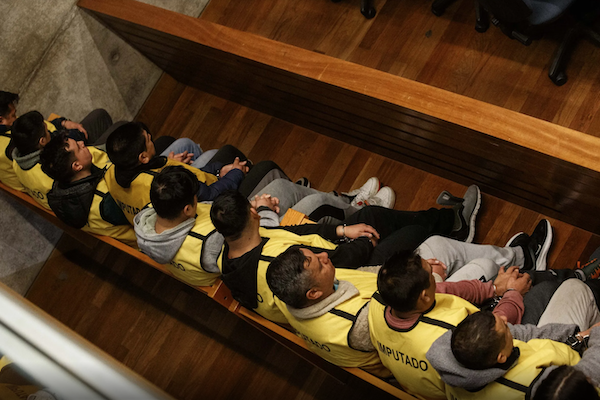
The first fast-track legislative initiative on security included a project for the expansion and construction of prisons. This is quite necessary considering that the Gendarmerie has reported a 133% usage of capacity over 24 hours. Having more capacity would allow for the segregation of the inmate population, cutting communication networks, isolating the most dangerous inmates linked to organized crime groups, and reducing the risk of criminogenic contagion. However, none of this is useful if those responsible for overseeing the enforcement of sentences and maintaining order within correctional facilities are part of the problem. Public policies would also be ineffective if judges request the identities of protected witnesses and undercover agents or authorize video calls to highly dangerous inmates.
The prison challenge must be addressed in its entirety. This means taking charge of the existing inmate population and how to manage it, as well as dismantling the internal corruption evident in the Gendarmerie, which has been exposed on several occasions.
The tough prison policy applied in Italy to confront organized crime within prisons undoubtedly represents a relevant case study for advancing in this area. However, it is first necessary to review what is happening with the Gendarmerie. Unlike other security agencies, they have the status of a public service, not a state institution, and they are neither apolitical nor non-deliberative. In fact, they deliberate quite a bit, as evidenced by each strike or protest carried out by their various unions when they disagree with a measure adopted by the authorities.
This does not mean that all is lost, and rather than discouraging, it should call for action. What action? To review that service, modernize it, elevate its status, and implement anti-corruption measures to prevent unfortunate news like that of this week regarding arms sales.
As with other matters related to security, the task is not easy, but without it, the results obtained from control measures and crime-fighting efforts may not be effective, as the last link in the chain would not be contributing to the desired final outcome.
A penitentiary strategy in Chile should strengthen the Gendarmerie, eliminate corruption, and dismantle organized crime. Increasing prison capacity helps alleviate overcrowding, but the challenge is much deeper than merely increasing facilities.
Pilar Lizana
Senior Researcher, Athenalab