State of Emergency or Critical Infrastructure? How to Better Utilize the Armed Forces?
This article was translated automatically and may contain differences from the original. For reference, read the original.
El Mostrador, July 26, 2024
President Boric’s government has long sought to have unrestricted authority regarding the use of the Armed Forces, but it wants to do so without having to request permission every 15 days, as is the case with States of Exception.
Recently, Senator José Miguel Insulza proposed the need to use the Armed Forces in the fight against organized crime under the legal framework of a Constitutional State of Exception, a proposal that he changed a few days later—after a meeting with the Minister of the Interior and Public Security—to its possible use under what is known as “critical infrastructure.”
For those not experts in the field, a State of Emergency is a Constitutional State of Exception that, as its name indicates, is exceptional and not permanent, as might be the case if it were to be used to support police in anti-crime actions for a more extended period.
The State of Emergency imposes more restrictions than those associated with a State of Emergency, which is used in the southern macrozone. It is designed for situations of internal war or severe internal unrest and, therefore, allows those in charge to apply greater restrictions on freedoms and constitutional guarantees. Like the State of Emergency, it is not designed to combat criminals, but it does permit the use of military force (although States of Exception are regulated by the Constitution currently in force, for more information on the subject it is recommended to refer to the Constitutional Organic Law that regulates them).
It is understood that what Senator Insulza had in mind was the use of military force for two purposes: to provide reassurance to the public through a military presence on the streets and to support the police in the fight against organized crime.
The application of a remedy like the State of Emergency may fulfill the above, but it comes at the collateral cost of restricting freedoms and constitutional guarantees and also requires a military contingent that we do not have. The current Chilean Army is no longer high in soldiers, as it once was. It is high in technology and low in personnel. It is no longer an Army rich in conscripts, who—of course—are not trained for public security tasks. It is also not high in professional soldiers, an alternative designed a few years ago that has not been very successful, due to the unattractiveness of the job offers made.
I am sure that Minister Tohá clarified the senator’s thoughts when they met and reviewed the issue. She surely told him that the use of the Armed Forces under the framework of critical infrastructure, which is already in the Constitution, is preferable, but without the law that operationalizes it.
President Boric’s government has long sought to have unrestricted authority regarding the use of the Armed Forces, but it wants to do so without having to request permission every 15 days, as is the case with States of Exception. To this end, they adopted the critical infrastructure project that was raised during Piñera’s second term to employ the Armed Forces in the protection of critical infrastructure, in order to prevent what occurred during the protests that took place during the so-called “social outbreak,” where, among other things, Metro stations, public transport, government offices, and, in more than one case, electricity generation and transmission facilities were affected.
The current government is employing military forces in support of the police at the borders with Peru and Bolivia, under the framework of critical infrastructure. They achieved this by including a paragraph in the constitutional amendment that also allows their use at borders, even though they are clearly not critical infrastructure, and they do this because they were allowed to regulate the use of defense institutions by decree, something that was only meant to last six months and has clearly extended much longer.
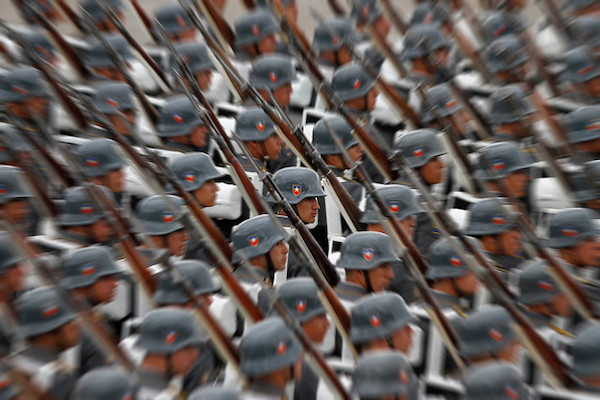
It must be understood that the Armed Forces are not designed to perform police duties. That said, it does not mean they cannot provide extraordinary support for specific purposes. Recently, General (r) Enrique Bassaletti indicated that, just as the police supported the Armed Forces in the case of external war, he expected the reverse to occur with support for the police. This is common sense, but it must be ensured that the idea does not end up being a disaster, which would surely happen if its use is not clearly regulated by law, as well as the use of force they possess. We are filled with cases of soldiers who are in process or convicted for using their weapons, following the President’s instructions.
Understanding that the use of the Armed Forces in support of the police is something that will happen sooner or later, the following should be established:
- That the use of the Armed Forces is determined by the President of the Republic, who assumes responsibility for their use, after discussion and reporting to the National Security Council, and approval by the National Congress.
- Both the Constitution and the critical infrastructure project must modify the title and concept of use, changing it to one that speaks of the support of the Armed Forces to police action in the fight against organized crime, insurgents operating within national territory, and border protection. The protection of critical infrastructure can remain, but with the understanding that it is more aimed at protecting it from terrorist actions. Its authorization by Congress must remain the same as in the case of Constitutional States of Exception, that is, every 15 days.
- The budget and resources required by the Armed Forces to carry out these functions must be provided, something that does not currently happen, as what is being done in the north and south is being carried out with ordinary resources directed by law to finance their normal operations and training, resulting in a degradation of capabilities.
- Before operating in support of the police, the concept of use, strategy, capabilities, and training that will be needed must be approved. This is something that must be worked on by the Army Chief Command with its Land Operations Command, the Chief of the Joint Staff, and the Carabineros’ Order and Security Directorate. If this is not coordinated and trained properly, it will end up being a complete disaster.
- The Armed Forces will require clarity regarding the responsibility in the use of military force and, on the other hand, clear and precise Rules of Use of Force (RUF), but mainly suitable for the realities they will face, where asking many times is not useful, but acting with clarity and precision is essential.
Finally, to conclude, if this issue is not addressed professionally, it will not succeed. It is clear that it needs broad political support, but the use and manner of use—please—should be left to the professionals in the field. Politicians should ensure the existence of laws and the budget, as that would already be a significant help, and above all, they should not undermine those who will be doing the work of combating organized crime, as if they do, there will be nothing left to do.
Richard Kouyoumdjian
Vice President AthenaLab
Source: El Mostrador