COLUMN | The Impact of the U.S. Election on South America
This article was translated automatically and may contain differences from the original. For reference, read the original.
- by Juan Pablo Toro
- Opinion
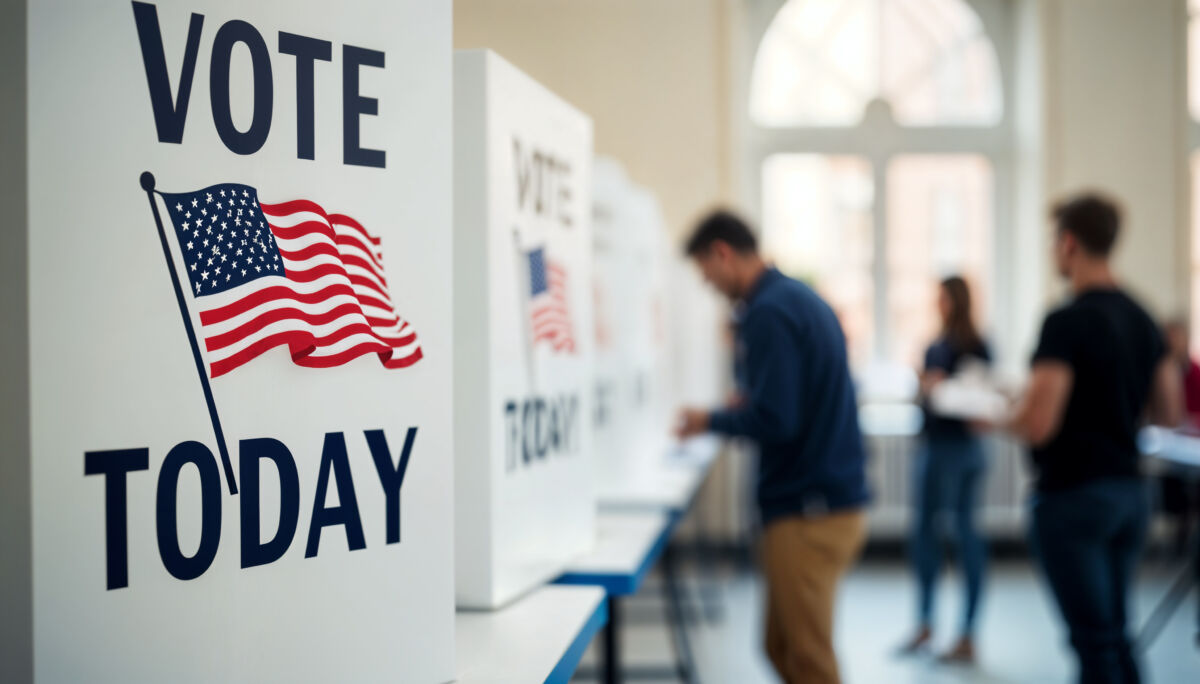
With the outcome of the U.S. election uncertain three weeks before the first Tuesday in November, the arrival of Democrat Kamala Harris or Republican Donald Trump at the White House is significant for South America, even if it is not a top priority for Washington.
Regarding Venezuela, Joe Biden’s approach to the regime, which involved lifting economic sanctions to encourage democratic behavior that has never existed in Nicolás Maduro’s mind, proved to be a failure, as seen in the recent electoral fraud. If Harris truly wants to take charge, she will need to seek an original solution or encapsulate the problem—similar to what was done with Cuba—since the total pressure strategy previously employed by Trump also did not bring about change. However, Maduro may create a more radical scenario if he decides to strike at neighboring Guyana or continues to align with Russia and Iran militarily.
When the Republican was president, his alignment with Jair Bolsonaro, the arch-enemy of current President Lula da Silva, was well known. If he returns to the White House, a distancing from Brazil is likely. However, Harris also faces challenges, as Lula has left the West perplexed with his ambiguous position on Ukraine, particularly regarding the attribution of responsibilities in the conflict. Lula may have his reasons, as the invading Russia is a source of fertilizers for the local agro-industry and a member of BRICS, but Ukrainian President Volodymyr Zelensky has criticized his behavior, claiming it is a way to seek leadership at the expense of his country. In any case, it will be easier for the Democrat to attempt a rapprochement with the Lula administration.
Argentine President Javier Milei is likely betting on Trump’s victory, with whom he has exchanged compliments. The libertarian will be his preferred interlocutor in South America, which will give Milei direct access to Washington and its circles of power. Harris may be more pragmatic, continuing efforts to draw Argentina back into the Western orbit, but without a loud rhetoric.
Beyond these countries, there are issues that will be unavoidable for either candidate, such as China’s presence in South America in the economic (strategic minerals), port, space, fishing, and cultural fields. If we recall what happened between 2017 and 2021, Trump-era officials could hold Peru accountable for its ‘audacity’ in allowing the construction of a Chinese maritime terminal in Chancay. On the other hand, a potential President Harris will need to offer more than just lessons to a region in need of infrastructure to improve its global connectivity (something the Chinese understand well) and cooperation in combating crime.
Taking the latter into account, the increasingly close correlation between crime and migration that is emerging in the United States could have an impact, depending also on the composition of Congress and the Senate. For Trump, the lands of the ‘bad hombres’ living south of the Rio Grande should not have privileged access to his country, so programs like the visa waiverwill be difficult to maintain. Indeed, immigration management has been one of the most exploited fronts by Republicans to attack the Biden administration, blaming Harris for the ‘border chaos,’ although she has been dealing with the root causes of the exodus originating in the Northern Triangle (Guatemala, El Salvador, and Honduras). Given the political context on this matter, more restrictions rather than openings are foreseeable.
One must also wonder what this holds for Chile. It is hard to imagine Trump seeking rapprochement with Gabriel Boric in the twilight of his term, given the political chasm between them. It also does not seem logical for Harris to expend much energy on a president who will soon leave power. For both, concerns about Chile’s economic dependence on China and the lack of scrutiny mechanisms for investments in strategic sectors will remain. Additionally, the deep connections between the militaries of both countries will maintain their course, although the shift of Americans towards Argentina does not go unnoticed.
In any case, to truly understand what Washington is interested in regarding the region, one must follow Southern Command, as its chief is the one who visits South America the most among high-ranking U.S. officials. The dangers threatening local democracies from extra-continental actors supporting autocracies (China, Russia, and Iran) and criminal organizations are on the radar. But as General Laura Richardson, who is about to transfer her position, announced this week in Mendoza, the U.S. seeks to ‘accelerate processes so that economic security becomes national security.’ And that is indeed a challenge for countries that have never considered that perspective, whether with Harris or Trump.


