COLUMN | Consequences of the Financial and Salary Issues of the Armed Forces
This article was translated automatically and may contain differences from the original. For reference, read the original.

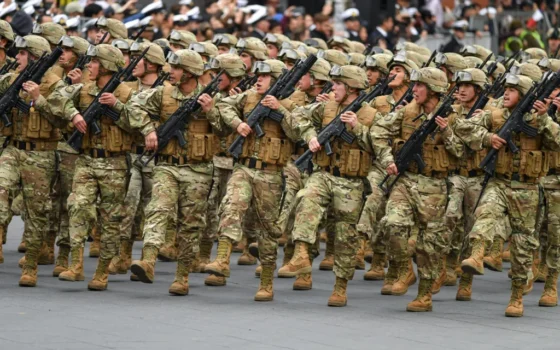
In times when Chile is managed by the Minister of Finance, the purpose of this column is to draw attention to the problems affecting the Armed Forces and the individuals working within them, primarily due to the fiscal constraints the country is experiencing, and, on the other hand, due to the manner in which the national budget is managed and distributed, which ultimately generates a national security problem, as the Defense institutions require quality resources and personnel in sufficient quantities to operate and fulfill their constitutional obligations, starting with ensuring they are well compensated, doing their part, and only exceptionally, internal security.
Recently, it was reported that military personnel were detained for engaging in criminal activities, which is obviously serious, very serious. Among the negative aspects, the positive is that it was detected by the Chilean Army itself, which reported it to the Public Prosecutor’s Office, who in turn ordered the detention and prosecution of those involved. Could the salary and working conditions of the Army’s personnel have contributed to members of that institution straying from the right path? We will surely know soon, but it is very possible and probable that the answer is affirmative.
Before delving into the issue of fiscal constraints, and to reinforce the previous point, let us remember that organized crime is a criminal enterprise that operates with a business logic, and that requires weapons and trained personnel in their use, something that can be found in the Armed Forces and the police, so it is to be expected that there will be more efforts from criminal organizations to obtain weaponry and to recruit and attract uniformed personnel, which is somewhat facilitated if the salaries they receive are low, the work demands are high, and they are deployed far from their families and in states of constitutional exception that are anything but exceptional.
Now shifting from the macro to the micro, the State of Chile has the constitutional obligation, as indicated in its Article 1, to safeguard national security, something for which the Armed Forces and the police play a primary role. Logic dictates that since national security is something recognized by the constitution in the first article, where the most essential matters are addressed, then it is appropriate that those institutions responsible for national security have the necessary budgets and equipment to fulfill those important functions.
The next question is, what is the Defense OPEX? If we exclude pension-related expenses, the budgets of the DGAC and DGTM, the CAPEX, and what the State does not reimburse for deployment expenses in the Southern Macrozone and the northern and northeastern borders, we are talking about approximately 1.7% of the national budget. Quite low considering that it is supposed to be an important and critical issue, and that additionally the Armed Forces must fulfill five mission areas, four of which are not necessarily related to the defense of sovereignty, national territory, and the protection of national interests wherever they may be located. Chile should have a minimum OPEX of 2.6% and not the current 1.7%.
By way of comparison, Education takes 19% of the budget, Health 18%, the Ministry of Housing and Urbanism 6.4%, Public Works 5.6%, and the police 2.4%. We could continue making comparisons, but it seems clear that defense spending is less than it should be. That said, what are the consequences of spending only 1.7% of the budget on the operation of the Army, Navy, and Air Force?
- Hours dedicated to training, sailing, and flying are very close to the minimum required to maintain operational qualifications, and more importantly, the combat capabilities necessary for adequate deterrence, thus putting national security at risk, which is what the Armed Forces are constitutionally obligated to ensure (Article 101 of the constitution).
- A decrease in academic activity and professional preparation both in Chile and abroad. Historically, we have had professionals globally recognized for their high training, culture, and knowledge. Military training is primarily learned outside of Chile, where conflicts exist, and in places like London, Washington, Tel Aviv, and Paris, among others.
- Impact on the national military industry due to low activity and requirements, nullifying the possibility of innovation and development.
- Suboptimal staffing levels required for safe operations, and wear on personnel due to operating with fewer people than necessary
- Low salaries that lead personnel to seek job alternatives outside the Armed Forces.
- The exodus of talent that occurs due to not engaging in activities inherent to the military profession, whether due to inactivity or non-military secondary missions.
Moving to more specific cases, where the consequences are clearer, we can mention:
- Inability to cover the staffing of 7,000 professional soldiers in the Army, which implies a lack of qualified labor that cannot be filled by conscripts in armored material, artillery, communications, and all operational requirements generated by states of exception, critical infrastructure, and border security, where personnel with a minimum of training are necessary.
- Inability to adjust salaries for marines and soldiers assigned to the Southern Macrozone and the borders with Peru and Bolivia, which implies, among other things, that the turnover rates in the Marine Corps and some military units affected by covering those geographic areas are higher than desirable.
- Inability to retain talent in a country where the State has not been able to resolve the security crisis, leading private companies to seek military personnel from the Armed Forces for their own needs in this area.
- Low salaries and very demanding working conditions are a vulnerability that makes military personnel sought after by criminal organizations, which not only require weaponry but primarily trained and disciplined soldiers and marines for their own ranks.
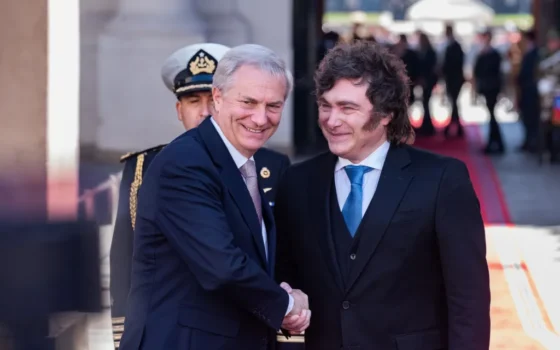
The budget adjustments reported in January 2025 primarily affect salary lines and general expenses, further deepening the aforementioned problems. It is time to understand that fiscal spending adjustments cannot come at the expense of defense, an expenditure that only represents 1.7% of the national budget and does not align with the criticality it is supposed to have. In this regard, as an example, Milei, when he took office in Argentina and began to reduce fiscal spending, the only ministries he did not touch were the Ministries of Security and Defense. On the contrary, he increased their budgets so they could regain lost capabilities over the years. He understands, more than anyone, as a good liberal, the roles that the state must perform and which it should not, and that national security is the primary and only justification for the existence of the state.
A quick look at Chile’s budget indicates that we have lost our way; we have transformed into a welfare state that is incapable of allocating resources to satisfactorily fulfill what is established in Article 1 of the constitution, the safeguarding of national security. We have the Armed Forces with the necessary equipment, but nothing is achieved if we are not capable of ensuring they operate, shoot, train, sail, and fly safely, and are able to generate effective and credible deterrence, something that is unacceptable in the current tumultuous world.
Richard Kouyoumdjian, Vice President of AthenaLab
El Líbero, July 2, 2025