The Importance of Bolivia for Chile
This article was translated automatically and may contain differences from the original. For reference, read the original.
- by Richard Kouyoumdjian
- Opinion
It is time to restore relations and to understand that Chile and Bolivia together are more than the sum of what each brings to the table. It is time for relations with neighboring countries to be the priority of our country's foreign relations.
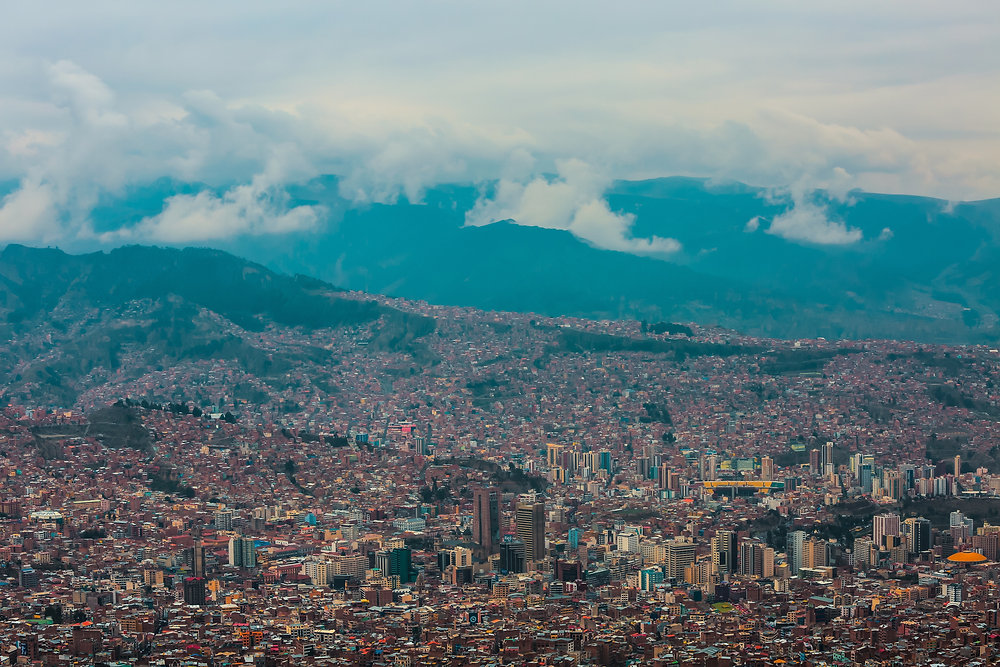
One only needs to look at a map of the region to realize the importance of Bolivia and the geopolitical influence that its location in the center of South America exerts on Chile, Peru, Argentina, Brazil, and Paraguay. What happens in Bolivia is not neutral for its neighbors, particularly for Chile, a country that also shares significant economic ties and dependencies, as well as a long border of approximately 850 kilometers, which—due to its elevation—are not easy to control, but that does not make it impossible, especially regarding smuggling, drug trafficking, and the movement of people.
With the election of President Rodrigo Paz, we all thought that engaging with Bolivia would be simpler and that we could move beyond a complicated relationship, one that made any efforts in public security difficult and, at times, complicated the economic relationship, despite the high dependency that Bolivia and northern Chile have on each other.
In the early months of President Paz’s term, everything seemed to flow smoothly, and we even discussed restoring full diplomatic relations at the ambassadorial level, moving away from the practice of having consuls general with ambassadorial rank. We talked about setting aside the eternal discussion of Bolivia’s access to the sea and focusing on security and economic emergencies, which affect both countries equally.
Having good relations with a politically stable Bolivia facilitates everything related to border control, allowing for actions to be taken on both sides and not just with a focus on Chile. This enables us to dedicate fewer human and material resources to preventing smuggling, organized crime, and illegal flows of people across our borders, something that requires greater efforts when things become disordered in Bolivia, especially when Bolivia’s security forces are focused on maintaining public order within their country rather than on what happens at the borders with neighboring countries.
It is clear that the meeting held last week in Santiago on May 28, with the participation of Ecuador, Peru, Argentina, Bolivia, and Chile, was necessary and mandatory. The five countries face the phenomena of transnational organized crime manifested in bidirectional flows of narcotics and smugglers of goods and people, which could increase and become more pronounced if U.S. efforts concentrate on Northern Latin America, from where the trafficking of drugs and people that affects them originates, pushing organized crime to move its lucrative businesses further south, making coordination and joint work among the aforementioned countries more necessary than ever.
Therefore, it is imperative that the countries affected by the same criminal phenomena act by firmly supporting the democracy and institutions of Bolivia, something that is even more important for us due to the long border we share and the economic interdependence we have. A Bolivia in a state of failure is a risk we cannot accept. Supporting President Rodrigo Paz Pereira and his democratically elected government must be a priority of our foreign policy and that of South American countries.
This week, the first week of June 2026, Ambassador Roberto Ruiz assumes the role of consul general, and we hope he will soon change his status to ambassador of the Republic of Chile. It is time to restore relations and to understand that Chile and Bolivia together are more than the sum of what each brings to the table. It is time for relations with neighboring countries to be the priority of our country’s foreign relations.