AthenaLab researcher consulted by Emol on crime in light of recent homicides
This article was translated automatically and may contain differences from the original. For reference, read the original.
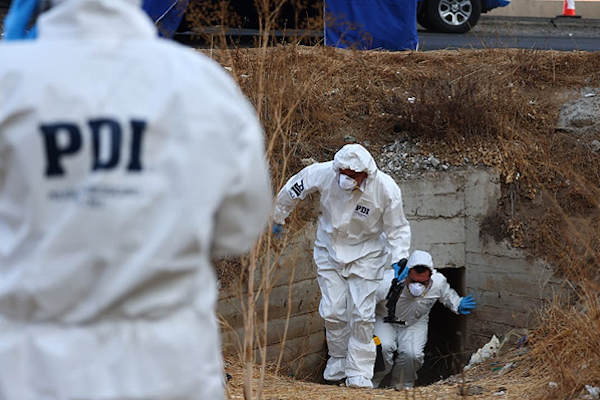
Bodies found and criminal importation: What are the factors behind the new modalities of homicides in Chile?
Marco Zecchetto Rocco
May 25, 2023
Security experts and lawmakers evaluate the most recent incidents in this category of crimes, explaining the main causes of these new modus operandi.
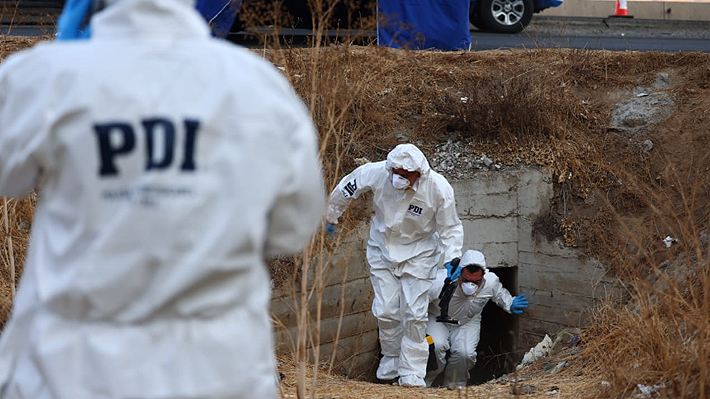
From the discovery of bodies and a head in dumpsters to corpses thrown on the roadside, these new forms of homicide have become increasingly common, which, according to specialists, are associated with settling scores. Even the Minister of the Interior, Carolina Tohá, referred to this type of murder, stating that “these are crimes that we now see periodically, but which were not common in Chile before.”
According to figures from the Center for Studies and Analysis of Crime (CEAD) of the Undersecretariat for Crime Prevention, last year there were 934 homicides, equivalent to a rate of 4.7 murders per 100,000 inhabitants. This represents a significant increase, as the rate was 2.8 cases in 2012, marking a 67.8% rise over the last ten years, according to government figures.
The 2022 Operational Management Results Report from the PDI indicated that the number of investigations conducted in 2022 regarding homicides was 969. The document states that the main percentage variation in the commission of murders shows an increase of 33.65% compared to 2021. Of these, 94% correspond to homicides, 4% to femicides, and 2% to parricides.
Additionally, the report recorded a total of 1,738 weapons seized during 2022, of which 60% were linked to crimes for violations of the Arms Law, and 30% for violations of the Drug Law.
Regarding the latest Annual Bulletin from the Prosecutor’s Office, between January 1 and December 31, 2022, 3,032 cases of homicide were filed, of which 1,744 involved known defendants (57.52%), and 1,288 corresponded to unknown perpetrators (42.48%).
In February, the InSight Crime foundation—a think tank that seeks to deepen the debate on organized crime and citizen security in the Americas—published its annual report on the occurrence of homicides in Latin America and the Caribbean, which revealed that Chile is the third country in the region with the highest increase in the homicide rate in 2022. Furthermore, the foundation warned that last year was one of the “most violent” for the country.
According to research conducted by Biobio.cl, based on data from the Judiciary, in the last four years, the number of foreigners charged with murder has increased by nearly 270%. According to the information published by this outlet, in 2018 there were 20 foreigners charged with simple homicide, while in 2022 the figure rose to 78.
“For some time now, we have seen how homicides have been increasing alongside much harsher practices. Settling scores, fatal assaults, and executions fill the crime reports of various media outlets,”states Alejandro Vega, director of the Fundación País Seguro—an organization that advocates for discussions on security issues, with a special emphasis on local governments and public policies related to security.
The associated causes and the role of organized crime
Vega points out that the importation of these types of crimes has become highly visible in recent years, asserting that irregular migration has been a determining factor, arguing that entry through unauthorized crossings does not allow for knowledge of any criminal history. He also highlights that the establishment of new criminal modalities in various neighborhoods of the capital and the country has been made evident through gangs and cartels that operate with heightened violence.
AthenaLab researcher Constanza Araos explains that globalization has brought new criminal actors to Chile, with a new criminal culture and an increase in crime.
Despite the recent Anti-Drug Law (21,575), which modifies various legal frameworks to improve the prosecution of this crime and organized crime, the expert asserts that the crime of organized gangs is not classified as such, emphasizing that the state is not prepared to confront it, making the country an attractive destination for foreign criminals.
Araos adds that drug trafficking is the crime that has historically had a more inclusive procedural response, and that there are special investigative tools for other crimes, but not for organized crime in general, arguing that this has led to an increase in violence and crimes committed with cruelty.
The impact of access to weapons and the magnitude of new homicides
Pía Greene, a researcher at the Center for Studies for Action and Prevention in Public Security and Organized Crime at the Universidad San Sebastián (CESCRO), indicates that in addition to the emergence of new crimes such as contract killings, “gota a gota” (illegal and abusive loans), or kidnapping, imported by transnational organized crime, the power and quantity of weapons in the country have increased, including the trafficking and modification of blank-firing guns.
“Access to weapons is evident, beyond the theft of properly registered firearms through the crime of burglary in inhabited and uninhabited places. The country has 56 ports, 40 authorized border crossings, and 7 international airports, yet we lack the technology to control what enters and exits the national territory, primarily weapons and ammunition, not to mention all the unauthorized crossings,” comments Alejandro Vega.
The director of Fundación País Seguro argues that the country must focus on the ports, stating, based on figures from the General Directorate of Maritime Territory (DIRECTEMAR), that 93.7% of Chile’s foreign trade is conducted by maritime transport. He adds that this has allowed gangs and organized crime to access weaponry that in many cases is superior to that of the police, generating firepower to commit all types of crimes.
Deputy Yovana Ahumada of Avancemos Chile highlights that the types of homicides seen recently are a wake-up call from organized crime, which, according to the parliamentarian, has demonstrated its operational strength and made it clear that its organization has not been restricted, nor its deployment in Chilean territory.
“I believe that this is concerning and compels us to focus on the study of organized crime gangs under strict control,especially because in the matter of weapons that we mainly see, these are weapons that today have a smuggling entry point,” asserts Ahumada.
Source: Emol Social Facts