AthenaLab researcher interviewed by El País about the murder of Ina, a popular trafficker on TikTok
This article was translated automatically and may contain differences from the original. For reference, read the original.
The murder of Ina: the young delinquent popular on TikTok who reveals the ‘narcoculture’ in Chile
The 24-year-old drug trafficker flaunted her money in videos she filmed even while in prison. Her fame illustrates how the narco subculture permeates the aspirations of certain segments of society
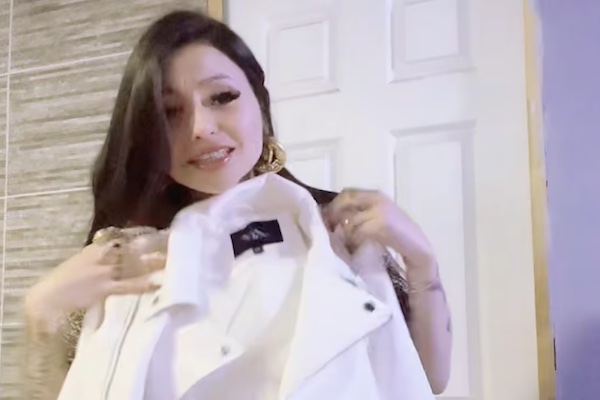
The last video Sabrina Durán Montero uploaded to TikTok before she was shot at point-blank range in broad daylight in Padre Hurtado, southwest of Santiago, has over five million views. In it, the influencer aged 24, wearing a Tommy Hilfiger shirt and large gold jewelry, cheerfully showcases hair products. Since her murder on Tuesday, the comments on the video are a string of farewells and good wishes to Joakina Gusman, the young woman’s username, in an evident nod to Joaquín Guzmán, better known as El Chapo, leader of the Mexican Sinaloa cartel. Durán was not only a TikToker. She also trafficked drugs, a crime for which she was imprisoned from March 2022 until last May. The bars did not prevent her from continuing to share her dances and reggaeton-urban songs on social media, thus defending the nickname of The Narco Queen of Peñaflor, the locality where the illicit gang she led operated.
The youngest of nine siblings and mother of a 10-year-old boy, Ina, as her close ones called her, grew up in a home where drugs were present and had ties to the business since her early adolescence, according to judicial documents cited by local media. Durán’s case, with her age, her jewelry, and her 450,000 followers, exemplifies how the tentacles of drug trafficking have conquered new territories and have changed the culture of a sector of society, in a phenomenon that is relatively recent and has only intensified over the last decade. Sociologist Rodrigo Ganter, author of Narcoculture and Signs of Transbordering in Santiago, Chile (2016), emphasizes that recently, the narco “not only overflows the borders between countries, but also transcends strictly economic, criminal, or subsistence aspects and social mobility for certain precarious segments, becoming a sign that organizes tastes, aesthetics, references, and aspirations of certain social segments.”
Pilar Lizana, a security specialist at the AthenaLab research center, explains that young people’s role models are becoming figures like Ina because they portray a world of power and easy money, of stolen luxury cars, and firearms. “Something is failing in the State of Chile that makes young people see more opportunities there. The rule of law has regressed significantly in some areas, such as the south, with rural terrorism, or in the north, with land occupations in Alto Hospicio. That deficit of sovereignty, that loss of territory, is being gained by crime, which exerts its control there,” she adds. The researcher points out that Chile has discussed the role of foreigners in crime, such as the Tren de Aragua, but that Ina’s case reminds us that there are also Chilean narco leaders “and more will emerge, including women.” “The fact that she appeared dancing reggaeton-urban from prison, with her jewelry, shows the power she has over state institutions,” Lizana explains.
How could the influencer frequently upload her videos from the Women’s Penitentiary Center (CPF) in the municipality of San Miguel, in the Chilean capital? The high number of phones inside prisons is a problem that Chile has faced for years. The Gendarmerie has seized nearly 20,000 mobile phones this year, in a population of about 49,000 inmates. When a case like Ina’s occurs, where the information about possessing a mobile phone is public, operations are carried out within the prisons. But when the person in question is a gang leader, they operate in such a way that they are never exposed as the phone’s owner, and only someone of lower rank within the structure risks exposure. Additionally, in prisons where 15 to 20 people share a room, they can hide the phone anywhere, and the guards have no way to prove it belongs to the inmate in question.
Regarding the phenomenon of the narco queen – as the media in Chile dubbed her – Pablo Carvacho, director of Research and Development at the Justice and Society Center, attributes it largely to the explosion of social media and the fact that during the pandemic many aspects of the real world shifted to the digital realm, “including crime.” “The digital space is also a space where the narco has to seek a market, attract more audiences willing to buy what they want to sell. It is not just a cultural representation of crime. There is a functionality that operates behind it,” says the professor at the Institute of Sociology at the Catholic University of Chile.
Carvacho opens the debate on whether Ina was as powerful as she appeared or if she created a character for social media that the media amplified. “What is novel,” he points out, “is that everything is recorded. The life and death of this young woman. The speed with which it spread. The difference is that the general public is exposed to this information in the most graphic way possible, like never before. At some point, we believe we are seeing new things that we did not know before.”
The Christian Democrat Claudia Pizarro, mayor of La Pintana, the first local authority to denounce narcoculture, and who has police protection due to death threats associated with her accusations, emphasizes that Ina had a 10-year-old child. “In La Pintana, we have the highest rate of teenage motherhood. I believe it is because they need a life project, to be important to someone, to belong to someone. We are now working to establish a Technical Training Center, which is shorter than university, so that our youth can see their path laid out in their municipality” (the poorest in Santiago). “Is there any university or technical training center in Peñaflor?” she asks, referring to the neighborhood where the murdered young woman lived, formerly a rural area but now affected by crime, like many of the rural areas surrounding the capital.
“We know that narcoculture is an easier path, but they will end up in prison or dead. I feel very sad that as a state we do not arrive in time, that we do not provide them with opportunities,” Pizarro laments. In her administration, she explains, she has prioritized investing more in sports and culture than in paving streets, for example. “I get criticized for it because the pothole filled is immediately visible. But a swimming instructor, a volleyball coach, a theater production can transform the lives of our children and youth,” she says, convinced after attending a championship of the Pan American Games being held in Chile. The rugby venue, for example, is the Municipal Stadium of La Pintana.
Amid the sports championship, Ina’s funeral, classified as extreme risk by the authorities, is scheduled to take place in Peñaflor, under a deployment of the Public Order and Control Service (COP), a special forces unit of the Carabineros. The narco-funerals are a practice that has been increasing in the South American country—over 1,700 are estimated to have occurred in the last four years. They take place both in the neighborhood where the deceased delinquent lived and within cemeteries over three days. At the end of September, President Gabriel Boric sent a bill to Congress to limit both the time and place where “high-risk” funerals are held, which disrupt neighborhood life and endanger its people. Source:El País.