Pilar Lizana in EMOL on Justice Minister's remarks regarding preventive detention
This article was translated automatically and may contain differences from the original. For reference, read the original.
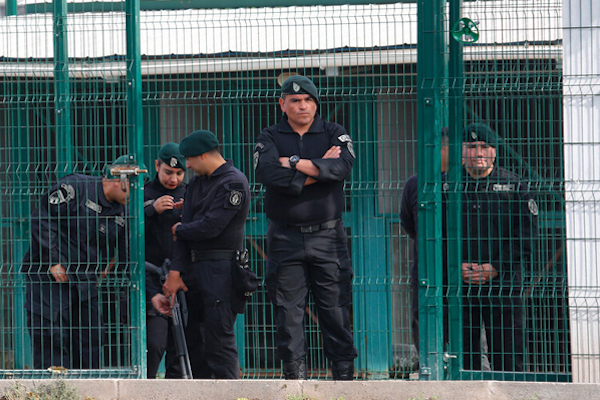
Punitive populism?: The debate over the alleged “abuse” of preventive detention raised by Cordero
An “abuse of preventive detention.” This is the diagnosis made yesterday by Justice Minister Luis Cordero as he addressed the macro-level state of the situation in prisons and the debate that arose because former Maipú mayor Cathy Barriga did not receive this precautionary measure requested by the prosecution.
In a conversation with Estado Nacional de 24 Horas, Cordero commented on the court’s decision in the “Barriga case,” stating, “I am quite respectful of judicial independence in this matter, because just as we have this case, we have cases where preventive detentions have been granted.”
“I would view it in terms of overall evolution. Today, we have an abuse of preventive detention. When we have an abuse of preventive detention and an increase in the number of people deprived of liberty, it reasonably prevents you from doing two things within the prison,” said the Justice Minister.
In this regard, he asserted that the first is to “effectively segregate.” And the second is to “have adequate reintegration policies, which is where one should focus particularly in the case of those convicted.”
Thus, he reflected that “this is a balance where the conversation must be approached with a certain maturity. Because it implies understanding that behind incarceration, there is not an inherent goodness, but rather a path fraught with risks.”
This is not the first time in the past month that Minister Cordero has addressed the “increase” in people in preventive detention and the penal population in general. On January 11, in a conversation with Radio Universo, he noted that by 2021 there were about 42,000 people deprived of liberty, but from late 2021 until now, “we have seen a very significant increase, over 20%, which has led to approximately 53,000 people deprived of liberty.”
The largest increase, he specified, is in people in preventive detention. There has also been a noticeable increase in the foreign population and women. “That growth, in such a short time, was very difficult to predict,” Cordero commented. The most significant overcrowding, he detailed, is in the Metropolitan Region, Valparaíso, and Copiapó.
In a conversation with Emol, security and criminal law experts share their analysis in response to the minister’s remarks, as well as the responsibilities associated with this “abuse,” propelled by a context of high public concern regarding the security crisis.
“The information has been available for some time”
Pilar Lizana, an analyst at AthenaLab and security expert, partially agrees with Minister Cordero’s statements, noting that “often there is a search for exemplary punishment with preventive detention, and there are cases where the accused is not a danger to society.”
“I have no issues with exemplary punishment, but in the situation we are in today (with overcrowding in prisons and associated problems), if a person is not a real danger to society and can comply with a total house arrest measure with an ankle monitor and efficient control by Gendarmería, I support freeing that space,” she specifies.
Once the issue of space in prisons is resolved and inmates are segregated, “then perhaps we can stop worrying about this, but we should not justify overcrowding with the use of preventive detention. Today we are discussing this because of what happened in Ecuador, due to organized crime and the security crisis we face, but the information that prisons were becoming overcrowded has been available for some time.”
“Penal populism”
From the field of criminal law, lawyer and academic Gonzalo Agliati from PUCV states that he is “fully in agreement” with Minister Cordero, because “indeed, although preventive detention is conceived as the ‘last resort’ in precautionary measures, in practice it is often granted in the majority of cases where the Public Prosecutor’s Office or the plaintiffs request it. And in that sense, although it is not the only factor influencing the matter, this criminal policy strategy becomes decisive in the increase of the prison population,” he comments.
In his opinion, “this abuse” is due to a criminal policy marked by the phenomenon of “punitive populism, which is mainly observed in the work of the Legislative Power and ends up influencing the actions of judges.”
This is because the criminal phenomenon is a constant concern for the population, especially when, as is being observed in Chile, its quantity increases, the violence with which it is committed, or the presence of more complex criminal organizations; a concern that, he emphasizes, “is exacerbated by the demonization of penal guarantees and the maintenance of the myth of the ‘revolving door.'”
Regarding this last point, Javier Castro, a criminal lawyer from Universidad Autónoma, comments that “preventive detention, before the year 2000, was conceived as a form of anticipated punishment, meaning that many people, investigated but not convicted, spent a long time deprived of liberty. Unfortunately, it happened that some of those people were acquitted.”
In this line, he recalls that with the criminal procedural reform, “the principle was sought to be instilled that preventive detention is a precautionary measure, not a sentence, and that it should proceed, as an extreme measure, exceptionally. Norms were established in the Criminal Procedure Code that guaranteed that, by application of the principle of innocence, it should be respected that an accused of a crime should be investigated in freedom. However, the requirements were relaxed, and preventive detention has been exploited again as an anticipated punishment. And it effectively causes prison overcrowding.”
More punitive measures
In recent years, a series of laws have been published that have aimed to meet punitive urgencies, stemming from new crimes that have emerged in the national territory.
For Agliati, these laws “end up being quite inorganic and lacking coherence with each other. Aside from that, regarding preventive detention, these reforms have contributed to broadening its grounds for application, easing the requirements that must be met to grant it, and, in summary, facilitating its imposition in each specific case.”
Castro shares the same opinion, emphasizing that “the responsibilities for the abuse lie with the legislator, who, yielding to pressures from the increase in fear of crime and/or for political reasons that stray from rational criteria, modify the requirements for preventive detention to increase the possibilities of its application.”
Lizana, for her part, agrees with criminalizing new offenses and updating legislation in accordance with the changes occurring in this area; however, she specifies that “I can have many laws that define a menu of crimes resulting in imprisonment, but if the individuals detained for that crime do not serve time, that law is of no use to me.”
In fact, the researcher comments that it can often be more efficient to impose a shorter prison sentence that is actually served. “Because ultimately what we need is for a person, whether foreign or Chilean, who commits a crime to know that they will face a sanction and that it will be enforced, because in this country, crime cannot be committed,” she specifies.
Ultimately, if a person who is hired, for example, to steal a car, is subjected to a five-year sentence, and while in prison loses their networks, their assets, and has no way to rearm in the criminal sphere, “that sentence is already effective,” but if that same person has a ten-year sentence “and continues to operate from prison, still has networks, and upon release is awaited, then the ten years were of no use,” Lizana concluded.
“Class-based criminal justice”
Another consequence that Agliati warns of is that the widespread application of preventive detention “contributes to reinforcing a criticism of the system that holds that there is ‘class-based criminal justice.'”
“That is to say, that the standards of treatment and judgment vary according to the social status of the accused. This was significantly increased with the case of Cathy Barriga, in which, aside from the personal opinions that may be expressed regarding the facts attributed to her, the judge’s decision on precautionary measures was appropriate, but it reinforces this feeling of inequality,” he commented.
In that sense, “even though I find it justified to argue that criminal prosecution operates with discriminatory biases based on the social class of the accused, the solution does not lie in indiscriminately decreeing preventive detention for common crimes and those of ‘collar and tie’ or public corruption,” the lawyer concluded.
January 22, 2024
Source: EMOL


