DT14 | Violence in the Southern Macrozone: A Perspective from Internal Conflict Studies
This article was translated automatically and may contain differences from the original. For reference, read the original.
- by Juan Pablo Toro
- Research & Data
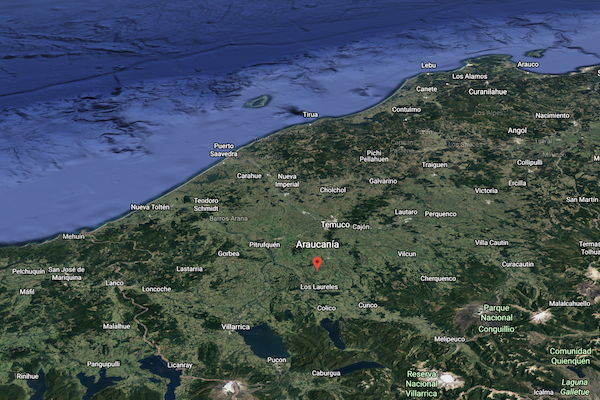
Psychologists often say that the first step in solving a problem is to acknowledge it. In this regard, the elected president Gabriel Boric faces a crucial issue: the violence in the southern macrozone. This is a very complex topic that no government has been able to resolve since 1990, and he has had to clarify his position on it. The latest Bicentennial Survey from the Catholic University of Chile indicated that the conflict between “Mapuches and the Chilean State” is perceived as the most intense by the population (88%), among many others; its highest point since measurements began in 2011. While the elected president has condemned the violence, he did not participate in some debates regarding La Araucanía and voted as a deputy against the state of emergency that allows the deployment of military forces in support of the police.
However, two of the four most radical groups—Mapuche Resistance Lavkenche (RML) and the Arauco-Malleco Coordinator (CAM)—have already announced that their struggle will continue, immediately dispelling any doubts about a potential change in attitude these armed organizations might have regarding the rise to power of a leftist government.
In a statement circulated on Wednesday, December 22, by various blogs and reproduced by several media outlets, RML warned that “in the face of the peace speeches that this false democracy tries to impose, we make it clear that we will not relinquish our tralkas (firearms). As long as forestry companies and gravel businesses continue to devastate our territory, tourism companies keep profiting from our resources, and the prisons in the south remain filled with Mapuches, the weichan (struggle) will not stop. Neither with (Sebastián) Piñera nor with (Gabriel) Boric.” In the same statement, they also claimed responsibility for the burning of 31 cabins around Lake Lanalhue.
Meanwhile, the CAM called on the “rebellious Mapuche people to continue resisting and to reclaim political violence as a legitimate instrument of our struggle, regardless of who is governing (…). We respond to this new ‘hippie, progressive, and chill’ left that today celebrates a social-democratic government or, to be more precise, a center-left government, that the Mapuche people have their own political-military organization that predates the formation of the Chilean State.”
In response to such challenges, the elected president stated: “We will engage in dialogue with all those willing to pursue the path of peace; that is our position. With all who want to restore peace, we will have dialogue, and as a future government, we must be very careful. In this matter, I also ask that we all be cautious; it is a very sensitive issue, there are people who have suffered greatly, whether in the Mapuche nation or the victims of attacks or violence, so let us not speculate on this.”
In other words, the positions of the parties are crystal clear: direct confrontation and dialogue within the framework of legality. The statements from Mapuche Resistance Malleco (RMM) and Weichan Auka Mapu (WAM) are still pending, which would complete the four radical groups mentioned by the authorities and the Multigremial of La Araucanía as responsible for most of the attacks in the southern macrozone, which extends from Biobío to Los Lagos.
The purpose of this document is not to review the deep-rooted causes that would explain the conflict or the demands that accompany it in its current dimension, as these have been extensively presented in various books and essays. While the causes emphasize history, culture, and long-standing socioeconomic factors, the demands generally coincide on elements such as the restitution of territories considered ancestral; autonomy and constitutional recognition of indigenous peoples; termination or restriction of forestry activities; and an end to the designation of “terrorists” for those who take up arms (hence the insistence on calling them “political prisoners”). What this document aims to do is examine the conflict situation in light of studies and experiences regarding insurgencies or guerrillas. Because while what is happening in the southern macrozone does not have the magnitude of what was experienced in countries like Peru between 1980 and 1992 or Colombia between 1964 and 2016, there are recurring and troubling elements that allow for lessons to be drawn that can contribute to addressing the conflict and preventing its escalation. For example, regarding the progressive loss of territorial control by the State, the need to protect local communities suffering from violence by organized armed groups, or the conditions that should surround any potential peace dialogue.
It is pertinent to keep in mind, before starting, the warning from economist Paul Collier, who, after comparing multiple internal conflicts, asserts that guerrilla leaders exploit ethnic differences to recruit their members and justify their calls to war, even though ethnicity is rarely the real cause of the problem. “Rebel leaders use ethnic grievances as a smokescreen for less respectable agendas.”