Beginning of the War in Ukraine: The Materialization of an Armed Attack
This article was translated automatically and may contain differences from the original. For reference, read the original.
From the perspective of international law and in accordance with the content of the 1945 United Nations Charter, the use and threat of the use of force in international relations is sanctioned whenever it is directed against the territorial integrity or political independence of any State, or in any other manner incompatible with the purposes of the United Nations. The exception to this is endorsed in Article 51 of the UN Charter, which authorizes the use of force to respond to an armed attack, enshrining the right to individual or collective self-defense of any State.
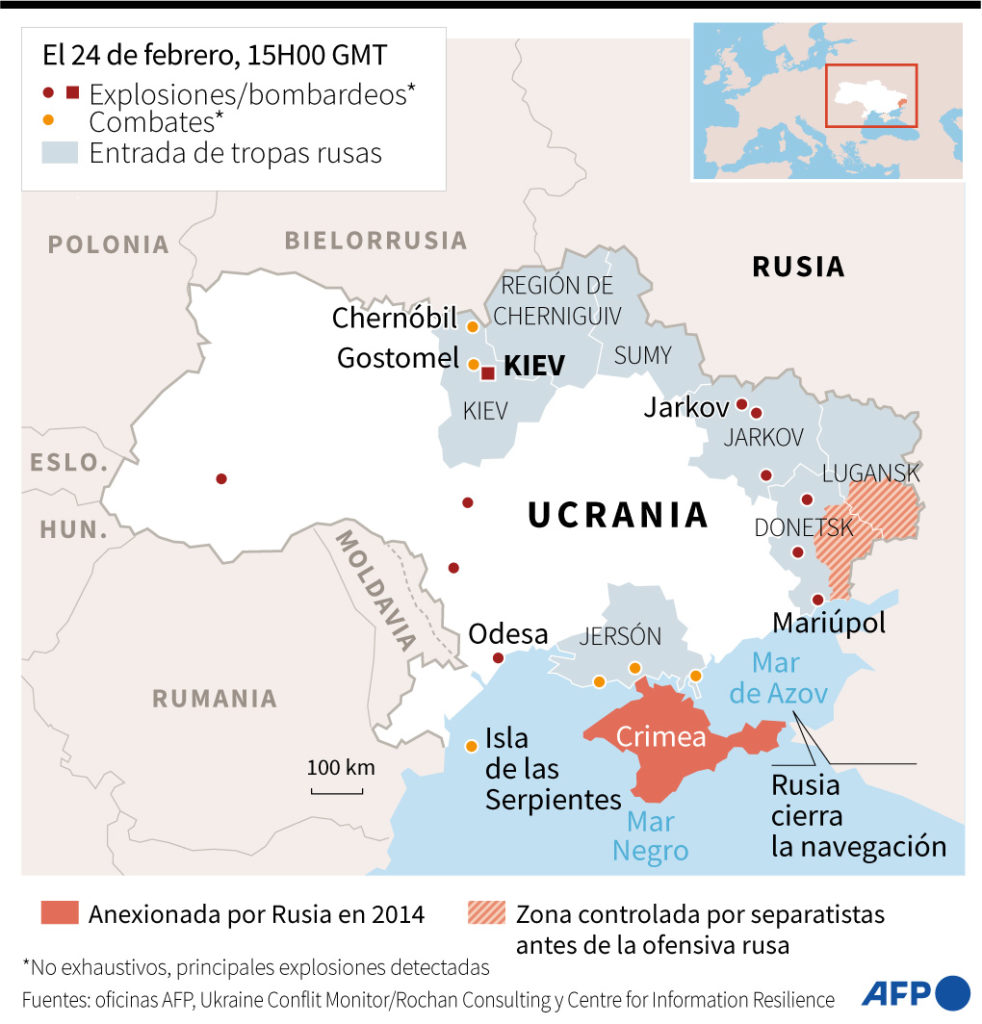
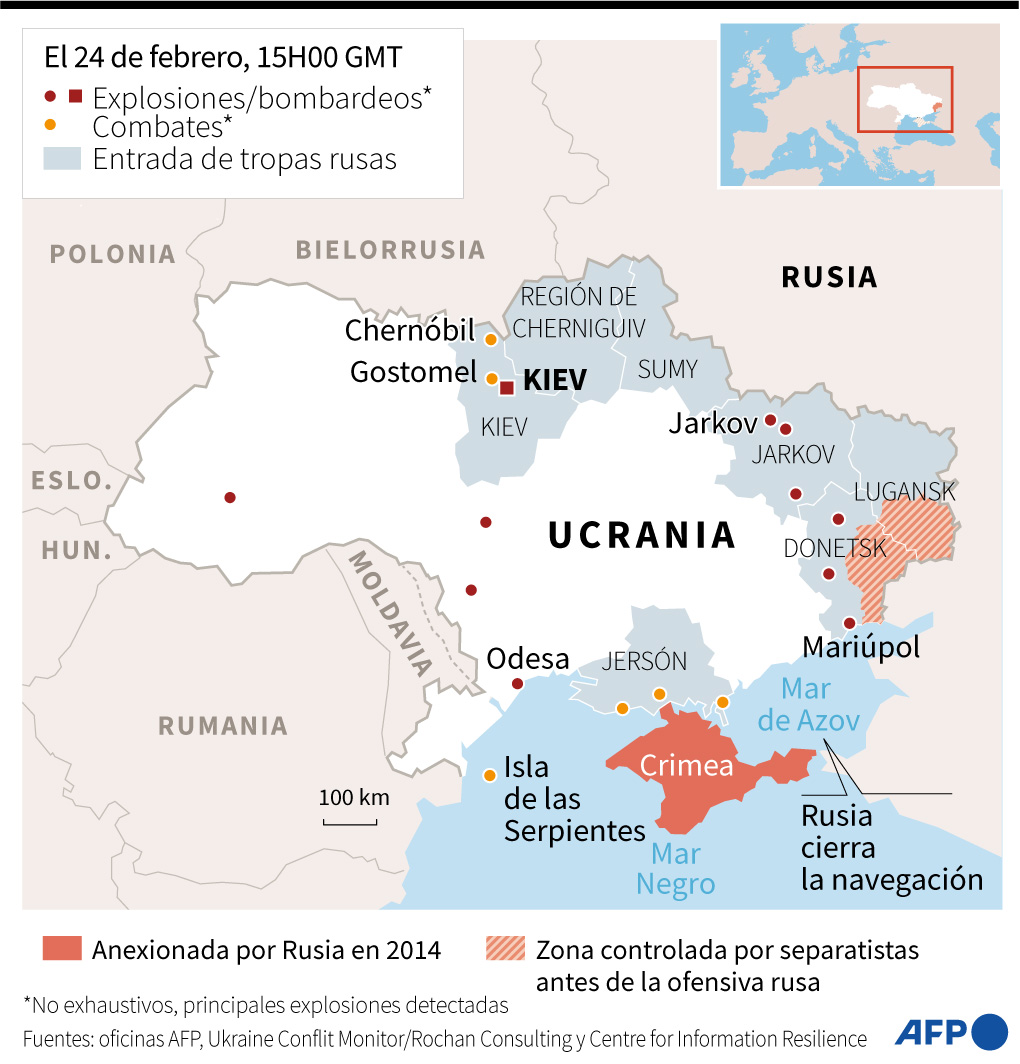
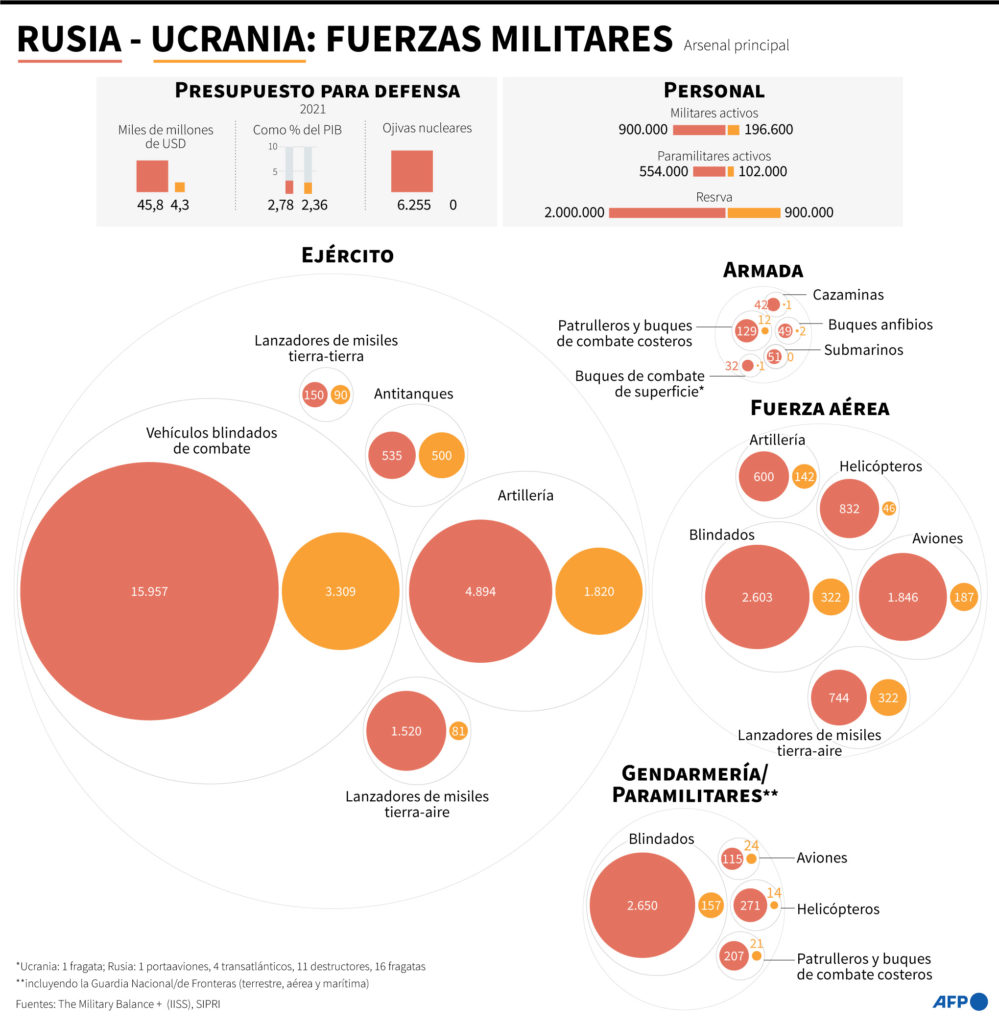
In the early hours of Thursday, February 24, eastern Ukraine suffered a military attack from Russia, which that country has termed a “special military operation,” following a concentration and deployment of military forces reaching 190,000 personnel among conventional and irregular forces. It is estimated that there are 105 battalion-level tactical groups on the ground. Each of these groups is composed of a force varying between 600 and 1,000 soldiers, and includes artillery elements, fire bases, air defense, and logistical means.
At sea, more than 40 naval units have been deployed, as well as approximately 500 combat aircraft. Additionally, this military operation will include the use of means in the space and informational dimensions, as well as other non-military means to achieve political and strategic ends, with greater intensity since in some cases these means exceed the effectiveness of traditional resources.
The entire Russian strategic deployment threatens Ukraine from the north, south, and west, with military objectives expected to encompass all of Ukraine, including the rebel regions of Donetsk and Luhansk, as earlier this week Russia and the lower house of its parliament unilaterally recognized the independence of both geographical areas.
The origin of the conflict dates back to Russia’s invasion of Crimea in 2014 and the ongoing support for pro-Russian separatist forces in these two rebel regions. Consequently, Ukraine will exercise its legitimate right to individual defense, with the expectation that, within the Security Council, for obvious reasons there will be no unanimity due to the veto power of at least one of the five permanent members.
What can we expect in the coming days? The main military operations will apparently be directed at controlling the rebel regions, to strengthen the unilateral claim of independence for Donetsk and Luhansk. Ukraine will make intensive use of its military and diplomatic capabilities, with the imposition of sanctions against Russia and, likely, Belarus by European countries and the United States, as well as an intensification of assistance to Ukraine in military, economic, intelligence, and humanitarian support.
The unfolding events in Ukraine will profoundly reconfigure the security situation in Europe, the most significant since World War II, with the expectation that the country will continue to be a focal point of tension between Russia and its Eurasian geopolitical vision versus that of Europe centered around Central Europe. What is at stake in this conflict for Russia is to limit the expansion of the North Atlantic Treaty Organization eastward, as well as the removal of U.S. nuclear weapons from Europe, expanding Russian influence westward to continue enjoying its historical strategic depth, a crucial imperative for its security.
John Griffiths
Head of Studies, AthenaLab