EXTERNAL COLLABORATION | The Nuances of Plurinationality
This article was translated automatically and may contain differences from the original. For reference, read the original.
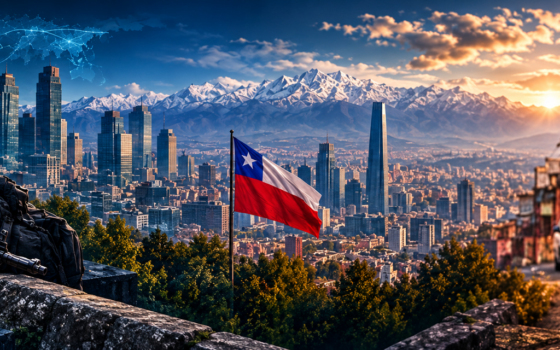
In what was Santiago of New Extremadura, just a few blocks from Cerro Huelén, a hundred delegates from the Mapuche people, radical leftists, and sympathetic independents are proposing a disruptive Political Constitution for Chile.
Among other characteristics, its first article—already approved internally—defines the State as “plurinational.” Literally, this implies granting statehood to all indigenous communities and peoples, whether pre-Columbian or post-Columbian, that exist throughout the country.
Since the delegates have not defined the concept and often refer to the need to “decolonize” and “refound” Chile, their proposal reflects a counterfactual dystopia: if the republican history was unjust to certain peoples, this would be the opportunity to rectify it. The pretext for this construct is “the historical debt” to the Mapuche people, by far the most populous.
However, the ongoing constitutional project is not limited to an indigenous dystopia. Rather, it would paradoxically serve the construction of a new State, motivated by the sociopolitical context. Among these motivations are the undeniable discrediting of “the political class,” corruption in institutions, collusion in markets, the social inequalities that afflict us, and the crisis of democratic representation that literally exploded during Sebastián Piñera’s government.
For this reason, the most surprising, yet confirming, aspect of our systemic politicians’ low level is that they did not detect, ab initio, that the proposed plurinationality conceals a couple of inescapable strategic effects. One, because it implies renouncing the early “State in form,” which provided us with a significant comparative advantage in the region. The other, because it puts an end to Chile’s geopolitical unity, undermining the national State and creating dangers where none existed before.
The unavoidable question, then, is who or what could benefit from a weakened State of Chile.
II
Such distraction from politicians is the correlate of the tactical intelligence of the disruptive creatives of the Constitutional Convention. They managed to cloak the plurinational project and its sources with synonyms, homologations, and false paradigms.
Under that diversionary layer, the non-expert citizen must assume that “nations,” “peoples,” and “descendants of peoples” are the same thing and that plurinationalizing the State relates to interculturality, decentralization, and self-determination. On the other hand, as a demonstration effect, they told him that the UN recognized the right of indigenous peoples to be a nation within their States[1] and that the models were in New Zealand, Canada, Spain, and various federal States around the world. As if that were not enough, the creatives ran a bulldozer over the controversial texts. All are equally important, they said, because the Constitution “is a whole.”
It was a successful diversion, as they managed to dilute plurinationality. While this was happening, public opinion abstained or focused on other alarming issues in the constitutional draft.
III
The merit of a good slogan is that it penetrates deeply. From my studies in Law, I retain the one that warns about the hierarchy in the legal order: “the accessory follows the fate of the principal.” In the matter sub litis, it allowed me to discern that the keystone of the constitutional draft was the identity mutation of my country: from nation-state, it was becoming a state of nations.
It seemed to me a major paradox, as the delegates were elected to legitimize essential reforms of the unitary State and not to liquidate it. It was to be expected, therefore, that if state plurinationality had been legally, communicatively, and timely challenged, we would not be discussing its most notable derivatives today: the reconfiguration of classic powers, justice according to ethnicity, cross-border cooperation among autonomous indigenous areas, the setting of priorities in foreign policy, and the end of the principle of “one citizen, one vote.”
Nevertheless, no distraction lasts a hundred years. Although belated, the evidence that “in the main” we are facing a revolution without a name, without leaders to assume it, and with ideologists who care little for us, has activated the alarm of citizens who prioritize national interest.
Suddenly, former presidents, former chancellors, academic authorities, legal professionals, and 40,000 signatories of the manifesto “Yellow for Chile” began to warn that the Constitution should be a home for all and not an exclusionary political program, nor, much less, an instrument that weakens the State.
As a first massive impact, serious, precise, and concordant surveys are showing the previously unthinkable possibility that the constitutional project may be rejected in the referendum supposedly intended to approve it.
In light of that scenario, euphemisms have run out, the indigenist goodwill has lowered its tone, and enlightened criollo delegates have even come to recognize that the approved plurinationality is “a concept under construction.”
In this new context, systemic politicians—I do not wish to say “sensible”—are proposing the need for a “plan B,” with various variables. The disruptive delegates, for their part, evade their responsibility and choose to threaten with an insurrectional explosion 2.0.
Paraphrasing Bertolt Brecht, they seem more willing to dissolve the real people than to respect what that people commands.
[1] They invoked UN Resolution 61/295 of 2007 on the rights of indigenous peoples, but overlooked its Article 46, paragraph 3, which “does not authorize or encourage any action aimed at undermining or impairing, in whole or in part, the territorial integrity or political unity of sovereign and independent States.”
JOSÉ RODRÍGUEZ ELIZONDO
*Lawyer, journalist, diplomat, professor of International Relations at the University of Chile, and National Prize for Sciences and Humanities 2021. He is also a member of the Advisory Council of AthenaLab.
** BOOK CHAPTER IN PREPARATION