CONFERENCE | Shangri-La Dialogue: A Look at Geostrategic Competition
This article was translated automatically and may contain differences from the original. For reference, read the original.
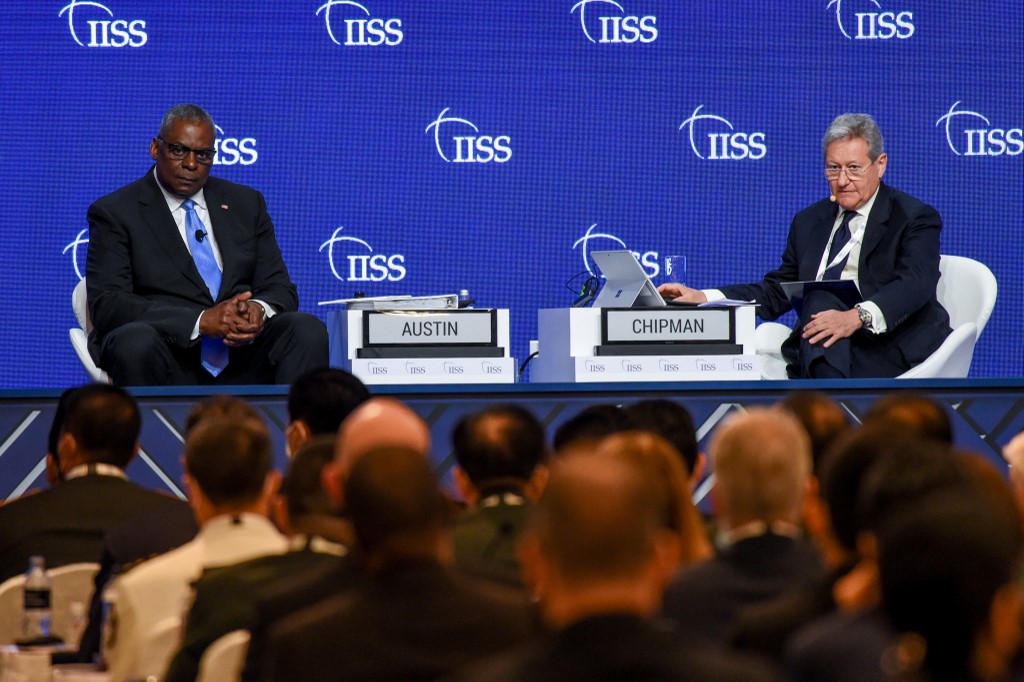
The next steps of the U.S. strategy for the Indo-Pacific, climate security, and the Chinese vision of regional order were some of the topics discussed at the 19th edition of the Shangri-La Dialogue, the annual forum organized in Singapore by the International Institute for Strategic Studies (IISS) in London. This edition brought together nearly 32 defense ministers, as well as official representatives and academics from over 50 countries, with a notable absence from the Latin American region.
The conference took place in the context of the evolution of the international order towards multipolarity, where the most significant current is the strategic competition between the United States and the People’s Republic of China.
For the United States, the Indo-Pacific region is its priority and center of gravity for strategic actions, emphasized Secretary of Defense Lloyd Austin, specifying that it is a space where international legal rules and norms form the foundation. Notably, $130 billion will be allocated in the defense budget to reinforce the strategy towards the region, aiming to generate new capabilities based on emerging technologies to deter aggressions from actors that behave outside international norms. Similarly, there is an intention to strengthen exercises and combined training with key partners in the region, among which the Rimpac 2022 naval exercise stands out, involving forces from over 26 countries, where Chile has played a prominent role in recent years. Additionally, it was deemed appropriate to enhance cooperation in regional maritime security through various institutional services, such as coast guards and regional intelligence fusion centers.
Regarding North Korea, the U.S. Secretary of Defense mentioned the persistent nuclear threat from this country towards the region as one of the relevant points. Concerning the relationship with Taiwan, he stated that a policy of maintaining the status quo and resolving conflicts through peaceful means will be favored, despite observing increased coercion from China. However, he warned that any unilateral change regarding the situation in Taiwan will not be tolerated by the United States.
Regarding geopolitical competition in a multipolar region, Austin explained that two simultaneous and complementary processes are evident. On one hand, there are the effects of the aforementioned strategic competition between great powers and its consequences for medium and small states. On the other hand, there are the existential challenges faced by smaller powers associated with the impacts of climate change, including its manifestations in food crises, pandemics, or migrations. This implies that regional and subregional cooperation could eventually translate into multilateral response processes regarding the most relevant geopolitical challenges and into minilateral responses for more specific security processes.
Another aspect addressed was the Russo-Ukrainian war, which demonstrated that economic interdependence processes are not sufficient to prevent a country from resorting to the use of force unilaterally. Hence, the importance of upholding international law over military power and the corresponding use of force. This will require the main leaders to have an adequate strategy centered on a “cold and rational mind, as well as a warm heart” to avoid making mistakes, indicated the Secretary of Defense.
The surprise of this dialogue was the direct contact with Ukrainian President Volodymyr Zelensky, who stated that Russia must answer before international courts for its open aggression and violation of international law, as well as for the crimes against humanity committed. He warned that this conflict is additionally generating a global food insecurity crisis due to the blockade of Ukrainian ports by Russia. He estimated that the international community should ensure a stable maritime corridor to enable adequate Ukrainian supply to the global market. He concluded his remarks by warning that the international community should focus its efforts on conflict prevention rather than reacting once they have already begun, as the costs of using force are significantly higher. “If there is a diplomatic and preventive path in Taiwan, it should be used,” said the president.
In relation to climate change, security, and “green defense,” the seminar established that it is essential to prepare military forces to contain and mitigate the effects of potential natural disasters on the population. Furthermore, the forces themselves must prepare the transition of their energy supply systems for their main land, naval, and air mobile platforms, which has been termed “green defense” (green defence). This will become an immediate challenge, according to the First Sea Lord, Admiral Ben Key, who stated that “green defense” is already part of the values of the Royal Navy, particularly among the new generations currently serving in military institutions.
In turn, Chinese Defense Minister General Wei Fenghe stated that in the current international order, no country should impose its will on others through military force, as dialogue and harmony should prevail. In his view, there are no superior states over others, and all interactions of these forms of political organization must be based on respect for the system and international laws.
The Chinese authority asserted that his country is in a new period of economic and military transformation, so its development should not represent a threat to any other state, but rather a historical trend. However, he warned that they will not accept pressure or threats from any actor and that if China is attacked, it will respond with all its capabilities. He expects that the legitimate national interests of his country will be respected. General Wei stated that Taiwan is an internal matter for China and that the goal is ideally peaceful reunification of what they consider a “province” of the country. The unity of China is not in question; therefore, persisting in an independent island would be a goal without destination, he warned. He called for not underestimating China’s resolve to defend its own integrity.
On the other hand, General Wei stated that China is strongly oriented towards promoting cooperation and unity in its area of influence in the South China Sea, respecting freedom of navigation, which is a principle that significantly benefits its own country. This is in the context of overlapping territorial claims from several countries.
Finally, he expressed that the relationship with the United States is at a critical moment, being aware of what it means for global peace. He believes it is a mistake to perceive China as an enemy, as well as to try to interfere in its internal affairs. If compromises are sought, Beijing is willing to coexist peacefully, but if confronted, it will defend itself and will not back down.
Regarding new ideas for regional stability, participants agreed that it is necessary to articulate a structure of partner countries to generate higher levels of stability, cooperation, and peace in the region.
Final Impressions
In conclusion, it is estimated that the geopolitical situation in the Indo-Pacific is and will be strongly marked by the effects of geopolitical competition between the interests of the U.S. and China. The effects of this interaction are being felt and will be felt across all states in the region. At the same time, medium powers will seek better positioning, and small powers, while dealing with the effects of strategic confrontation, will have to prepare to face security challenges from more internal threats associated with the impacts of climate change.
The effects of the competition between the U.S. and China will affect the entire international system, including Latin America, hence the importance of continuing to observe and evaluate the repercussions of what occurs in the Indo-Pacific, the current axis of global geopolitical and geostrategic development.
Overall, it can be inferred that Chile must continue its process of insertion into the Indo-Pacific based on its own national interests, strengthening its presence in collective and bilateral instances, as well as cooperating regionally on matters of common interest. Additionally, it should consider the impact on military strength from the introduction of the new concept of “green defense” and, finally, define a national instance for strategic reflection—based on its own national interests—to establish scenarios and address risks and threats while seizing the opportunities that will arise.
John Griffiths Spielman
June 16, 2022