KEYS | Russian Weapons for Latin America: More Rhetoric than Reality
This article was translated automatically and may contain differences from the original. For reference, read the original.
Crisis moments in the international system always open opportunities for great powers to settle scores, and often, rather than seeking direct confrontation, they prefer to do so in peripheral theaters by encouraging or strengthening allied countries. All with the purpose of causing disruptions in the rival’s area of influence.
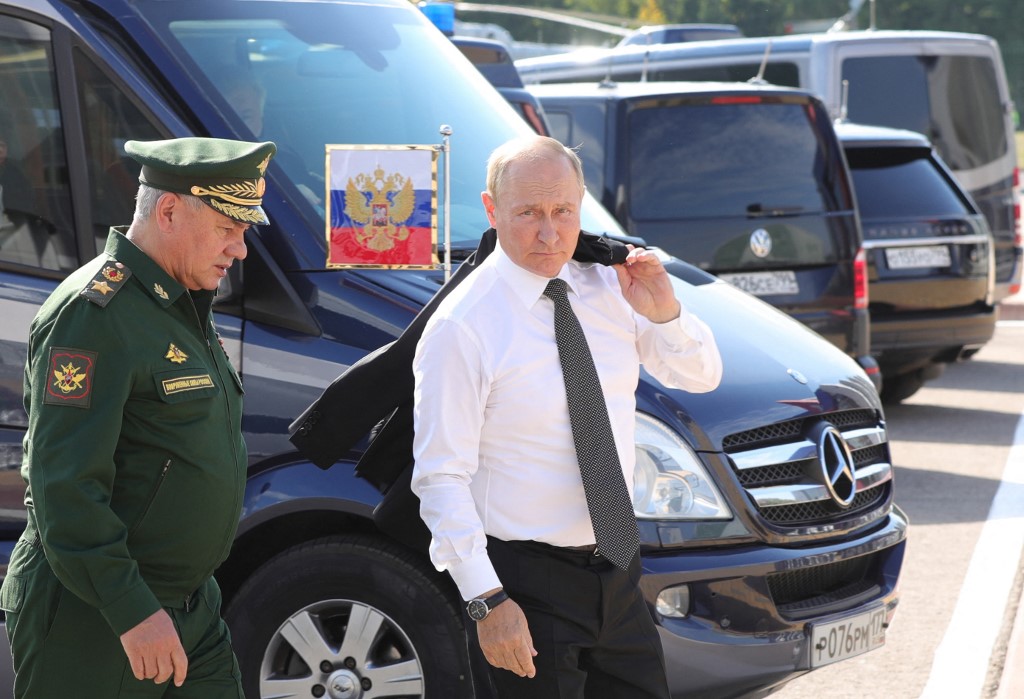
This context helps to understand the latest offer from Russian President Vladimir Putin made during the opening of a military exhibition this week, precisely at a time when his forces are suffering a series of attacks against ammunition depots in Ukraine.
“Russia sincerely values the historically strong, friendly, and truly trusting ties with countries in Latin America, Asia, and Africa. (We are) willing to offer our allies the most modern types of weapons, from small arms to armored vehicles and artillery, including combat aviation and unmanned aerial vehicles,” said Putin.
“We greatly appreciate the fact that our country has many allies, partners, and like-minded people across different continents,” he added.
Then, the Kremlin leader continued his speech by inviting his partners to conduct joint exercises and emphasized that many foreign officials have received training in his country.
Despite the concern that may arise from a proposal coming from a president who does invade countries when he sees fit, the reality is that in the case of Latin America, these words seem more like part of U.S. rhetoric than a feasible reality in the short term. Below is an analysis of Putin’s words.
- While Latin American economies are rebounding after the contractions caused by the pandemic and organizations like the World Bank project growth of between 2% and 3% for this year, the region is far from experiencing the boom in commodities that allowed some countries to make massive military purchases in the early 2000s. Debt levels are high, and the priorities of many governments lie in social or policing areas.
- Sales of Russian weapons to the region have been nonexistent in the last five years; according to the databases of the Stockholm International Peace Research Institute, they do not even represent 1% of the total sales of that country globally (https://armstrade.sipri.org/armstrade/page/values.php).
- There are several reasons to explain this reality in the region. Financial issues, as mentioned above, but also the enactment in 2017 of the Countering America’s Adversaries Through Sanctions Act, a law with which the United States seeks, among other things, to disincentivize the purchase of Russian arms by imposing penalties on those who do so (https://home.treasury.gov/policy-issues/financial-sanctions/sanctions-programs-and-country-information/countering-americas-adversaries-through-sanctions-act-related-sanctions). It is true that many countries in the region that were not traditional buyers of Russian material, such as Colombia and Mexico, decided in the past to acquire Mi-8 and Mi-17 helicopters due to their lower comparative cost and robust condition for operation in various terrains, even though they were expensive to maintain in their final life cycle. Meanwhile, others like Venezuela even upgraded their military forces with Sukhoi-30 fighters, S-300 air defense systems, T-72 tanks, and Mi-35 helicopters, among other equipment. But today, even Caracas has stopped purchasing due to the collapse of its economy and is opting for Chinese suppliers. Brazil recently announced it would decommission its Mi-35 combat helicopters due to operational and logistical costs. Other countries are also facing difficulties maintaining their aircraft due to the sanctions imposed on Russia for invading Ukraine.
- It is true that both Russian and Ukrainian forces have similar military equipment. However, the performance of the Western weapons supplied to Ukrainian forces appears to be significantly superior to that of Russian material. This presents very poor publicity for any arms sales, regardless of the perspective.
- Finally, regarding joint exercises, the Army Games 2022, currently taking place in Venezuela, have delegations from Russia, China, Iran, Belarus, Uzbekistan, Vietnam, and Myanmar as guests ( https://www.bloomberglinea.com/2022/08/15/army-games-2022-organizado-por-rusia-se-instala-por-primera-vez-en-venezuela/). According to various reports, practices will range from sniper shooting to naval landings. While the timing of these exercises is noteworthy, they do not compare in complexity or scale to others like Unitas, Panamax, Crucex, or Fuerzas Comando, where the United States plays a leading role.Given all the above, it seems that the Russian president’s offer will not find much resonance in a region that is not experiencing a good economic situation and has little interest in Russian-origin armaments. This situation contrasts sharply with the massive desire in Europe to acquire U.S.-origin weapons, from Javelin anti-tank missiles to F-35 fighters. If the Kremlin leader’s goal is to discomfort Washington by selling arms to his few partners in Latin America, when other markets are closing to him, it does not seem to be a plausible objective unless he is willing to be extremely generous. The times do not seem to favor that.
AthenaLab Team
August 18, 2022