COMMENTARY | The Great Transformation of Gorbachev
This article was translated automatically and may contain differences from the original. For reference, read the original.
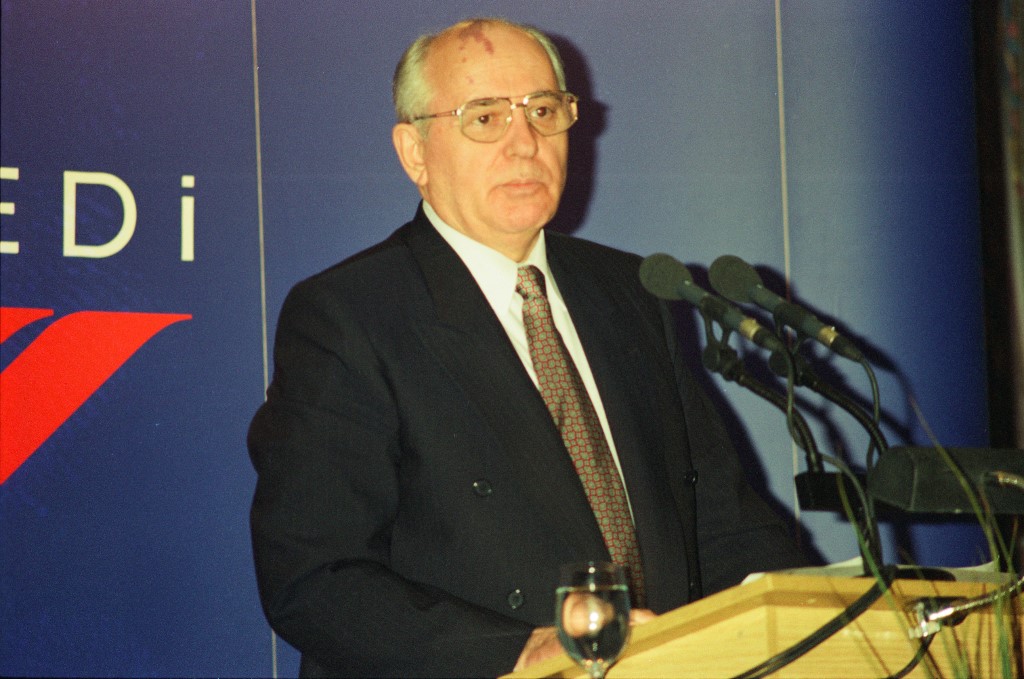
On August 30, at the age of 91, Mikhail Gorbachev passed away, recognized as the architect of the transformation of the communist system that ultimately led to the collapse of the Soviet Union.
Gorbachev is highly regarded in the West for his attempt at political and economic openness starting in 1985, which allowed for both freedom and democracy in many Eastern European countries, as well as the end of the Cold War and the threat of nuclear holocaust.
However, this sentiment is not necessarily shared in Russia.
The hardline nationalist and communist factions criticize him because the dissolution of the Soviet bloc resulted in a loss of power for Russia, which, in the words of current President Vladimir Putin, represented the greatest geopolitical catastrophe of the century, a moment of shame and defeat.
Those with liberal ideas within the Soviet Union argue that Gorbachev’s actions were not bold enough to eradicate the power structure of the Communist Party and that the costs of the transformation led to a backlash among the Russian population, as it did not meet expectations for an improvement in quality of life comparable to Western democracies.
Upon assuming the role of General Secretary of the Communist Party of the Soviet Union (de facto leader in the one-party system), Gorbachev was convinced that it was necessary to modify the political-economic system that had been in place for seven decades since the Bolshevik Revolution to avoid disaster.
To this end, he pursued two main lines of action: Glasnost or openness, allowing freedom of the press and expression; and Perestroika, or restructuring of society and the economic system. With this, he aimed to correct the high official corruption, low productivity and labor incentives, and inefficiencies in production and supply chains, among other issues that resulted in a very weak economy to sustain the power of the Soviet Union.
These two lines of action, for some analysts, represented a double-edged sword, opening the desires for freedom and nationalism in the Soviet republics and in its sphere of influence, primarily in Eastern Europe, as well as facing strong resistance from the structure of the one-party system, for whom this represented a threat to the privileges achieved in previous decades.
Although it was never an objective for Gorbachev, this ultimately led to the independence of many countries that moved away from the Marxist-Leninist model to integrate into the liberal democratic system with a social market economy, including the reunification of Germany and the consequent fall of the Berlin Wall.
Unlike the Soviet doctrine of the Leonid Brezhnev era, Gorbachev did not intervene militarily to keep Eastern European countries within Soviet dominance, which ultimately resulted in the end of the Warsaw Pact, the opposing force to the North Atlantic Treaty Organization (NATO), and the dissolution of the Soviet Union, with the Russian Federation remaining as its successor but geopolitically diminished.
During his time in office and aware that regenerating the economy required reducing military spending, Gorbachev withdrew troops from Afghanistan and negotiated a nuclear arms reduction agreement with the United States. Meanwhile, President Ronald Reagan (1980-1988) increased military spending and announced the Strategic Defense Initiative, a ballistic missile defense shield with significant technological development, also aimed at pressuring the Soviet Union.
Additionally, as part of the opening process, Gorbachev lifted restrictions on media, allowing the publication of previously censored books and the screening of films that had also been banned until then. Among other measures, the release of dissident Andrei Sakharov, a famous physicist who participated in the development of the hydrogen bomb, stands out.
A milestone that expresses the revisionist view regarding the past of the Soviet Union was the closure in 1985 of the Smolny Institute, recognized as the center of communist orthodoxy and from where Lenin himself declared the triumph of Bolshevism in 1917. There, he called for a change in attitudes, from the worker to the minister, general secretary, and government leaders included. This was followed by the authorization of elections with multiple parties and measures to combat corruption at high levels, which meant that many party hierarchs and bureaucrats lost their positions.
The poor economic situation, internal resistance, and his low general popularity prompted a failed coup attempt in 1991 by hardline factions of the Communist Party and the KGB. This movement was resisted by Boris Yeltsin’s leadership but caused damage that ultimately led to Gorbachev’s resignation at the end of that same year.
INTERNATIONAL LANDSCAPE
The process initiated by Gorbachev’s reforms, while not achieving its initial objectives for the then-Soviet Union, produced a transformation in the structure of European and global security, forever changing the geopolitical landscape.
Thus, after the end of the Cold War, there was a vision of achieving a free Euro-Atlantic community, including Russia, the United States, and European countries, in an integrated security system. However, this has not been realized, as evidenced by the situation and friction between Putin’s Russia and NATO’s eastward expansion.
For many analysts, there have likely been mistakes in the processes of transforming the security framework and NATO’s eastward expansion, failing to adequately integrate the new Russia into this framework. On the other hand, Moscow has evolved into a state that fundamentally differs from the European liberal democratic ideal and maintains a personalized leadership based on strong nationalism, a vision of Russia destined to be great and powerful in its entire sphere of natural influence, which is wary and distrustful of NATO and, in particular, the United States as a threat.
There is a theory that defines peace not only as the absence of armed conflict but as a period preceding the next war, unless that time is used to create an architecture and conditions that make war a highly inconvenient option compared to other conflict resolution options.
The great transformation initiated more than thirty years ago by Mikhail Gorbachev has provided that opportunity in Europe and the rest of the world. It is to be hoped that in the medium term, this will not be wasted and that a framework for coexistence in peace and freedom will be achieved. It is difficult, it seems almost impossible, but that is what political leadership and open, creative minds are called to do.
Cristián de la Maza
Research Fellow at AthenaLab
August 31, 2022