Chairman of the AthenaLab Advisory Council Shares Leadership Experiences with Youth
This article was translated automatically and may contain differences from the original. For reference, read the original.
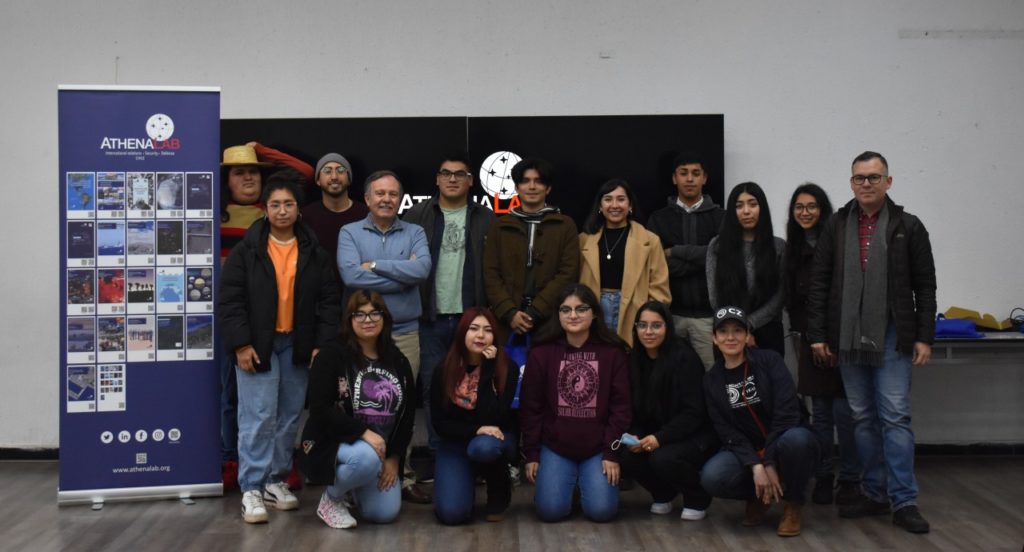
Accepting the invitation from the Dignity Foundation of La Pintana, as a member of AthenaLab, I shared my experiences from 44 years in the Chilean Navy with a group of enthusiastic and motivated young people who want to build a better Chile, starting from La Pintana, the place where they live.
On this occasion, we discussed Leadership and its impact on any organization, focusing on how those in authority lead. The figure of the Leader is the one who will shape that human group and the achievements it can attain. In my life in the Navy, I believe I can highlight four (among many others) essential elements that anyone wishing to be followed by their group in achieving objectives beneficial to society should keep in mind. These basic elements are not necessarily sequential, nor once achieved, should they be forgotten; they must be present at all times when one assumes a leadership position.
The first is “Overcome oneself, be an example”. This relates to the fact that the first battle for a Leader is to overcome all fears, limitations, insecurities, and egos that we carry from a long time ago, as they will only immobilize us and prevent us from moving forward. This requires motivation, discipline, resilience, and above all, willpower. Once this is achieved, their unwavering integrity, based on professional and personal ethics, must serve as an example for those who follow them. It has been demonstrated that no one will follow a leader who does not lead by example and does not inspire trust down an uncertain and risky path. If they do follow, it will be out of fear of retaliation, which is the antithesis of good leadership.
The second point is “Sense of Purpose, pursue a good cause”. Ancient Greek philosophers asserted that true happiness consists in doing good. The experience of many people indicates that there is nothing more rewarding in life than feeling useful by helping others achieve a better quality of life. It is about seeking a cause that is greater than ourselves and that achieving it brings something good to those around us. If that cause is so significant and important, I will be willing to sacrifice and take risks for others, and that will make me happy and fulfilled.
The third is “Build cohesive teams”. Many individuals who have made significant advances in society, including in business, military, education, technology, and social fields, indicate that such work is never done by a single person, no matter how capable they may be, but by a great team. As we say in the military, no one wins a war alone. The leader must trust their team, where the outcome depends on each member. Everyone is important, no matter how small they believe their responsibility to be. The relationships among all team members must be based on mutual respect, personal knowledge, and duty fulfillment. As a motto, a cohesive team never abandons one of its own in times of trouble. When team members feel secure, well-treated, and properly trained for the mission, they become practically invincible. If this is achieved, it is because the leader created the conditions to make it happen.
The fourth and simplest to identify, yet the most complex to execute, is “Never fear making decisions”. Leaders are constant decision-makers. Their essence lies in the timely and effective making of decisions, whether in combat, business, projects, medicine, and many other situations to resolve a situation favorably. This is a complex process, as many variables always come into play at that moment. I advise asking the first question, in this case, Who am I accountable to?, for example, if I am a school principal, I am accountable to my students. If I am a surgeon, I am accountable to my patient. If I am a ship’s commander, I am accountable to the mission to be accomplished, and to achieve it, I must care for my crew so they can fulfill it. This can help organize one’s thoughts in the decision-making process. The second question in this decision-making process is, What is preventing me from making an obvious decision? It is common for those who must make a decision to feel fear regarding the effects on their personal interests (including reputation, before the law, before their electorate, before their employer, before the Board, etc.) and the fear of making a mistake inhibits them from making it. Those who do not feel capable of overcoming this situation and refrain from making the necessary decisions should resign from their position.
These four points were presented and discussed with real examples from my life in the Navy, and the young people also contributed examples from their own lives, which naturally enriched the meeting.
I hope we all learned something more from our experiences (that was the case for me), and with that, we can better prepare these extraordinary young people who have tremendous potential and who, in the future, I am sure will be the leaders of their communities, organizations, and, why not say it, of our country. Thank you very much for the opportunity to share with you in La Pintana, and many thanks to the Dignity Foundation for giving us the chance to contribute to the formation of young leaders.
Julio Leiva, Chairman of the AthenaLab Advisory Council
September 25, 2022